return to home  
Join   |  Gift   |  Member Login   |  Library Login
BookBrowse Mobile
Follow Us: 
   Reading Guides

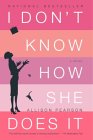
I Don't Know How She Does It by Allison Pearson: Questions, plus a reading group guide, with links to reviews, excerpt, author interview and author biography at BookBrowse.com.

I Don't Know How She Does It

I Don't Know How She Does It
The Life of Kate Reddy, Working Mother
by Allison Pearson
Hardcover: Oct 2002,
352 pages.
Paperback: Aug 2003,
352 pages.

Publication information
First book/First Novel


Author Information
Critics' Opinion:   
Readers' Rating:  
About BookBrowse Rankings
Share: 
Buy This Book

Reading Guide Questions

 Printer Friendly Guide

Please be aware that this discussion guide may contain spoilers!

About This Reading Guide

The questions, discussion topics, and author biography that follow are intended to enhance your group's reading of Allison Pearson's I Don't Know How She Does It: The Life of Kate Reddy, Working Mother, a hilarious, heartbreaking, and utterly unforgettable novel about a working mother trying to strike that impossible balance between work and family.


Discussion Topics

  1. At 1:37 a.m. on an average night, Kate Reddy has just returned from a business trip to Sweden and is banging store-bought mince pies with a rolling pin so that they'll look homemade for her daughter's school Christmas party. She then goes out to the trash bins to hide the pie boxes so that Paula, her nanny, won't tell the other nannies that Kate cheated on the pies. She cleans up the kitchen and then takes a long time brushing her teeth so that her husband will fall asleep before she comes to bed (if they don't have sex, she can skip a shower in the morning and possibly have time for Christmas shopping on the way to work). How does this sequence, along with the "Must Remember" list that follows it, work to set the comic pacing for the novel [pp. 3–10]? How successful is the opening chapter in getting the reader to sympathize with Kate and her daily challenges?

  2. When Kate arrives late for work, she needs to come up with what her friend Debra calls "a Man's Excuse" [p. 15]—something that does not have to do with sick children or an absent nanny, preferably something involving car repairs or traffic. Is Pearson accurate in describing a business world that has little patience for the out-of-office responsibilities of working mothers?

  3. Kate has two good friends, Debra and Candy, with whom she exchanges comical e-mail messages. What do these messages convey about the ways women console, support, and entertain one another? What do they convey about the subculture of office life?

  4. "There is an uneasy standoff between the two kinds of mother which sometimes makes it hard for us to talk to each other. I suspect that the nonworking mother looks at the working mother with envy and fear because she thinks that the working mum has got away with it, and the working mum looks back with fear and envy because she knows that she has not. In order to keep going in either role, you have to convince yourself that the alternative is bad" [p. 96]. How do Kate's vexed interactions with local "Mother Superiors" reflect the truth of this statement?

  5. Pearson has said of her book, "It's a tragedy at the pace of comedy." What does she mean by this? Do you agree?

  6. Musing on her relationship with her unreliable father, Kate thinks, "Daughters striving to be the son their father never had, daughters excelling at school to win the attention of a man who was always looking the other way, daughters like poor mad Antigone pursuing the elusive ghost of paternal love. So why do all us Daddy's Girls go and work in places so hostile to women? Because the only real comfort we get is from male approval" [153]. Is this an adequate explanation for Kate's ambition? How did her family's instability and poverty shape her psyche?

  7. How is the romantic distraction posed by Jack Abelhammer important in further illuminating Kate's position? Is the outcome a forgone conclusion, or did she just make the right choice for herself?

  8. "If you give Chris Bunce five million years he may realize that it's possible to work alongside women without needing to take their clothes off" [p. 298]. Is Pearson right in suggesting that many workplaces tolerate the sexism of some male workers? How satisfying is Kate and Momo's revenge upon Bunce?

  9. Why has Pearson chosen to include the character of Jill Cooper-Clark, who dies of cancer at age forty-seven? Why is Jill's memo to her husband ("Your Family: How It Works!") so poignant? What has Jill's friendship meant to Kate? How does it shift the novel's comic events to a more serious context?

  10. In an essay in a British newspaper, Pearson remarked, "Children may behave like liberals—they believe they should be allowed to do what they want—but what they really like, what makes them feel safe, is essentially conservative. . . . My ideals told me that men and women could both go out to work and be truly equal. My children told me something more complicated, something I really didn't want to hear. Their need for me was like the need for water or light: it had a devastating simplicity to it. It didn't fit any of the theories about what women were supposed to do with their lives, theories written in books often by women who never had children." How does this statement resonate with the experiences detailed in the novel? Is this a novel that is too close to reality for comfort because Pearson tells us things we know but don't want to acknowledge?

  11. Which is a greater strain on Kate and Richard's marriage—the children, Kate's job, and her frequent travel, or her romantic interest in her American client? What does Pearson mean when she writes, "Any woman with a baby has already committed a kind of adultery" [p. 169]? How does the novel underscore the ways in which the arrival of children irrevocably changes the relationship between husband and wife?

  12. A recent newspaper article noted that of Fortune magazine's fifty most powerful women, one-third have husbands who stay at home with the children. Would Kate's problems be solved if her husband left his failing architecture firm to become a stay-home father? Does the novel suggest that Kate needs to let him reassume the primary economic role if their marriage is to survive? Does Pearson suggest that people are still offended by the idea of a woman who makes more money than her husband? Why?

  13. Some of the novel's funniest moments have to do with clothing, as when, in her haste, Kate has overlooked some detail of her dress. She gives a major presentation wearing a red bra under a sheer white blouse; she pulls on black tights in the train on the way to Jill's funeral without realizing that they have Playboy bunnies up the backs of the legs. How does Pearson use these moments to show how important details of dress are in the working world, and how much wrong things can go when women don't have butlers or wives to look after their clothing?

  14. With their aggressive moral superiority, the women Kate calls "Mother Superiors" seem to believe they have made the right choice in staying home with their children. When Kate is tried at the imaginary "Court of Motherhood" (Chapters 6, 18, 40), why is she always on the defensive? Is this internalized "court of motherhood" something that plagues all mothers, not only those who work outside the home?

  15. As Kate herself says, "Giving up work is like becoming a missing person. One of the domestic Disappeared. The post offices of Britain should be full of Wanted posters for women who lost themselves in their children and were never seen again." [p. 170]. Is Kate's decision to leave her job a disappointment or a relief?

  16. The book ends with the question "What else?" at the end of another "Must Remember" list. Is Kate's life qualitatively better since she left her job and moved away from London? With the final page, does Pearson imply that Kate's life is essentially unchanged, or that it is about to take off in an exciting direction in which she will dictate the terms of her working life?


Unless otherwise stated, this discussion guide is reprinted with the permission of Anchor Books. Any page references refer to a USA edition of the book, usually the trade paperback version, and may vary in other editions.


Become a Member
Click Here
Editor's Choice
  •  Jun 19 
  •  Jun 17 
  •  Jun 15 
If You Find Me
Emily Murdoch

If You Find Me Jacket

There are some things you can't leave behind…
Americanah
Chimamanda Ngozi Adichie

Americanah Jacket

Fearless, gripping, at once darkly funny and tender, spanning three continents and numerous lives, Americanah is a richly told story set in today's globalized world.
We Are All Completely Beside Ourselves
Karen Joy Fowler

We Are All Completely Beside Ourselves Jacket

The story of an American family, middle class in middle America, ordinary in every way but one. But that exception is the beating heart of this extraordinary novel.
The Expats by Chris Pavone
   Most Recent Blog Entries
Top Ten Guidelines For How to Behave in a Book Club
Movies Based on Books: Summer 2013 (May - August)
Jewish Themed Young Adult Books, Not About The Holocaust
rss  RSS   rss  subscribe
Recent Reader Reviews
In the Shadow of the Banyan by Vaddey Ratner
First time novelist Vaddey Ratner captured my heart and senses in this novel based on her childhood in Cambodia. Her story transcends any news story... read more
In the Shadow of the Banyan by Vaddey Ratner
From the first page, I was drawn in by the lyrical writing of the author and mesmerized as the narrator, eight year old Raami, remembered the years... read more
TransAtlantic by Colum McCann
Trite but true, all good things must come to an end. I so wanted to keep reading the wonderful prose, the settings that let one think they are part... read more
RSS RSS feed More...  
Most Viewed This Week
1. Coraline
Neil Gaiman
2. Memoirs of a Geisha
Arthur Golden
3. The Glass Castle
Jeannette Walls
4. The Immortal Life of Henrietta Lacks
Rebecca Skloot
5. Behind the Beautiful Forevers
Katherine Boo
More...
Book Club Recommendations
Where'd You Go, Bernadette
by Maria Semple
Paperback (Apr/13)
The Unlikely Pilgrimage of Harold Fry
by Rachel Joyce
Paperback (Mar/13)
The Unchangeable Spots of Leopards
by Kristopher Jansma
Hardback (Mar/13)
How to Get Filthy Rich in Rising Asia
by Mohsin Hamid
Hardback (Mar/13)
More...
First Impressions
Members read and review books often months before they're published. See what they think in First Impressions!
Her Last Breath
by Linda Castillo
4.5 Stars            (Jun/13)
Crime of Privilege
by Walter Walker
Four Stars            (Jun/13)
Children of the Jacaranda Tree
by Sahar Delijani
4.5 Stars            (Jun/13)
More...
  Latest BookBrowse News
Amazon cuts off 5200 affiliates in Minnesota (Jun 19 2013)
With Minnesota's online sales tax law due to take effect July 1, Amazon has played a familiar card by cutting ties with 5,200 members of its Associates... Full Story
rss RSS feed More...
 
BookBrowse Poll
Q: We've been discussing guidelines for book club etiquette. Which of these do you think are important?
Read the book
Listen thoughtfully to all members
Take notes while you're reading
Stay on topic when you're speaking
Enjoy yourself
Don’t get drunk
Bring chocolate, everyone likes chocolate!
Eat before you come so you don’t devour the snacks
Compliment others sincerely
Have a good sense of humor
Don’t fret the small stuff
Search: Title or Author
Free Newsletters

Online Book Club
More about
The Execution of Noa P. Singleton
Join the discussion!


Win This Book!
You Only Get Letters From Jail


one of the finest and truest collections of 'American' short stories I have ever read

Enter To Win Now!

wordplay
Solve this clue:
"T M T C, T M T Stay T S"

and be entered
to win....
frame top
New Author
Interviews
Lawrence Osborne
Carol Rifka Brunt
Kent Wascom
Jennifer McVeigh
frame bottom
HOME Book Submissions | Advertising | Library Subscriptions | Reviewing for BookBrowse | Contact Us