Write your own review!
Gabrielle Renoir-Large
A Beautiful, Haunting Book, Too Little Known
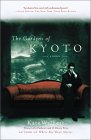
One might think that a book titled “The Gardens of Kyoto” would be set in Japan, but such is not the case with Kate Walbert’s hauntingly beautiful debut novel. Instead, this lovely book wends its way from a brick mansion in Baltimore, Maryland to a hotel on Paris’ Rive Gauche, to a military hospital on Long Island, to a women’s college in suburban Philadelphia. Along the way, it makes stops to reveal “hidden” characters to the reader, fascinating people all, but people whose lives, at least in relation to the book’s narrator’s, are ephemeral, people whose lives blur through grief or tragedy or fantasy, people who may or may not be “real” to anyone but our narrator, people who may not be real even to themselves.
“The Gardens of Kyoto” begins with a deceptively simple sentence: “I had a cousin, Randall, killed on Iwo Jima. Have I told you?” The book, however, is complicated, structurally sophisticated, and ephemeral. The gardens in the title are a reference to Kyoto’s famous Ryoan-ji Zen gardens, probably constructed in the late 15th century, and consisting of an arrangement of fifteen rocks on raked, white pebbles, situated so that only fourteen are visible at any one time, from any vantage point. (In Buddhism, fifteen designates enlightenment, and presumably, one would have to be enlightened in order to see the fifteenth rock.
Walbert has chosen to tell her story within a frame, which leaves her free to roam the past as she chooses, and create a book in which all is never exactly what it seems. The book’s narrator, Ellen, the youngest of three sisters, is a middle-aged English teacher when she utters that simple opening line, but as a young teenager, she was a shy, sensitive, dreamy girl who lived for her annual Easter visits to her cousin, Randall in Maryland.
Randall is a bookish and intellectually curious young man, a few years older than Ellen, and like Ellen, sensitive and quiet. He lives with his father, an elderly, retired judge, who spends his days closeted in his library, researching a biography of Jonathan Edwards. Randall is obsessed with memories of his deceased mother, and he enjoys showing Ellen secret rooms in his father’s house that were used to smuggle slaves to the North via the Underground Railroad. The young impressionable Ellen becomes totally infatuated with Randall, and according to her, their relationship is cemented by the fact that both of them have bright red hair. Ellen, in fact, becomes so taken with Randall that her brief association with her beloved cousin will color every relationship she has throughout the rest of her life.
We know, of course, that Randall is eventually sent to fight in WWII and that he doesn’t survive the war. (This is not a spoiler; as mentioned above, it’s revealed in the first sentence of the book.) In fact, one of the book’s early set pieces takes place in a diner in which Ellen is waiting with Randall and several other soldiers for a train that will take many of them away from their loved ones forever.
After learning of Randall’s presumed death on Iwo Jima (his body is never found), his father sends Ellen a package of Randall’s “treasures” that contains his (Randall’s) diary as well as his book, “The Gardens of Kyoto.” It is through Randall’s diary and his beloved book about Japan’s famous gardens that Ellen and the reader are able to piece together the history of Randall’s short life, and in so doing, learn about Ellen’s. Slowly, Randall takes on another role, not cousin and not friend, in Ellen’s life.
As Ellen details her relationship with Randall for her own daughter, the narrative is colored with both grief and loss. We know how much Randall meant to Ellen; we’ve already come to like him ourselves; and we know he is one of the soldiers who will not return. Ellen doesn’t deny this fact, even to herself.
As Ellen continues to relate her story, we learn how she and others like her felt about coming of age in the 1950s. Certain things, taken for granted (or not taken for granted, but acknowledged as not to be swept under the figurative rug) today, were simply not tolerated in the era immediately following WWII. One was rebellion, something one of Ellen’s sisters displays during an otherwise “normal” and “loving” Thanksgiving Day dinner. Domestic abuse was another, along with the other things one preferred not to deal with. Unwed pregnancies were taboo, as was suicide and the madness to which some of the soldiers in WWII and Korea were driven. The emotional devastation of war is a constant theme running through “The Gardens of Kyoto,” and it affects Randall’s father, Sterling, Ellen’s sister, Rita and her husband, Roger, Ellen, herself, and Lt. Henry Rock, a handsome young man who falls in love with the already “attached” Daphne, one of Ellen’s friends, and with whom Ellen, herself falls instantly in love.
One might assume that a book detailing so much tragedy and violence would become “weighty” and perhaps even melodramatic. Walberg, however, writes such restrained prose, with such a light touch that for the most part, the book remains delicate and lyrical, and because of its restraint, all the more chilling.
”The Gardens of Kyoto” is a rich, full book, with wonderfully developed, imperfect characters and beautifully developed themes. Is it perfect? No, it’s not. At times, Walbert relies too much on epistolary gimmicks to advance her plot than she does on her own considerable powers as a writer. Besides the diary and book that are given to Ellen by Sterling, Randall’s father, there’s the note from glamorous Aunt Ruby to Randall that reveals a long buried family secret; there’s the letter that Randall steals from a locked box in his father’s desk; there are the invented letters from his sweetheart the lieutenant reads out loud in the evening to try to boost the morale of his men; and then there are the bloodstained letters culled from the corpses in the trenches (only letters free from stains were sent on to the families of deceased soldiers to minimize the families’ pain). And in a book that’s remarkable for its lovely nuanced understatement, Ellen’s deliberate staining of Henry’s letters with her own blood is a bit too much. And given the fact that the title of the book is the name of a Japanese rock garden, it’s a little heavy handed that Henry’s surname just happens to be “Rock.” Fortunately, these minor jarring notes don’t harm the beauty or the power of this book. I’m going to guess that some readers will even like them, and even those who don’t will be willing to forgive.
In setting down her story, Ellen blurs the lines of fantasy and reality. Eventually, the reader has to question which events in the book really happened and which are only products of Ellen’s wishful thinking.
The writing in “The Gardens of Kyoto” is gorgeous. Except for the few instances of the overuse of epistolary devices mentioned above, this is a beautiful and beautifully understated book. The prose is poetic and lyrical; the sentences are, for the most part, long, detailed, and almost as multilayered as the book. It was a joy to read this book for the prose alone. And though the structure and themes are “heavy” and complicated, the book never feels overwrought. Instead, it has an airy, weightless quality that I very much admired.
In the end, “The Gardens of Kyoto,” while taking place primarily in the US and revolving around American characters, expresses a profoundly Japanese view that “truth,” like the gardens of Ryoan-ji, is subjective and depends solely on the viewer’s vantage point.
I thought this was an extraordinary book – extraordinary in its finely drawn characters, in the scope of its plot and theme, and in the understatement and beauty of its poetic prose.
It’s far too little known and read.
4.5/5
Constance Murray
A cacophany of characters populate this mysterious tale. I was mesmerized by when and how they appeared. Walbert skips from here to there, from now to then in relating to her daughter a stream of consciousness of imagings of what her daughter might want to know, never quite letting us see the whole picture. Fascinating read. I am still unsure that I know completely what it is about. Occasional magical use of language keeps me wanting more from this author. The book has affected me deeply. I recommend it.