Summary | Excerpt | Reading Guide | Reviews | Beyond the book | Read-Alikes | Genres & Themes | Author Bio
Critics' Opinion:
Readers' Opinion:
First Published:
Oct 2012, 336 pages
Paperback:
Sep 2013, 336 pages
 Book Reviewed by:
Karen Rigby
Buy This Book
Louise Erdrich's first book in a planned trilogy and a 2009 Pulitzer Prize finalist, The Plague of Doves, considered the ways in which past trauma filters through generations. The Round House, the second installment, continues with her exploration of a North Dakotan Ojibwe community, this time revisiting Judge Antone Bazil Coutts and his family in a lively yet reflective narration by his thirteen-year old son, Joe. Set during the late spring and early summer of 1988, the novel raises worthy questions about legal jurisdiction, retribution, and loyalty, and features a crime as a catalyst for the plot.
When Joe's mother, Geraldine, is raped during the course of her work maintaining the reservation's tribal enrollment records, uncertainty as to whether the assault occurred on state or tribal land leads to complications, and underscores historic tensions over the question of Indian sovereignty. Much of the plot involves Geraldine's reclusiveness, as well as Joe and his father's struggles to work around her reluctance to name her assailant, and their search for a culprit. When Geraldine finally gathers the courage to reveal the truth, the pace quickens with Joe's desire to avenge the crime and prevent further harm. Scenes thread between the Coutts family and their kin; an investigation riddled with problems; brief reflections narrated by an adult Joe long after the events; and escapades between Joe and his friends, who support him in the aftermath, sometimes helping him search for clues. Erdrich navigates through such dramatic material with admirable ease, telescoping between intensity and respite. She is especially talented at demonstrating the reconfigured relationships in the Coutts household as Gerladine moves from silence to resuming everyday activities, and as Joe's father acknowledges his son's increasing maturity.
However, some details fall short of the book's otherwise thoughtfully considered elements: familiar character types (an evil twin, an ex-stripper with a kind heart, a priest whose public façade belies a rougher streak); humor that stems from perhaps too-easy sources (a grandmother with a salty tongue, a grandfather with a penchant for the alcohol that is forbidden to him; a somewhat bumbling Christian youth group); the fortuitous reemergence of evidence; and, in one instance, a local woman's recollection of her background using poetic language that is not believable. Still, there is much to admire about The Round House, not the least of which is Erdrich's multilayered portrait of a conflicted young man.
Joe, who is gradually pushed to make an irrevocable decision, retains a believable mixture of vulnerability and fearlessness. When he remarks that "The sentence was to endure" – a provocative if unsettling outlook from one so young, and perhaps more so from one who resides in a town frustrated by the tendency for cases to languish without trial – the novel expands with weighty implications. Erdrich holds back little when it comes to seeking emotional resolution for her characters; her novel offers the daring justice that real life seldom affords. Readers intrigued by literature about adolescents coping amid violence will find a striking entry that inspires conversation.
Additional Information
The Round House won the National Book Award for fiction in 2012.
 This review was originally published in The BookBrowse Review in October 2012, and has been updated for the
October 2013 edition.
Click here to go to this issue.
This review was originally published in The BookBrowse Review in October 2012, and has been updated for the
October 2013 edition.
Click here to go to this issue.

If you liked The Round House, try these:
by Margaret Verble
Published 2024
A gripping, gut-punch of a novel about a Cherokee child removed from her family and sent to a Christian boarding school in the 1950s—an ambitious, eye-opening reckoning of history and small-town prejudices from Pulitzer Prize finalist Margaret Verble.
by William Kent Krueger
Published 2022
The author of the instant New York Times bestseller This Tender Land returns with a powerful prequel to his acclaimed Cork O'Connor series - a book about fathers and sons, long-simmering conflicts in a small Minnesota town, and the events that echo through youth and shape our lives forever.

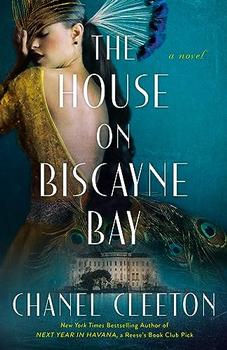
The House on Biscayne Bay
by Chanel Cleeton
As death stalks a gothic mansion in Miami, the lives of two women intertwine as the past and present collide.
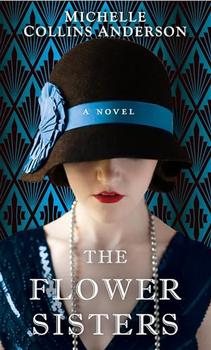
The Flower Sisters
by Michelle Collins Anderson
From the new Fannie Flagg of the Ozarks, a richly-woven story of family, forgiveness, and reinvention.
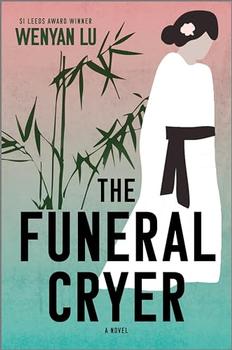
The Funeral Cryer by Wenyan Lu
Debut novelist Wenyan Lu brings us this witty yet profound story about one woman's midlife reawakening in contemporary rural China.
Your guide toexceptional books
BookBrowse seeks out and recommends the best in contemporary fiction and nonfiction—books that not only engage and entertain but also deepen our understanding of ourselves and the world around us.