Summary | Excerpt | Reading Guide | Reviews | Beyond the book | Read-Alikes | Genres & Themes | Author Bio

Critics' Opinion:
Readers' Opinion:
First Published:
May 2012, 352 pages
Paperback:
Dec 2012, 384 pages
 Book Reviewed by:
Jennifer G Wilder
Buy This Book
The Hastings are engagingly real, regular folk. They may have their flashes of vision and talent, but mainly they are occupied with securing their comforts in life - love, shelter, enough to eat. The pain and loss of the two World Wars take their toll on the family, tugging on the fates of the surviving members for generations. In Jo Baker's vision, the "undertow" of the title - the strong, slightly sinister pull of large-scale events - exerts an undeniable force on people that isn't always visible from the surface.
Water metaphors swirl through Baker's fiction like hidden currents in a seaside postcard.
From literal water-crossings (naval battles in WWI and the all-important landing at Normandy in WWII), Baker moves into the territory of watery nightmares, water breaking in labor, water sloshing in the bath. The overt traumas of war shift and mutate into hidden hurts - tempers and grief, an overly devoted parent and a detached one. In Baker's world, the individual is not a craggy, solitary romantic figure, not a hero standing apart, but instead, one wave in a whole sea of waves, moved by forces of a different order of magnitude. She suggests that one generation's defining moments cannot be understood or brought to fruition on the scale of one human life, although even tiny events can create large shifts in the current. When Billy, the second-generation William Hastings, gets his first job at age 10 in 1925, it involves a grocer's delivery bike. His love and mastery of that bike leads to the start of a racing career and beyond, into currents of disappointed ambition and expectation that agitate the family for another two generations.
Baker launches The Undertow into a harbor already crowded with famous examples of the family and war saga, putting her subtle novel into the company of bolder, more melodramatic works like Ian McEwan's Atonement, however her artistry differs from the knock-your-socks off effects of other books. If Atonement is a dark painting in bold, textured oil on canvas, The Undertow is more like watercolor on paper. Baker's colors are subtle hues in the pastel range, her effects natural and flowing. Her characters are more ordinary and, by extension, more real. The horrors of war filter into the story through only one pair of eyes, giving us a human-scale vision of such cataclysms. What the Hastings family lacks in melodrama, it gains in authenticity. Readers will find it easy to relate to the psychology of the Hastings clan and may find themselves wishing they could read the underlying currents of their own families with as discerning an eye as Baker.
Interestingly, the female characters in The Undertow seem more peripheral than the men, less richly explored and less determinate. This reads less as a lack of imagination on Baker's part than as an honest historical device. The matriarch, Amelia, and the mother, Ruth, have less agency and fewer choices than their husbands and sons. When times change, the narrative changes, and the female Billie Hastings at the end of the book has many more choices as she goes about creating an identity and building a life.
The Undertow deserves to be taken seriously. Stylistically, it's a book with a serious flavor. (I was startled when I came across the first "joke", one character's feeble attempt to get a laugh out of another, on page 291.) The shining dreams of youth never come easily to fruition, and hope and beauty reveal themselves in flashes. It takes more than one generation to fulfill an ambition, and when luxury and plenty come to the family (enough to eat at every meal, a big house to live in), the younger generation takes the gains for granted. For all its watercolor lightness, The Undertow has a very sober take on the mixed, muddled nature of life.
 This review was originally published in The BookBrowse Review in June 2012, and has been updated for the
November 2012 edition.
Click here to go to this issue.
This review was originally published in The BookBrowse Review in June 2012, and has been updated for the
November 2012 edition.
Click here to go to this issue.

If you liked The Undertow, try these:
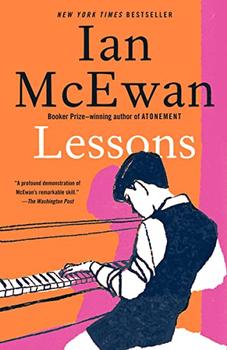
by Ian McEwan
Published 2023
From the best-selling author of Atonement and Saturday comes the epic and intimate story of one man's life across generations and historical upheavals. From the Suez Crisis to the Cuban Missile Crisis, the fall of the Berlin Wall to the current pandemic, Roland Baines sometimes rides with the tide of history, but more often struggles against it.
by Alan Hollinghurst
Published 2012
A magnificent, century-spanning saga about a love triangle that spawns a myth, and a family mystery, across generations.
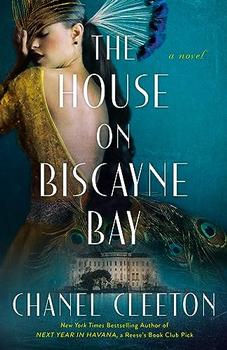
The House on Biscayne Bay
by Chanel Cleeton
As death stalks a gothic mansion in Miami, the lives of two women intertwine as the past and present collide.
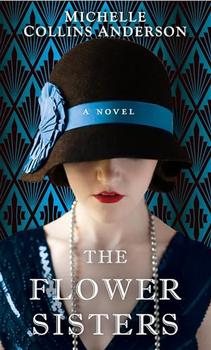
The Flower Sisters
by Michelle Collins Anderson
From the new Fannie Flagg of the Ozarks, a richly-woven story of family, forgiveness, and reinvention.
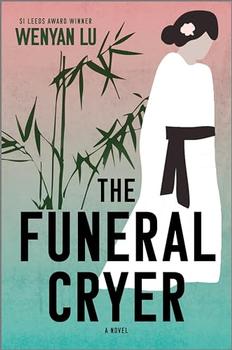
The Funeral Cryer by Wenyan Lu
Debut novelist Wenyan Lu brings us this witty yet profound story about one woman's midlife reawakening in contemporary rural China.
Your guide toexceptional books
BookBrowse seeks out and recommends the best in contemporary fiction and nonfiction—books that not only engage and entertain but also deepen our understanding of ourselves and the world around us.