Summary | Excerpt | Reviews | Beyond the book | Read-Alikes | Genres & Themes | Author Bio
Critics' Opinion:
Readers' Opinion:
First Published:
Feb 2009, 384 pages
Paperback:
Jul 2010, 384 pages
 Book Reviewed by:
Marnie Colton
Buy This Book
Don't be put off by the extensive family tree that prefaces Morten Ramsland's rollicking saga; before you know it, you'll be immersed in the stories of a Norwegian-Danish family, the Erikssons, whose tale begins with Grandpa Askild's escape from the Nazis' mercenary bloodhounds as they chase him across a German plain. As the title suggest, dogs permeate the novel, but Ramsland waits to reveal the actual significance of the legendary Doghead until mid-way through. Both up to and beyond that point, he maintains a brisk pace by dividing the family members' individual stories into punchy, titled chapters that help us keep the characters straight as well as clearly understand the relationships between them.
In seamless succession, we meet Grandpa Askild, his long-suffering wife Bjørk, and their ragtag assortment of siblings, children, and grandchildren, all of whom play simultaneously comic and tragic parts in the narrative. "New Life in the Old Privy," for instance, introduces us to Askild and Bjørk's oldest son, Niels "Jug Ears" Eriksson, a coin-collecting misfit whose large ears force him to creatively battle the neighborhood bullies. Askild and Bjørk add to their family with son Knut, a ne'er-do-well who runs off to sea, and Anne Katrine, the mentally retarded, overweight daughter whose attachment to both Knut and her nephew, narrator Asger, has sobering consequences.
Although it is Asger's return to the family fold from his work as a painter in Amsterdam that precipitates these stories, we don't get to know our narrator in depth until much later in the story, after his father Niels grows up and meets Asger's mother, Leila. Niels' transformation from jug-eared outcast to self-confident business student happens in the wonderfully eerie chapter "In the Enchanted Forests of Nordland." On a summer visit to an uncle, Niels has a mystical experience where he envisions both future wife Leila and first love Marianne, a daredevil who eventually encourages him to ride a bicycle blindfolded through the streets of their town. Having to choose between two great loves is one of the many challenges that Doghead's characters make as they struggle between living pragmatically and living passionately.
The story of Asger's maternal lineage, recounted in "Among Angels and Stepmothers-My Mother's Family," provides equal amounts of the humor, mystery, and sorrow that make Doghead such a giddy read. While Ramsland has received comparisons to John Irving and other writers lauded for using magical realism within the context of a family saga, his writing most aptly conjures an anarchic, more salacious version of Astrid Lindgren, the Swedish author best known for creating Pippi Longstocking. This is not to suggest that Doghead is in any way aimed at or appropriate for children (indeed, even some adults might find its earthy sense of humor and sexual content offensive) but rather to note the zest for life and disregard for authority that Ramsland and Lindgren, both Scandinavian authors, share.
One of Ramsland's most successful techniques throughout the novel is his use of Grandpa Askild's paintings to reinforce episodes in the family's history. An ardent admirer of Cubism, Askild creates commemorative artworks for such events as Niels' birth in a latrine, Bjørk's lust for a doctor she dated in her youth, and young Asger's penchant for telling lies to get out of trouble. Asger reveals early on that he, too, has become a painter, and that his mission in recounting the family's anecdotes is to likewise commemorate them on canvas. These paintings bolster the stories that Asger tells, lending an extra layer to the novel so that we can almost see the canvases as they show us what we have imagined in our minds. "Don't let the darkness go through you," Niels tells Asger at one point. "It's much better to go through the darkness yourself." When reading Doghead, though, it's best to surrender to its dark charms, to let this invigorating novel blow through you like the tree spirits that Niels encounters in the Enchanted Forests.
 Portrait of Ambroise Vollard Portrait of Ambroise Vollardby Pablo Picasso (1910) |
 This review was originally published in The BookBrowse Review in April 2009, and has been updated for the
July 2010 edition.
Click here to go to this issue.
This review was originally published in The BookBrowse Review in April 2009, and has been updated for the
July 2010 edition.
Click here to go to this issue.

If you liked Doghead, try these:
by Per Petterson
Published 2016
I Refuse is a powerful, unforgettable novel from an internationally acclaimed novelist at the height of his powers.
by David Vann
Published 2016
In crystalline, chiseled, yet graceful prose, Aquarium takes us into the heart of a brave young girl whose longing for love and capacity for forgiveness transforms the damaged people around her.


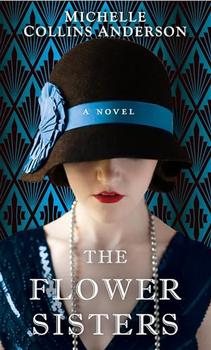
The Flower Sisters
by Michelle Collins Anderson
From the new Fannie Flagg of the Ozarks, a richly-woven story of family, forgiveness, and reinvention.
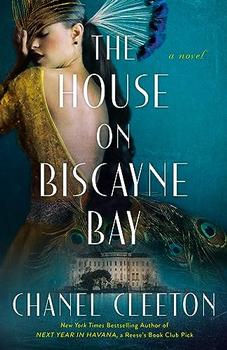
The House on Biscayne Bay
by Chanel Cleeton
As death stalks a gothic mansion in Miami, the lives of two women intertwine as the past and present collide.
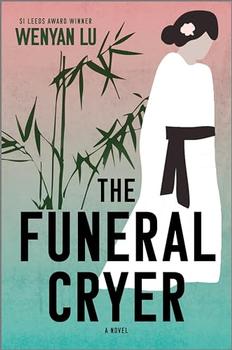
The Funeral Cryer by Wenyan Lu
Debut novelist Wenyan Lu brings us this witty yet profound story about one woman's midlife reawakening in contemporary rural China.
Your guide toexceptional books
BookBrowse seeks out and recommends the best in contemporary fiction and nonfiction—books that not only engage and entertain but also deepen our understanding of ourselves and the world around us.