Summary | Excerpt | Reviews | Beyond the book | Read-Alikes | Genres & Themes | Author Bio
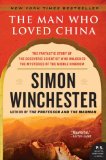
The Fantastic Story of the Eccentric Scientist Who Unlocked the Mysteries of the Middle Kingdom
Critics' Opinion:
Readers' Opinion:
First Published:
May 2008, 336 pages
Paperback:
May 2009, 416 pages
 Book Reviewed by:
Kim Kovacs
Buy This Book
Simon Winchester's latest work explores the life of Joseph
Needham. His subject is a fascinating one. Born in 1900, Needham can be
termed nothing less than an eccentric genius. He was well-known in the
British scientific community for his work in biochemistry even before he turned
his attention to China. His peers were referring to him as the Erasmus of
the twentieth century by the time he was 24. He published Chemical Embryology
when 31, which is considered a classic and which eventually led to his
election as a fellow of the Royal Society. He was also notorious for his
wide range of odd interests and for being quite the womanizer.
Winchester contends that Needham was a pivotal figure in the West's
understanding of Chinese history and its contributions to science. Before
Needham, China was thought to be "backward, cruel, rigid," as well as ignorant
and poverty-stricken. Needham's observations and subsequent documentation of
China's technological achievements forced the West to consider China in a new
light.
Most of The Man Who Loved China is straight-forward biography.
Needham's history is explored in intimate detail from his childhood to his death
in 1995, using the diaries that he penned over the decades, as well as his
correspondence with friends, lovers and associates. The sheer volume of
material that Winchester had to sift through to get to the heart of Needham's
story makes this book a remarkable work of research. It does, however,
tend to be on the dry side. This is especially true of Winchester's narration
of Needham's later life, the last 50 or so years of which was almost completely
absorbed in creating his magnum opus,
Science and
Civilisation in China.
A large part of the book is devoted to Needham's four-year term in China (1941 –
1945) as head of the Sino-British Scientific Cooperation Office. Needham
took eleven trips throughout the Chinese countryside during his tenure.
Seven were relatively short, but four were extended expeditions that took weeks
or months to complete. They were remarkably complex and dangerous, and
Winchester's account of Needham's adventures is absorbing (and in some instances
almost unbelievable). This part of the book reads like a novel, and is
quite entertaining, however, the reader may find this section too brief.
The reader may also find that he or she is craving more information about China,
the Chinese people and China's history than the author delivers.
Make no mistake: This is a book about Needham, not about China. It's a bit
frustrating that the focus of the book is so narrow. Winchester does, however,
do what he set out to: Provide a detailed account of one remarkable man's
extraordinary life. Fans of Winchester's writing and those who enjoy pure
biographic works may find much to like about his most recent book.
Interesting Links
 This review was originally published in The BookBrowse Review in May 2008, and has been updated for the
May 2009 edition.
Click here to go to this issue.
This review was originally published in The BookBrowse Review in May 2008, and has been updated for the
May 2009 edition.
Click here to go to this issue.

If you liked The Man Who Loved China, try these:
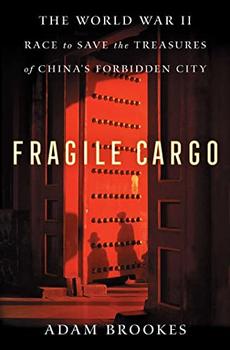
by Adam Brookes
Published 2023
The gripping true story of the bold and determined museum curators who saved the priceless treasures of China's Forbidden City in the years leading up to World War II and beyond.
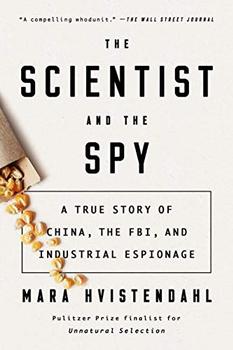
by Mara Hvistendahl
Published 2021
A riveting true story of industrial espionage in which a Chinese-born scientist is pursued by the U.S. government for trying to steal trade secrets, by a finalist for the Pulitzer Prize in nonfiction.


The House on Biscayne Bay
by Chanel Cleeton
As death stalks a gothic mansion in Miami, the lives of two women intertwine as the past and present collide.
The Flower Sisters
by Michelle Collins Anderson
From the new Fannie Flagg of the Ozarks, a richly-woven story of family, forgiveness, and reinvention.

The Funeral Cryer by Wenyan Lu
Debut novelist Wenyan Lu brings us this witty yet profound story about one woman's midlife reawakening in contemporary rural China.
Your guide toexceptional books
BookBrowse seeks out and recommends the best in contemporary fiction and nonfiction—books that not only engage and entertain but also deepen our understanding of ourselves and the world around us.