Summary | Excerpt | Reading Guide | Reviews | Beyond the book | Read-Alikes | Genres & Themes | Author Bio
Critics' Opinion:
Readers' Opinion:
First Published:
Apr 2008, 288 pages
Paperback:
Apr 2009, 288 pages
 Book Reviewed by:
Kim Kovacs
Buy This Book
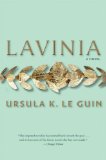
When thinking of the epics that tell the tales of Odysseus,
Achilles and Aeneas, grand scenes come to mind. Characters are larger than life,
battles are loud and bloody, and the gods are an ever-present influence over the
fortunes of their heroes. If the reader approaches Lavinia with these
expectations, they will be disappointed. It's not an epic; it's a quiet tale,
small and contained. It tells of the things that would have concerned the women
of that time – tending to the hearth and performing home rituals, caring for
their children, ministering to the wounded in battle -- common, mundane matters.
Battles happen in the background for the most part. There are no marble-columned
palaces here; what action there is takes place in a rural community.
The reader's expectations may also be distorted by a well-publicized review by
Publishers Weekly comparing Lavinia favorably to Robert Graves's I,
Claudius. Any parallel that reviewer saw between the two novels is unclear,
as the books aren't remotely equivalent. I, Claudius provides a sense of
epic history; Lavinia reads more like a diary. Anyone selecting
Lavinia based on an assumed similarity with I, Claudius will almost
certainly be dissatisfied with it.
Le Guin reinvents a decidedly masculine story from the perspective of a minor
female character who ultimately has great influence on history. Marion Zimmer
Bradley (The Mists of Avalon) and Margaret Atwood (The Penelopiad)
have both used this technique, but unlike their writings, Le Guin's novel shows
no trace of feminism. It's purely feminine from start to finish.
Some interesting plot choices bring Lavinia's story to life. The gods are a
huge part of the mythology behind Aeneas's tale. But, like Alessandro Baricco's
An Iliad (2006), Le Guin opts to leave the gods out of her story
entirely. People familiar with the epic poem may find this choice objectionable.
Omitting the gods as characters in this novel, however, makes the tale more
human and believable. It allows the reader to sympathize with the various
characters' motivations. People in Lavinia act and react based on human
emotions – jealousy, love, sorrow – instead of events taking place merely
because the gods willed it. The result is a strong, realistic tale, as opposed
to another retelling of a well-known myth.
One of the most interesting aspects of the novel is Le Guin's inclusion of
Vergil's shade as an important character, using the relationship between it and
Lavinia to explore the dynamics of creator and creation. Lavinia narrates the
tale explaining that she's "contingent" on the poet's imagination. She exists
only because he created her, and is immortal because her death is unrecorded.
While at times a bit confusing, it adds a layer of complexity that work well
within the confines of the novel.
Lavinia's strength is the depth of Le Guin's imagination. Lavinia is a
fully fleshed out character. The novel is rich with detail, and Le Guin's
scholarship is evident. It won't be for everyone, but readers who take pleasure in
learning what day-to-day life was like in a distant era will find Lavinia
worth their time.
 This review was originally published in The BookBrowse Review in May 2008, and has been updated for the
May 2009 edition.
Click here to go to this issue.
This review was originally published in The BookBrowse Review in May 2008, and has been updated for the
May 2009 edition.
Click here to go to this issue.

If you liked Lavinia, try these:
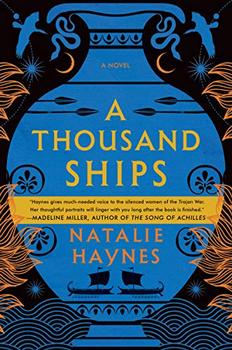
by Natalie Haynes
Published 2021
Shortlisted for the Women's Prize for Fiction, a gorgeous retelling of the Trojan War from the perspectives of the many women involved in its causes and consequences - for fans of Madeline Miller.

by Sue Monk Kidd
Published 2021
An extraordinary story set in the first century about a woman who finds her voice and her destiny, from the celebrated number one New York Times bestselling author of The Secret Life of Bees and The Invention of Wings.

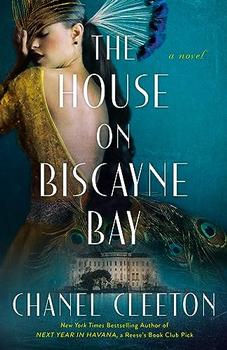
The House on Biscayne Bay
by Chanel Cleeton
As death stalks a gothic mansion in Miami, the lives of two women intertwine as the past and present collide.
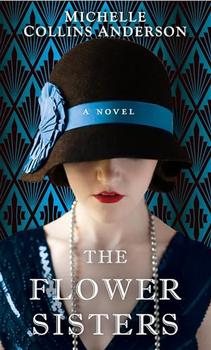
The Flower Sisters
by Michelle Collins Anderson
From the new Fannie Flagg of the Ozarks, a richly-woven story of family, forgiveness, and reinvention.
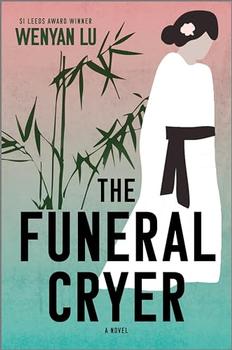
The Funeral Cryer by Wenyan Lu
Debut novelist Wenyan Lu brings us this witty yet profound story about one woman's midlife reawakening in contemporary rural China.
Your guide toexceptional books
BookBrowse seeks out and recommends the best in contemporary fiction and nonfiction—books that not only engage and entertain but also deepen our understanding of ourselves and the world around us.