Summary | Excerpt | Reading Guide | Reviews | Readalikes | Genres & Themes | Author Bio
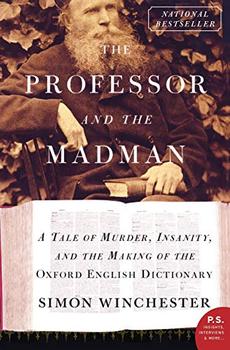
A Tale of Murder, Insanity, and the Making of the Oxford English Dictionary
Critics' Opinion:
Readers' Opinion:
First Published:
Jan 1998, 256 pages
Paperback:
Jul 2005, 288 pages

Chapter 1
The Dead of Night in Lambeth Marsh
Murder (m2.0de0), sb. Forms: a. 1 mor1or, -ur, 3-4 mor1re, 3-4, 6 murthre, 4 myr1er, 4-6 murthir, morther, 5 Sc. murthour, murthyr, 5-6 murthur, 6 mwrther, Sc. morthour, 4-9 (now dial. and Hist. or arch.) murther; b. 3-5 murdre, 4-5 moerdre, 4-6 mordre, 5 moordre, 6 murdur, mourdre, 6- murder. [OE. mor3or neut. (with pl. of masc. form mor1ras) = Goth. maur1r neut.:-OTeut. *mur1rom:-pre-Teut. *mrtro-m, f. root *mer-: mor-: mr- to die, whence L. mori' to die, mors (morti-) death, Gr. mort'j, brot'j mortal,T1. The most heinous kind of criminal homicide; also, an instance of this. In English (also Sc. and U.S.) Law, defined as the unlawful killing of a human being with malice aforethought; often more explicitly wilful murder.
In OE. the word could be applied to any homicide that was strongly reprobated (it had also the senses 'great wickedness', 'deadly injury', 'torment'). More strictly, however, it denoted secret murder, which in Germanic antiquity was alone regarded as (in the modern sense) a crime, open homicide being considered a private wrong calling for blood-revenge or compensation. Even under Edward I, Britton explains the AF. murdre only as felonious homicide of which both the perpetrator and the victim are unidentified
In Victorian London, even in a place as louche and notoriously crime-ridden as Lambeth Marsh, the sound of gunshots was a rare event indeed. The marsh was a sinister place, a jumble of slums and sin that crouched, dark and ogrelike, on the bank of the Thames just across from Westminster; few respectable Londoners would ever admit to venturing there. It was a robustly violent part of town as well - the footpad lurked in Lambeth, there had once been an outbreak of garroting, and in every crowded alley were the roughest kinds of pickpocket. Fagin, Bill Sikes, and Oliver Twist would have all seemed quite at home in Victorian Lambeth: This was Dickensian London writ large.
But it was not a place for men with guns. The armed criminal was a phenomenon little known in the Lambeth of Prime Minister Gladstone's day, and even less known in the entire metropolitan vastness of London. Guns were costly, cumbersome, difficult to use, hard to conceal. Then, as still today, the use of a firearm in the commission of a crime was thought of as somehow a very un-British act - and as something to be written about and recorded as a rarity. "Happily," proclaimed a smug editorial in Lambeth's weekly newspaper, "we in this country have no experience of the crime of 'shooting down,' so common in the United States."
So when a brief fusillade of three revolver shots rang out shortly after two o'clock on the moonlit Saturday morning of February 17, 1872, the sound was unimagined, unprecedented, and shocking. The three cracks - perhaps there were four - were loud, very loud, and they echoed through the cold and smokily damp night air. They were heard - and, considering their rarity, just by chance instantly recognized - by a keen young police constable named Henry Tarrant, then attached to the Southwark Constabulary's L Division.
The clocks had only recently struck two, his notes said later; he was performing with routine languor the duties of the graveyard shift, walking slowly beneath the viaduct arches beside Waterloo Railway Station, rattling the locks of the shops and cursing the bone-numbing chill.
When he heard the shots, Tarrant blew his whistle to alert any colleagues who (he hoped) might be on patrol nearby, and he began to run. Within seconds he had raced through the warren of mean and slippery lanes that made up what in those days was still called a village, and had emerged into the wide riverside swath of Belvedere Road, from whence he was certain the sounds had come.

Excerpted from The Professor and The Madman, Copyright (c) 1998 by Simon Winchester. Reprinted with permission from Harper Collins Publishers Inc. All rights reserved.


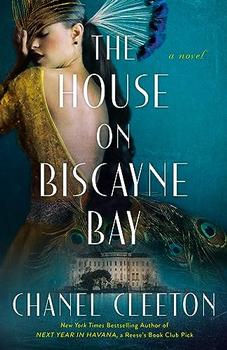
The House on Biscayne Bay
by Chanel Cleeton
As death stalks a gothic mansion in Miami, the lives of two women intertwine as the past and present collide.
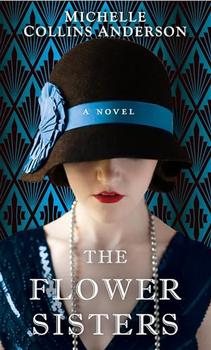
The Flower Sisters
by Michelle Collins Anderson
From the new Fannie Flagg of the Ozarks, a richly-woven story of family, forgiveness, and reinvention.
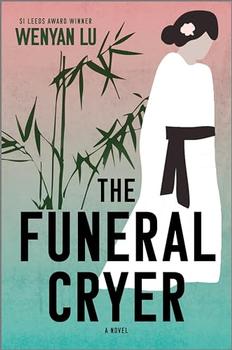
The Funeral Cryer by Wenyan Lu
Debut novelist Wenyan Lu brings us this witty yet profound story about one woman's midlife reawakening in contemporary rural China.
Your guide toexceptional books
BookBrowse seeks out and recommends the best in contemporary fiction and nonfiction—books that not only engage and entertain but also deepen our understanding of ourselves and the world around us.