
-
Your next favorite book
is waiting.
Summary | Excerpt | Reading Guide | Reviews | Beyond the Book | Readalikes | Genres & Themes | Author Bio
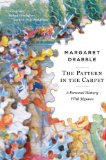
A Personal History with Jigsaws
by Margaret Drabble Book Reviewed by:
Foreword
This book is not a memoir, although parts of it may look like
a memoir. Nor is it a history of the jigsaw puzzle, although
that is what it was once meant to be. It is a hybrid. I have always
been more interested in content than in form, and I have never
been a tidy writer. My short stories would sprawl into novels, and
one of my novels spread into a trilogy. This book started off as a
small history of the jigsaw, but it has spiralled off in other directions,
and now I am not sure what it is.
I first thought of writing about jigsaws in the autumn of ????,
when my young friend Danny Hahn asked me to nominate an
icon for a website. This government-sponsored project was collecting
English icons to compose a ‘Portrait of England’, at a time
when Englishness was the subject of much discussion. At random
I chose the jigsaw, and if you click on ‘Drabble’ and ‘jigsaw’ and
‘icon’ you can find what I said. I knew little about jigsaws at this
point, but soon discovered that they were indeed an English invention
as well as a peculiarly English pastime. I then conceived the
idea of writing a longer article on the subject, perhaps even a short
book. This, I thought, would keep me busy for a while.
I had recently finished a novel, which I intended to be my last,
in which I believed myself to have achieved a state of calm and
equilibrium. I was pleased with The Sea Lady and at peace with the
world. It had been well understood by those whose judgement I
most value, and I had said what I wanted to say. I liked the idea of
writing something that would take me away from fiction into a
primary world of facts and pictures, and I envisaged a brightly
coloured illustrated book, glinting temptingly from the shelves of
gallery and museum shops amongst the greetings cards, mugs and
calendars portraying images from Van Gogh and Monet. It would
make a pleasing Christmas present, packed with gems of esoteric
information that I would gather, magpie-like, from libraries and
toy museums and conversations with strangers. I would become
a jigsaw expert. It would fill my time pleasantly, inoffensively. I
didn’t think anyone had done it before. I would write a harmless
little book that, unlike two of my later novels, would not upset or
annoy anybody.
It didn’t work out like that.
Not long after I conceived of this project, my husband Michael
Holroyd was diagnosed with an advanced form of cancer and we
entered a regime of radiotherapy and chemotherapy all too familiar
to many of our age. He endured two major operations of
hitherto unimagined horror, and our way of life changed. He dealt
with this with his usual appearance of detachment and stoicism,
but as the months went by I felt myself sinking deep into the paranoia
and depression from which I thought I had at last, with the
help of the sea lady, emerged. I was at the mercy of ill thoughts.
Some of my usual resources for outwitting them, such as taking
long solitary walks in the country, were not easily available. I
couldn’t concentrate much on reading, and television bored me,
though DVDs, rented from a film club recommended by my sister
Helen, were a help. We were more or less housebound, as we were
told to avoid public places because Michael’s immune system was
weak, and I was afraid of poisoning him, for he was restricted to an
unlikely diet consisting largely of white fish, white bread and
mashed potato. I have always been a nervous cook, unduly conscious
of dietary prohibitions and the plain dislikes of others, and the
responsibility of providing food for someone in such a delicate
state was a torment.
The jigsaw project came to my rescue. I bought myself a black
lacquer table for my study, where I could pass a painless hour or
two, assembling little pieces of cardboard into a preordained
pattern, and thus regain an illusion of control. But as I sat there, in
the large, dark, high-ceilinged London room, in the pool of lamplight,
I found my thoughts returning to the evenings I used to
spend with my aunt when I was a child. Then I started to think of
her old age, and the jigsaws we did together when she was in her
eighties. Conscious of my own ageing, I began to wonder whether
I might weave these memories into a book, as I explored the
nature of childhood.
Excerpted from The Pattern in the Carpet by Margaret Drabble. Copyright © 2009 by Margaret Drabble. Excerpted by permission of Houghton Mifflin Harcourt. All rights reserved. No part of this excerpt may be reproduced or reprinted without permission in writing from the publisher.



At times, our own light goes out, and is rekindled by a spark from another person.
Click Here to find out who said this, as well as discovering other famous literary quotes!

Can you name the title?
Test your book knowledge with our daily trivia challenge!
Your guide toexceptional books
BookBrowse seeks out and recommends the best in contemporary fiction and nonfiction—books that not only engage and entertain but also deepen our understanding of ourselves and the world around us.

