Summary | Excerpt | Reading Guide | Reviews | Beyond the Book | Readalikes | Genres & Themes | Author Bio
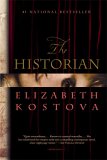
Critics' Opinion:
Readers' Opinion:
First Published:
Jun 2005, 656 pages
Paperback:
Oct 2006, 688 pages
 Book Reviewed by:
BookBrowse Review Team
Buy This Book

Chapter 1
In 1972 I was sixteen—young, my father said, to be traveling with him
on his diplomatic missions. He preferred to know that I was sitting
attentively in class at the International School of Amsterdam; in those
days his foundation was based in Amsterdam, and it had been my home for
so long that I had nearly forgotten our early life in the United States.
It seems peculiar to me now that I should have been so obedient well
into my teens, while the rest of my generation was experimenting with
drugs and protesting the imperialist war in Vietnam, but I had been
raised in a world so sheltered that it makes my adult life in academia
look positively adventurous. To begin with, I was motherless, and the
care that my father took of me had been deepened by a double sense of
responsibility, so that he protected me more completely than he might
have otherwise. My mother had died when I was a baby, before my father
founded the Center for Peace and Democracy. My father never spoke of her
and turned quietly away if I asked questions; I understood very young
that this was a topic too painful for him to discuss. Instead, he took
excellent care of me himself and provided me with a series of
governesses and housekeepers—money was not an object with him where my
upbringing was concerned, although we lived simply enough from day to
day.
The latest of these housekeepers was Mrs. Clay, who took care of our
narrow seventeenth-century town house on the Raamgracht, a canal in the
heart of the old city. Mrs. Clay let me in after school every day and
was a surrogate parent when my father traveled, which was often. She was
English, older than my mother would have been, skilled with a feather
duster and clumsy with teenagers; sometimes, looking at her
too-compassionate, long-toothed face over the dining table, I felt she
must be thinking of my mother and I hated her for it. When my father was
away, the handsome house echoed. No one could help me with my algebra,
no one admired my new coat or told me to come here and give him a hug,
or expressed shock over how tall I had grown. When my father returned
from some name on the European map that hung on the wall in our dining
room, he smelled like other times and places, spicy and tired. We took
our vacations in Paris or Rome, diligently studying the landmarks my
father thought I should see, but I longed for those other places he
disappeared to, those strange old places I had never been.
While he was gone, I went back and forth to school, dropping my books
on the polished hall table with a bang. Neither Mrs. Clay nor my father
let me go out in the evenings, except to the occasional carefully
approved movie with carefully approved friends, and—to my retrospective
astonishment—I never flouted these rules. I preferred solitude anyway;
it was the medium in which I had been raised, in which I swam
comfortably. I excelled at my studies but not in my social life. Girls
my age terrified me, especially the tough-talking, chain-smoking
sophisticates of our diplomatic circle—around them I always felt that my
dress was too long, or too short, or that I should have been wearing
something else entirely. Boys mystified me, although I dreamed vaguely
of men. In fact, I was happiest alone in my father’s library, a large,
fine room on the first floor of our house.
My father’s library had probably once been a sitting room, but he sat
down only to read, and he considered a large library more important than
a large living room. He had long since given me free run of his
collection. During his absences, I spent hours doing my homework at the
mahogany desk or browsing the shelves that lined every wall. I
understood later that my father had either half forgotten what was on
one of the top shelves or—more likely—assumed I would never be able to
reach it; late one night I took down not only a translation of the
Kama Sutra but also a much older volume and an envelope of yellowing
papers.
Copyright © 2005 by Elizabeth Kostova. All rights reserved. No part of this book maybe reproduced without written permission from the publisher Little, Brown & Co.



The Flower Sisters
by Michelle Collins Anderson
From the new Fannie Flagg of the Ozarks, a richly-woven story of family, forgiveness, and reinvention.

The House on Biscayne Bay
by Chanel Cleeton
As death stalks a gothic mansion in Miami, the lives of two women intertwine as the past and present collide.

The Funeral Cryer by Wenyan Lu
Debut novelist Wenyan Lu brings us this witty yet profound story about one woman's midlife reawakening in contemporary rural China.
Your guide toexceptional books
BookBrowse seeks out and recommends the best in contemporary fiction and nonfiction—books that not only engage and entertain but also deepen our understanding of ourselves and the world around us.