Summary | Excerpt | Reading Guide | Reviews | Readalikes | Genres & Themes | Author Bio
Critics' Opinion:
Readers' Opinion:
First Published:
Jun 1997, 356 pages
Paperback:
Aug 1998, 449 pages

His neck had eventually decided to heal. But during the weeks when he could neither turn his head nor hold up a book to read, Inman had lain every day watching the blind man. The man would arrive alone shortly after dawn, pushing his cart up the road, doing it about as well as any man who could see. He would set up his business under an oak tree across the road, lighting a fire in a ring of stones and boiling peanuts over it in an iron pot. He would sit all day on a stool with his back to the brick wall, selling peanuts and newspapers to those at the hospital whole enough to walk. Unless someone came to buy something, he rested as still as a stuffed man with his hands together in his lap.
That summer, Inman had viewed the world as if it were a picture framed by the molding around the window. Long stretches of time often passed when, for all the change in the scene, it might as well have been an old painting of a road, a wall, a tree, a cart, a blind man. Inman had sometimes counted off slow numbers in his head to see how long it would be before anything of significance altered. It was a game and he had rules for it. A bird flying by did not count. Someone walking down the road did. Major weather changes did—the sun coming out, fresh rain—but shadows of passing clouds did not. Some days he'd get up in the thousands before there was any allowable alteration in the elements of the picture. He believed the scene would never leave his mind—wall, blind man, tree, cart, road—no matter how far on he lived. He imagined himself an old man thinking about it. Those pieces together seemed to offer some meaning, though he did not know what and suspected he never would.
Inman watched the window as he ate his breakfast of boiled oats and butter, and shortly he saw the blind man come trudging up the road, his back humped against the weight of the cart he pushed, little twin clouds of dust rising from beneath the turning cartwheels. When the blind man had his fire going and his peanuts boiling, Inman put his plate on the windowsill and went outside and with the shuffling step of an old man crossed the lawn to the road.
The blind man was square and solid in shoulder and hip, and his britches were cinched at the waist with a great leather belt, wide as a razor strop. He went hatless, even in the heat, and his cropped hair was thick and grey, coarse-textured as the bristles to a hemp brush. He sat with his head tipped down and appeared to be somewhat in a muse, but he raised up as Inman approached, like he was really looking. His eyelids, though, were dead as shoe leather and were sunken into puckered cups where his eyeballs had been.
Without pausing even for salutation Inman said, Who put out your pair of eyes?
The blind man had a friendly smile on his face and he said, Nobody. I never had any.
That took Inman aback, for his imagination had worked in the belief that they had been plucked out in some desperate and bloody dispute, some brute fraction. Every vile deed he had witnessed lately had been at the hand of a human agent, so he had about forgot that there was a whole other order of misfortune.
—Why did you never have any? Inman said.
—Just happened that way.
—Well, Inman said. You're mighty calm. Especially for a man that most would say has taken the little end of the horn all his life.
The blind man said, It might have been worse had I ever been given a glimpse of the world and then lost it.
—Maybe, Inman said. Though what would you pay right now to have your eyeballs back for ten minutes? Plenty, I bet.
The man studied on the question. He worked his tongue around the corner of his mouth. He said, I'd not give an Indian-head cent. I fear it might turn me hateful.
—It's done it to me, Inman said. There's plenty I wish I'd never seen.
Excerpted from Cold Mountain. Copyright © 1997 by Charles Frazier. All rights reserved. No part of this excerpt may be reproduced or reprinted without permission in writing from the publisher.




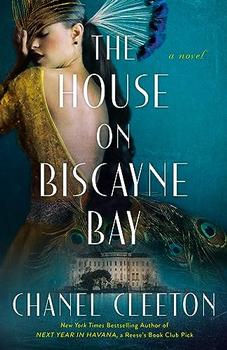
The House on Biscayne Bay
by Chanel Cleeton
As death stalks a gothic mansion in Miami, the lives of two women intertwine as the past and present collide.

The Flower Sisters
by Michelle Collins Anderson
From the new Fannie Flagg of the Ozarks, a richly-woven story of family, forgiveness, and reinvention.

The Funeral Cryer by Wenyan Lu
Debut novelist Wenyan Lu brings us this witty yet profound story about one woman's midlife reawakening in contemporary rural China.
Your guide toexceptional books
BookBrowse seeks out and recommends the best in contemporary fiction and nonfiction—books that not only engage and entertain but also deepen our understanding of ourselves and the world around us.