Summary | Excerpt | Reviews | Beyond the Book | Readalikes | Genres & Themes | Author Bio
Critics' Opinion:
Readers' Opinion:
First Published:
May 2012, 272 pages
Paperback:
Feb 2013, 272 pages
 Book Reviewed by:
Jo Perry
Buy This Book

Inventions of all kinds, ingenious mechanical solutions to practical problems, were popping up seemingly every day. In 1884 the synthetic cloth industry began when a French chemist, Louis-Marie-Hilaire Bernigaud, comte de Chardonnet, patented a process to make artificial silk, which decades later became known as rayon. In 1884, Lewis Waterman, a Brooklyn insurance agent, frustrated with the inefficient pens of the day, invented the capillary feeding fountain pen, the first practical alternative to a pen dipped in an inkwell. James Ritty, an Ohio barkeeper, became the first manufacturer of his new invention, cash registers, the same year. In 1885, Hiram Maxim, an American inventor, demonstrated the first machine gun to the British army. In 1886, in addition to Daimler's automobile, Coca-Cola and the first washing machine were invented. Barbed wire, which divided up the open range and changed the character of the American West, and wearable contact lenses were both patented the following year. In 1888, Marvin Stone, an Ohio-born inventor, came out with the first paper drinking straw. In 1889, Joshua Pusey, a cigar-smoking Pennsylvania attorney, invented the matchbook. In 1891, when Birdseye was four years old, Jesse Reno, the son of the Civil War officer after whom the Nevada city was named, invented the escalator. Typical of his generation of inventors, he was part inventor and part entrepreneur. Reno created a sensation in Birdseye's native Brooklyn when he showcased the escalator for two weeks as a ride at the Coney Island amusement park. It was then featured on the Manhattan side of the Brooklyn Bridge, still in itself a sensation since its 1883 opening as the longest suspension bridge in the world, for the first time connecting Brooklyn and Manhattan.
New York City was being reshaped. The Statue of Liberty was installed in the harbor and dedicated the year of Birdseye's birth. Eight years later the city began digging tunnels for subways.
These were exciting times in New York and in America. In the nineteenth century there was a notable difference between the culture of American inventors and that of Europeans. European inventors reveled in the theoretical, sometimes even shunning patents lest they give the impression of harboring lowbrow commercial interests, whereas Americans thought inventions were pointless without practical and commercial applications. There were of course exceptions. Daimler, who was an engineer and not a scientist, did start producing automobiles, and Chardonnet, who was a scientist and a colleague of Louis Pasteur's, did start a synthetic textile mill. But many Europeans were content in the world of the theoretical, whereas Americans had a Puritan belief that anyone who invented something had a moral obligation to put it to useful service. The press would criticize inventors who failed to do this.
Dr. John Gorrie ran a naval hospital in Apalachicola, Florida, that treated victims of yellow fever and malaria. He invented a primitive form of air-conditioning in the 1840s that produced artificial ice by expanding compressed air. Modern air-conditioning was not developed until sixty years later at the beginning of the twentieth century. Gorrie cooled his hospital and his home with the device, but he was so attacked by religious conservatives for interfering with God's design that he published the ideas behind his invention under a pseudonym. Not realizing who the writer was, the editor of the publication, the Commercial Advertiser, criticized the author for having failed to put his ideas into service.
Robert Fulton, the father of the steamboat, was a prototypical American inventor. The steamboat had had a long development, which had nothing to do with Fulton. It was a European idea, as was the steam engine. A Frenchman, Denis Papin, built a steam piston in 1690 and a steamboat in 1704 but failed to attract any interest in the boat. The Scottish engineer James Watt built a greatly improved steam engine at the time of the American Revolution. But although the French, the Germans, the British, and then the Americans built various steam-powered vessels, there was no commercially successful steamboat until Robert Fulton. The great inventor Robert Fulton did not exactly "invent" anything. But he put the right kind of engine in the right kind of vessel and established a commercial run on the right route. Earlier steamboat lines were on less profitable routes or ones with good alternative land transportation. Fulton established his line on the East River in Manhattan running up the Hudson to Albany. It was the first commercially successful steamboat line in part because there was no good land route for hauling freight between these two commercially important centers. Fulton is often erroneously remembered today as the inventor of steamboats - in much the same way that Birdseye is erroneously remembered as the inventor of fast freezing - but the real reason we still know the name Fulton is that he launched an industry by showing that money could be made from steamboats and that it was a commercially important idea. In America an important idea is an idea that makes money.
Excerpted from Birdseye by Mark Kurlansky. Copyright © 2012 by Mark Kurlansky. Excerpted by permission of Doubleday, a division of Random House, Inc. All rights reserved. No part of this excerpt may be reproduced or reprinted without permission in writing from the publisher


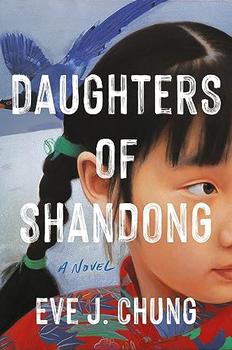
Daughters of Shandong
by Eve J. Chung
Eve J. Chung's debut novel recounts a family's flight to Taiwan during China's Communist revolution.

The Flower Sisters
by Michelle Collins Anderson
From the new Fannie Flagg of the Ozarks, a richly-woven story of family, forgiveness, and reinvention.
Life is the garment we continually alter, but which never seems to fit.
Click Here to find out who said this, as well as discovering other famous literary quotes!
Your guide toexceptional books
BookBrowse seeks out and recommends the best in contemporary fiction and nonfiction—books that not only engage and entertain but also deepen our understanding of ourselves and the world around us.