Summary | Excerpt | Reviews | Beyond the Book | Readalikes | Genres & Themes | Author Bio
Critics' Opinion:
Readers' Opinion:
First Published:
Sep 2011, 356 pages
Paperback:
Sep 2012, 384 pages
 Book Reviewed by:
Poornima Apte
Buy This Book

Yet when we choose Calibri over Century, or the designer
of an advertisement picks Centaur rather than
Franklin Gothic (which are both American and both created
at the start of the twentieth century but are very different
from each other), what lies behind our choice and
what impression do we hope to create? When we choose
a typeface, what are we really saying? Who makes these
fonts and how do they work? And just why do we need
so many? What are we to do with Alligators, Accolade,
Amigo, Alpha Charlie, Acid Queen, Arbuckle, Art Gallery,
Ashley Crawford, Arnold Böcklin, Andreena, Amorpheus,
Angry and Anytime Now? Or Banjoman, Bannikova,
Baylac, Binner, Bingo, Blacklight, Blippo or Bubble Bath?
(And how lovely does Bubble Bath sound, with its thin
floating circles ready to pop and dampen the page?) There
are more than 100,000 fonts in the world. But why can't
we keep to a half-dozen or so - perhaps familiar faces
like Times New Roman, Helvetica, Calibri, Gill Sans, Frutiger
or Palatino? Or the classic, Garamond, named after the
type designer Claude Garamond, active in Paris in the first
half of the sixteenth century, whose highly legible roman
type blew away the heavy fustiness of his German predecessors
and later, adapted by William Caslon in England,
would provide the letters for the American Declaration of
Independence.
Typefaces are now 560 years old. So when a Brit called
Matthew Carter constructed Verdana and Georgia for the
digital age in the 1990s, what could he possibly have been
doing to an A and a B that had never been done before?
And how did an American friend of his make the typeface
Gotham, which eased Barack Obama into the presidency?
And what exactly makes a font presidential or American,
or British, French, German, Swiss, or Jewish? These are
arcane mysteries, and it is the job of this book to get to
the heart of them.
But we should first take a walk around Brooklyn and
Manhattan, and look about us. We live at a time where
we have never had such an engaging choice of fonts from
which to design an alluring storefront or sell a product.
Despite global branding, the trend is towards originality.
Helvetica dominates, selling us cars, clothing and mass
transit, but our eyes are still dazzled by diversity as we
walk along. One of the silent threats of multinational
consumerism - every high street the same, the trend that
ushers us into a buzzing chain restaurant with the same
font on its awning as one that ushers us into a funeral
home - has not yet overtaken New York City. The sign
writer's art has all but been replaced by fascias delivered
by trucks, and not all are beautiful (often, as with the big
pharmacies, the script is fine but it is the illumination
that scars us). But the variety remains: the carved Roman
grandeur on monumental stone, the flourish of stylish
penmanship on the trattoria, the cracking English gothic
of the dive bar. We walk around, and the history of type
beckons from every angle, here a whisper, there an alarm,
until one is so smothered in letters that a headache surely
looms. Letters do not have zoning laws, and type has only
commerce and taste to guide it. We should be grateful.
And where there is homogeneity, that may be welcome
too. Nothing says Woody Allen's New York like the
condensed Windsor typeface he employs for his screen
credits, particularly when used white on black (and so
what if it was originally manufactured at a foundry in
Sheffield, England). The solid Gotham typeface so favoured
by Obama's campaign team is stealthily threatening to
become the principal US homegrown rival to Helvetica,
such is its stout reliability (with no evidence of a midterm
slide). But in Brooklyn's Cobble Hill neighbourhood,
the ability of display type to confer emotion - surely its
strongest suit - is nowhere more evident than along the
eclectic mix of shops and restaurants on Smith and Court
streets, where, beyond the Starbucks font (more on that
later), we have a true blend of entrepreneurism and
confusion - every conceivable letter in just a few blocks.
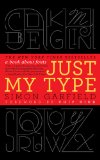
Excerpted from Just My Type by Simon Garfield. Copyright (c) 2011 by Simon Garfield. Reprinted by arrangement with Gotham Books, a member of Penguin Group (USA), Inc.
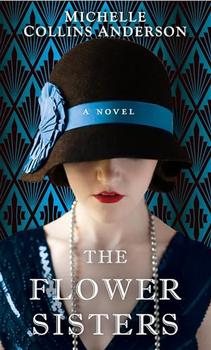
The Flower Sisters
by Michelle Collins Anderson
From the new Fannie Flagg of the Ozarks, a richly-woven story of family, forgiveness, and reinvention.
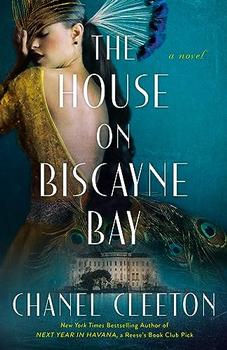
The House on Biscayne Bay
by Chanel Cleeton
As death stalks a gothic mansion in Miami, the lives of two women intertwine as the past and present collide.

The Funeral Cryer by Wenyan Lu
Debut novelist Wenyan Lu brings us this witty yet profound story about one woman's midlife reawakening in contemporary rural China.
Your guide toexceptional books
BookBrowse seeks out and recommends the best in contemporary fiction and nonfiction—books that not only engage and entertain but also deepen our understanding of ourselves and the world around us.