Summary | Excerpt | Reading Guide | Discuss | Reviews | Beyond the Book | Readalikes | Genres & Themes | Author Bio
Critics' Opinion:
Readers' Opinion:
First Published:
Jul 2011, 320 pages
Paperback:
May 2012, 320 pages
 Book Reviewed by:
BookBrowse First Impression Reviewers
Buy This Book

Gently.
I'm not a rabid dog.
No, you're not. Indeed you aren't. But I can't stand by and do nothing. You
know I can't, Dr. White.
I brush my icy hair out of my face and keep going, but he idles his truck
alongside. He takes out his phone. If he punches seven numbers, it's
okay. If he punches three numbers, it's bad. I know that. I stop and wait.
Onetwothree. He stops. He brings the phone to his ear.
Wait, I say. No. I run around the front of the truck. I yank the door open
and clamber in beside him. Anything to stop the phone. Stop what will
happen. Bad things will happen. Put the phone down, I say. Put the
phone down. He hesitates. I hear a voice on the other end. He looks at
the phone and flips it shut. He gives me what is supposed to be a reassuring
smile. I am not fooled.
Okay! Let's get you home before you catch your death.
He waits at the curb until I reach the front door. It is wide open, and
wind and sleet are gusting through into the hallway. The thick damask
curtains on the front windows are drenched. I step on a sodden
carpet - a dark Tabriz runner we bought in Baghdad thirty years ago,
now considered museum-quality. James had it appraised last year, will
be furious. Magdalena's shoes are gone. A lukewarm cup of tea sits on
the table, half drunk.
I am suddenly very tired. I sit down in front of the tea, push it away,
but not before getting a waft of chamomile. So many old wives' tales
about chamomile have proven true. A cure for digestive problems, fever,
menstrual cramps, stomachaches, skin infections, and anxiety. And, of
course, insomnia.
A fix for whatever ails you! Magdalena had exclaimed when I told her
that. Not really, I said. Not everything.
We are listening to St. Matthew's Passion. It is 1988. Solti is at the podium
in Orchestra Hall, and the audience is held captive until the cadences
resolve. The diminished seventh chords and the disturbing modulations.
The suspense barely tolerable. I can feel the warmth of James's fingers
intertwined with mine, his breath warm against my cheek.
Then suddenly it is a cold winter day. I am alone in my kitchen. I fold
my arms on the table and lean my forehead against them. Did I take my
pills this morning? How many did I take? How many would it take?
I am almost to the point. I have almost reached that point. And hear an
echo of Bach: Ich bin's, ich sollte büßen. It is I who should suffer and be
bound for hell.
But not yet. No. Not quite yet. I sit and wait.
A man has walked into my house without knocking. He says he is my
son. Magdalena backs him up, so I acquiesce. But I don't like this man's
face. I am not ruling out the possibility that they are telling me the
truth - but I will play it safe. Not commit.
What I do see: a stranger, a very beautiful stranger. Dark. Dark hair, dark
eyes, a dark aura, if I may be so fanciful. He tells me he is unmarried,
twenty-nine years old, a lawyer. Like your father! I say, cunningly. His
darkness comes alive, he glowers - there is no other word for it.
Not at all, he says. Not in the slightest. I cannot hope to fill those mighty
McLennan shoes. Give counsel to the mighty and count the golden coin of
the realm. And he gives a mock half bow to the portrait of the lean,
dark man that hangs in the living room. Why didn't you give me your
name, Mom? The shoes would have been just as large but of a different shape
altogether.
Enough! I say sharply - for I remember my son now. He is seven years
old. He has just run into the room, his hands clutching at his thighs, a
glorious look on his face. Water spattering everywhere. I discover his
front pockets are full of his sister's goldfish. They are still wiggling. He
is astonished at my anger.
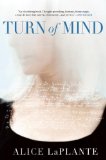
Excerpted from Turn of Mind by Alice LaPlante. Copyright © 2011 by Alice LaPlante. Excerpted by permission of Atlantic Monthly Press. All rights reserved. No part of this excerpt may be reproduced or reprinted without permission in writing from the publisher.






The Flower Sisters
by Michelle Collins Anderson
From the new Fannie Flagg of the Ozarks, a richly-woven story of family, forgiveness, and reinvention.
The House on Biscayne Bay
by Chanel Cleeton
As death stalks a gothic mansion in Miami, the lives of two women intertwine as the past and present collide.

The Funeral Cryer by Wenyan Lu
Debut novelist Wenyan Lu brings us this witty yet profound story about one woman's midlife reawakening in contemporary rural China.
Your guide toexceptional books
BookBrowse seeks out and recommends the best in contemporary fiction and nonfiction—books that not only engage and entertain but also deepen our understanding of ourselves and the world around us.