
-
Your next favorite book
is waiting.
Summary | Excerpt | Reviews | Beyond the Book | Readalikes | Genres & Themes | Author Bio
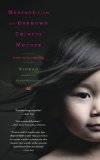
Stories of Loss and Love
by Xue Xinran Book Reviewed by:
Preface
A Book Written for Adopted Daughters
It took a long time for me to summon the courage to relive the personal memories and experiences of my life as a reporter in China. In The Good Women of China, my first book, published in 2002, I wrote about those brave women who had told me their stories when I worked as a radio presenter. But there were some stories I could not yet bring myself to tell. They were too painful and too close to home. I am not a particularly courageous woman; I am just a woman who longs to feel a mother's embrace and that lifelong bond of love and dependence between mother and daughter. Little by little, that longing seeped through me until it began to dominate my thoughts night and day. Reawakening the memories threatened to reopen old wounds: I would miss my own mother more than ever and would feel even more bitterness that I would never have that kind of love.
At a talk I gave at the International Book Fair in Melbourne, Australia, in 2002, someone asked me, "Xinran, what is your dream?"
I didn't even have to think about the answer. I said, "To be a daughter."
There was uproar from the audience of several hundred people. "But you were born, so you must be someone's daughter!"
"In a biological sense, yes," I responded. "But I was born into a traditional culture, I experienced brutal political upheavals as a child, and my mother and I lived in times that did not consider bonds of family affection important. The result is there's not a single occasion I can remember when my mother said she loved me, or even hugged me."
After the meeting, I found a line of silver-haired women waiting for me by the car. They were there, they said, to give me a mother's embrace. One by one they came up to me, put their arms around me, and kissed my forehead. …
I could not help myself, tears poured down my face. In my heart, I cried, "I'm grateful for their genuine affection, but how I wish my own mother could have held me like this. Every day, since I was a little girl, I have missed my mother's love so much!"
In 1958, when I was just thirty days old, I was sent away to live with my grandmother. Like millions of Chinese women, my mother believed that anyone who put their family and children before their country and the Party was at best selfish and at worst criminal.
My earliest memory of my mother is of her walking toward me on a very quiet platform in the Nanjing railway station. She was a cloud of purple - her silk scarf draped over her shoulders waved in the breeze. She smiled sweetly and opened her arms to me like a dancer on the stage.
I was five years old and had never called anyone mother before. That day, at my grandmother's urging, I called my mother "aunty" - what children call any female stranger in China - and as I whispered the word this beautiful woman stiffened and a solitary tear fell down her face.
In 1966, only two weeks after I had begun living with my mother, the Cultural Revolution began. My parents were both sent to a political jail within a month of each other. My younger brother, who was only two and a half, and I became orphans. Ten years later we were all back as one family but no one has ever spoken about how we survived the struggles during that turbulent time.
In 1989, after twelve years of studying and working at a military university, I became a radio presenter. The first time I went to a small village in the countryside, I was devastated by the poverty-stricken lives I witnessed. It was only a forty-minute drive from the city I worked in, but they were so poor that in the summer most children did not even wear trousers, they only had a pair to provide warmth in the winter. I was so shocked to hear from the people I interviewed, face-to-face, the real numbers on how many lives had been lost in the past one hundred years within China. I was so ashamed by my lack of knowledge of traditional Chinese culture and the real history of China.
Excerpted from Message from an Unknown Chinese Mother by Xue Xinran. Copyright © 2011 by Xue Xinran. Excerpted by permission of Scribner. All rights reserved. No part of this excerpt may be reproduced or reprinted without permission in writing from the publisher.



Finishing second in the Olympics gets you silver. Finishing second in politics gets you oblivion.
Click Here to find out who said this, as well as discovering other famous literary quotes!

Can you name the title?
Test your book knowledge with our daily trivia challenge!
Your guide toexceptional books
BookBrowse seeks out and recommends the best in contemporary fiction and nonfiction—books that not only engage and entertain but also deepen our understanding of ourselves and the world around us.

