Summary | Excerpt | Reviews | Beyond the Book | Readalikes | Genres & Themes | Author Bio
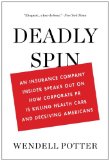
An Insurance Company Insider Speaks Out on How Corporate PR Is Killing Health Care and Deceiving Americans
Critics' Opinion:
Readers' Opinion:
First Published:
Nov 2010, 288 pages
Paperback:
Sep 2011, 304 pages
 Book Reviewed by:
Stacey Brownlie
Buy This Book

AHIP - and every PR person in the health insurance industry - had been trying to get information about Moore's intentions since July
2004, when he had mentioned to a reporter that his next film would
be about the U.S. health care system. Most of us had feared it was just
a matter of time before he and his film crew began showing up at our
corporate headquarters demanding to talk to our CEOs, or worse,
waiting at their homes.
In anticipation of those tactics - which he had used in most of his
other films - I met with corporate security to develop a plan to make
sure that managers at every CIGNA office knew what to do in the
event that Moore showed up at their doorstep. I also scheduled mediatraining
sessions with all of the company's top executives, equipping
them with pithy things to say and pointers on how not to look like a
deer caught in the headlights if they got ambushed leaving their home
or getting out of their limo.
Above all, we in the industry strove to keep our activities and
plans close to the vest. Fearful that an internal memo or e-mail might
be leaked to the media or wind up in Moore's hands, AHIP advised
all of its member companies not to put Moore's name or anything
remotely related to his project in writing. AHIP didn't want insurance
companies to appear to be on the defensive. In December 2004, it was
disclosed that at least six drug companies had been warning their employees,
in internal e-mails, to keep an eye out for Moore. When one
of the e-mails was leaked, Moore went straight to the media with it,
knowing that the drug companies had unwittingly given him exactly
what he needed to generate early interest in his movie.
Determined to avoid the same scenario, insurers were giving their
employees the same instructions, but not in writing. AHIP was so
cautious that its staff was instructed to use the code term "Hollywood"
in communications to company executives about Moore and
his movie.
In one of her few written communications about Moore, AHIP
president Karen Ignagni sent a note to her board of directors in late
2004 about "health care and Hollywood." Ignagni had charged AHIP's
communications staff and PR agencies with the task of searching for
every mention of the movie they could find, and they had come across
a brief story in the blog Cinematical, which read in part, "Though he's
clearly passionate about exposing the problems with American health
care, Moore still seems to be struggling a bit with the film- after all,
he says, 'everyone knows that health care is a mess in this country.' His
goal, then, seems to be less education than motivation: Moore hopes
that [Sicko] 'pushes health care to the top of the public agenda' and,
presumably, forces politicians to get involved."
It Never Hurts to Plan Ahead
In late May 2007, ten days after Sicko's Cannes premiere, the top public
relations executives of the country's biggest health insurers fl ew to Philadelphia
to be briefed on AHIP's multipronged strategy to discredit both
Moore and his movie.
The meeting was being held in Philadelphia instead of Washington
because the chair of AHIP's Strategic Communications
Committee was CIGNA's CEO, H. Edward Hanway, and he wanted to
host the meeting close to home. It was the second time in two weeks
that the group had met there. Three days before Sicko's premiere, they
had convened to hear Bill McInturff, partner and cofound er of Public
Opinion Strategies, a national Republican and corporate research firm,
disclose the results of four focus groups and three national polls his
firm had conducted for AHIP in recent months to determine Americans'
attitudes on the need for health care reform.
McInturff, who was later to be lead pollster for the 2008 McCain-
Palin campaign, has had a long association with the health insurance
industry, going back to the early 1990s. He earned his chops when he
teamed up with the po liti cal con sul tants and creative team at ad
agency Goddard Claussen to create the "Harry and Louise" commercials,
which helped scuttle the Clinton health care reform plan in
1994. He has played a key role ever since in helping the industry defeat
any federal legislation that has posed a serious threat to insurers'
profitability.
Excerpted from Deadly Spin by Wendell Potter. Copyright © 2010 by Wendell Potter. Excerpted by permission of Bloomsbury. All rights reserved. No part of this excerpt may be reproduced or reprinted without permission in writing from the publisher.


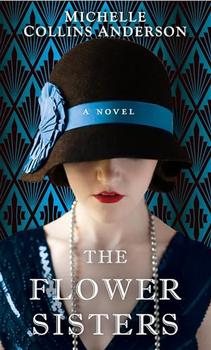
The Flower Sisters
by Michelle Collins Anderson
From the new Fannie Flagg of the Ozarks, a richly-woven story of family, forgiveness, and reinvention.
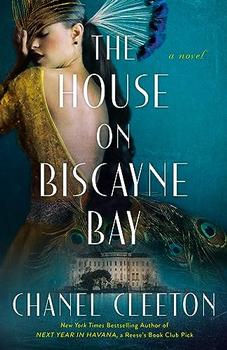
The House on Biscayne Bay
by Chanel Cleeton
As death stalks a gothic mansion in Miami, the lives of two women intertwine as the past and present collide.

The Funeral Cryer by Wenyan Lu
Debut novelist Wenyan Lu brings us this witty yet profound story about one woman's midlife reawakening in contemporary rural China.
Your guide toexceptional books
BookBrowse seeks out and recommends the best in contemporary fiction and nonfiction—books that not only engage and entertain but also deepen our understanding of ourselves and the world around us.