Summary | Excerpt | Reading Guide | Reviews | Beyond the Book | Readalikes | Genres & Themes | Author Bio
Critics' Opinion:
Readers' Opinion:
First Published:
May 2010, 278 pages
Paperback:
Jun 2011, 288 pages
 Book Reviewed by:
Kim Kovacs
Buy This Book

Occasionally, Brian passed the HIV unit, where the chimps were in crush cages. Each cage was just big enough for the chimp to stand up and turn around. The cages had a crank that moved one wall of the cage forward, jamming the chimps against the wall so a researcher could give them injections. The chimps spent their entire lives in these crush cages. They could see each other, but they weren't allowed to touch. The only contact they had was with humans who were covered head to toe in white fabric, goggles, a face mask, Kevlar gloves, and gum boots.
Brian didn't last much longer than a month at the medical station. He transferred to the field station and started working with a famous psychologist called Mike Tomasello. Mike was interested in intelligence, and Brian's new job was to figure out how chimpanzees think.
The chimps at the field station were better off than the ones at the medical station. They lived in social groups in enclosures that were no worse than those at most zoos. Brian convinced himself that this was as good as things were going to get. He loved the chimps, and he knew they looked forward to his experiments to break the monotony of the day.
Then he started working with a group of chimps called FS3. The other chimps at the field station were allowed to spend part of each day outside, but FS3 didn't have an outdoor area. Their "enclosure" was a concrete cage with some Plexiglas benches. There was one toy, a metal pole, and a swing made for a three-year-old chimp called Abby.
As Brian got to know FS3, he became bothered by their lack of freedom—not in terms of space but in terms of choice. Brian knew of a progressive research institute in Japan run by Professor Tetsuro Matsuzawa.
Matsuzawa's chimps didn't have much space either, but the chimps had a lot of choices. Their enclosure was high and full of climbing structures, so the chimps could choose to go up or down. There were hiding places so the chimps could choose whom they wanted to hang out with. They could choose from a wide variety of food. Mothers could choose to be tested with their infants. Infants could participate in the research.
In the novel 1984 by George Orwell, the worst part of the dystopia wasn't Big Brother always watching or the drab postwar world or the dreary work. It was the absence of choice. The people had all their decisions made for them. They were told when to eat, how to behave, whom to love. And it was this dehumanizing lack of choice that made life so unbearable.
At Yerkes, the chimps had only one choice—inside or outside—and FS3 didn't have even that. They couldn't avoid their cage mates or hide from researchers. In the wild, chimps eat hundreds of different foods. By U.S. law, the only food you are required to feed a captive chimpanzee is "monkey chow," which has all the required nutritional components but tastes like cardboard. In a show of benevolence, Yerkes added half an orange to the diet.
Then there was the commercial side. Every part of the chimps could be bought and sold, their minds, their organs, their blood. It was $30 a day per chimp for the kind of behavior work that Brian did, and much more for any kind of medical testing.
After five years, Brian had had enough. His undergraduate degree was finished, and his supervisor, Mike Tomasello, was moving to Leipzig to become the director of psychology at the Max Planck Institute. The Germans were building Mike a $14 million facility at the Leipzig Zoo, inspired by Matsuzawa's institute in Japan. There would be spacious indoor and outdoor enclosures with grass and trees and climbing structures. When the Max Planck Institute told Mike he could get twenty-five chimps from anywhere he wanted, Brian started hatching a plot to bust out FS3.
Yerkes was already in trouble because it had too many chimps. In 1997, the National Institutes of Health banned the breeding of chimpanzees and demanded that Yerkes reduce its population. So when Mike asked for twenty-five chimps, including FS3, the director of Yerkes was thrilled. He hastily agreed and even promised to see the chimps off at the airport. All the plans were in place. Then Dr. Death stepped in.
Excerpted from Bonobo Handshakeby Vanessa Woods. Copyright © 2010 by Vanessa Woods. Reprinted by arrangement with Gotham Books, a member of Penguin Group (USA), Inc.

The Flower Sisters
by Michelle Collins Anderson
From the new Fannie Flagg of the Ozarks, a richly-woven story of family, forgiveness, and reinvention.
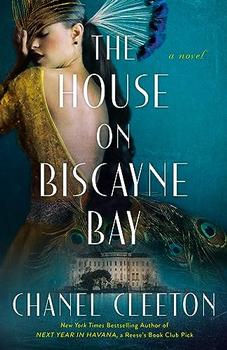
The House on Biscayne Bay
by Chanel Cleeton
As death stalks a gothic mansion in Miami, the lives of two women intertwine as the past and present collide.

The Funeral Cryer by Wenyan Lu
Debut novelist Wenyan Lu brings us this witty yet profound story about one woman's midlife reawakening in contemporary rural China.
Your guide toexceptional books
BookBrowse seeks out and recommends the best in contemporary fiction and nonfiction—books that not only engage and entertain but also deepen our understanding of ourselves and the world around us.