Summary | Excerpt | Reviews | Beyond the Book | Readalikes | Genres & Themes | Author Bio
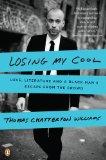
How a Father's Love and 15,000 Books Beat Hip-hop Culture
Critics' Opinion:
Readers' Opinion:
First Published:
Apr 2010, 240 pages
Paperback:
Apr 2011, 240 pages
 Book Reviewed by:
BookBrowse First Impression Reviewers
Buy This Book

When my parents first began searching in the area, real estate
brokers only wanted to show them homes in Plainfield or on the
redlined black sides of town. They said families like ours tended
to prefer things this way, but my father, whom we call Pappy in a
nod to his Southern roots, had led a childhood that was boxed in
by formal segregation in Texas, and no longer could stand to be
told where to live. Out of principle he said to the brokers thank
you but no thank you, and insisted on seeing all listings. Reluctantly,
they caved and the four of us settled into a three-bedroom
ranch on Fanwood’s decidedly white side.
It was a neighborhood of well-kept homes with yards that were
flaired-up with inflatable IT’S A BOY! lawn signs, lighted holiday displays,
and the occasional life-size Virgin Mary shrine. There were
two main downtown areas in either direction of our house, with
more pizzerias than banks or dry cleaners and, to Pappy’s lament,
without a single bookstore between them. Our neighbors were
what my parents called “ethnic whites,” and they tended to grow
up, buy homes, have children, and die within a twenty-mile radius
of where they had been born—a fact that always seemed to strike
Mom and Pappy as bizarre. As a family, we did not fit in with these
people, who often didn’t know what to make of us. Once when I
was a very young boy, I was at the grocery store with my mother,
misbehaving as little children do, when an older white woman
walked by and said, “Ugh, it must be so tough adopting those kids
from the ghetto.”
Despite my mother’s being white, we were a black and not an
interracial family. Both of my parents stressed this distinction and
the result was that, growing up, race was not so complicated an
issue in our household. My brother and I were black, period. My
parents adhered to a strict and unified philosophy of race, the contents
of which boil down to the following: There is no such thing
as being half-white, for black, they explained, is less a biological
category than a social one. It is a condition of the mind that is
loosely linked to certain physical features, but more than anything
it is a culture, a challenge, and a discipline. We were taught from
the moment we could understand spoken words that we would be
treated by whites as though we were black whether we liked it or
not, and so we needed to know how to move in the world as black
men. And that was that.
Questions of the soul were less clear. My mother is Protestant,
the daughter of an evangelical Baptist minister. My father is what
he calls a Geopolitical-Existentialist-Secularist-Humanist-Realist,
which really is just his way of saying he doesn’t put much stock in
organized religion. Nevertheless, after very nearly being homeschooled,
Clarence and I were enrolled in private Catholic schools
for what my father described as “the superior levels of discipline”
they offered in relation to the public schools nearby.
Another factor in the decision was the day Clarence came
home from School One, about a half-block away from our front
door, dazed and unable to speak. He was in the second grade and
my father had given him an oxblood leather briefcase. Apparently,
this made him stand out among the other boys. So did his suntanned
skin, which after the long hot summer was the color of
maple honey; and his hair, which was styled in a large spherical
Afro and which in his childhood was light brown with strands of
blond and something like sherry in it: beautiful. My mother and
sometimes my father would comb my brother’s Afro in the mornings
with an orange tin can of Murray’s dressing grease and a black
plastic pick. “You look distinguished now, son,” Pappy would say,
and smile when he was finished with him, distinguished being the
rarest and highest compliment in his vocabulary.
Excerpted from Losing My Cool by Thomas Chatterton Williams. Copyright © 2010 by Thomas Chatterton Williams. Excerpted by permission of Penguin Press. All rights reserved. No part of this excerpt may be reproduced or reprinted without permission in writing from the publisher.

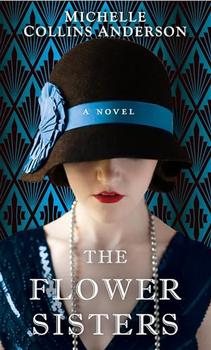
The Flower Sisters
by Michelle Collins Anderson
From the new Fannie Flagg of the Ozarks, a richly-woven story of family, forgiveness, and reinvention.
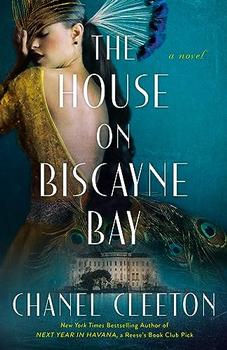
The House on Biscayne Bay
by Chanel Cleeton
As death stalks a gothic mansion in Miami, the lives of two women intertwine as the past and present collide.
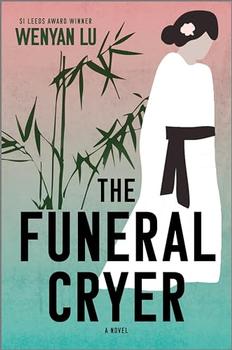
The Funeral Cryer by Wenyan Lu
Debut novelist Wenyan Lu brings us this witty yet profound story about one woman's midlife reawakening in contemporary rural China.
Your guide toexceptional books
BookBrowse seeks out and recommends the best in contemporary fiction and nonfiction—books that not only engage and entertain but also deepen our understanding of ourselves and the world around us.