
-
Your next favorite book
is waiting.
Summary | Excerpt | Reviews | Beyond the Book | Readalikes | Genres & Themes | Author Bio
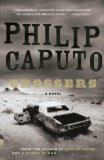
 Book Reviewed by:
Ben Erskine
We fly from our time and place to the settlement of Lochiel, the present-day ghost town then home to four hundred souls: adobe houses and miners' shacks, a post office, a school, a few stores, and three saloons islanded on the mile-high grasslands of the San Rafael Valley and tethered to the outside world by a single road that writhes westward through the Patagonia Mountains to its end in Nogales, the road deeply rutted by the giant wagons trundling silver and copper ore out of the mountains to Lochiel's smelter, its stack leaking smoke into an otherwise unblemished desert sky.
The black tendril leans in a light breeze, and a faint, sooty mist sifts down on the tin roof of a nearby bungalow—the house-cum-courtroom of Joshua Pittman, the justice of the peace. A clean-shaven man of forty, wearing a collarless shirt and a vest he can no longer button over his portly torso, he is seated on a spindle-backed chair on his front porch, booted feet crossed atop the porch rail as he reads the Border Vidette. The issue is dated August 6, 1903; it's two days old, delivered from Nogales, some twenty miles away, by a mailman on horseback. The Justice, as he's often called, reads almost every word; as a leading citizen in a town most of whose inhabitants are illiterate in English and Spanish, he considers it his duty to keep abreast of events in the world beyond Lochiel.
In his dusty yard stands his nephew, Ben Erskine, a boy just past the threshold of adolescence, tall for his age, as lean as one of the ocotillo wands that fence the yard. He wears a loose-fitting cotton shirt, dungarees tucked into a pair of scruffy boots, and a high-peaked, dirty hat, its brim rolled up tightly at the sides. A boy on an idle Saturday, playing a solitary game of mumblety-peg in the shade of a cottonwood. The hunting knife in his hand is a prize possession, its four-inch blade mirror-bright and sharp enough to cleanly slice a page of his uncle's newspaper. What makes this knife special are the engravings on each side of the blade. At first glance they resemble scrollwork; but with a closer look, the pattern reveals itself to be a dancing girl in three different intertwined poses. Holding the knife up to the light at the correct angle and turning it slowly side to side creates an illusion of movement. The three figures merge into one; the dancing girl comes to life, her ample hips swaying. Ownership of the knife has made Ben the envy of the other boys at Lochiel's one-room school. Many was the afternoon after class when they gathered around him for a demonstration and a chance to gawk at the forbidden. These entertainments have continued into the summer vacation, but they will end soon. Next month, after a year in his uncle's care, Ben will rejoin his mother, stepfather, and older brother, Jeffrey, in Tucson, where he is to begin high school. This isn't something he's looking forward to, not because he dislikes school—he is in fact an eager student—but because he doesn't get along with his stepfather, a South?ern Pacific supervisor named Rudy Hollister.
Skinny legs spread, Ben flips the knife into the ground a few inches from his right foot, then stretches his legs farther and plants his foot next to the knife, buried up to the dancing girl's neck. He is almost doing the splits. He can't move another inch, so he pulls his legs together, withdraws the knife, and begins again.
The Justice folds the newspaper, swings his feet off the rail, and looks at his nephew. "One of these days you are going to stick that thing clear through your foot," he says slowly and deliberately, as if he's passing sentence in his courtroom.
"Yes, sir."
"What do you mean? Yes, you are going to stick yourself in the foot?"
Ben pauses a moment, tips his hat back with two fingers as he's seen the cowhands do, and grins his peculiar grin. It slashes across his face like a soldier's hash mark and is often misinterpreted by those who don't know him well. To them, it looks like a sneer, cocky, even a little cruel.
Excerpted from Crossers by Philip Caputo Copyright © 2009 by Philip Caputo. Excerpted by permission of Knopf, a division of Random House, Inc. All rights reserved. No part of this excerpt may be reproduced or reprinted without permission in writing from the publisher.
Theo of Golden by Allen Levi
One spring morning, a stranger arrives in the small southern city of Golden. No one knows where he has come from…or why…




Your guide toexceptional books
BookBrowse seeks out and recommends the best in contemporary fiction and nonfiction—books that not only engage and entertain but also deepen our understanding of ourselves and the world around us.



