Summary | Excerpt | Reviews | Beyond the Book | Readalikes | Genres & Themes | Author Bio
Critics' Opinion:
Readers' Opinion:
First Published:
Oct 2006, 320 pages
Paperback:
Sep 2007, 336 pages
 Book Reviewed by:
BookBrowse Review Team
Buy This Book

If he told the story to give me courage, it worked. I had every benefit that he had gone without—quick first aid and evacuation and the world’s best medicine. If Sami could fight another day, so could I.
But I would have to get out of Iraq first. The air force was the only thing flying, a tough ticket for a civilian. My army buddies pushed, as did my Time colleagues. After another surgery to clean my wounds, doctors cleared me to go. I arrived at the Baghdad airport in a pool of my own urine and came close to being hit by mortars in a holding tent before I was finally loaded on to a transport plane. We took off just after 3 a.m., December 13.
The German countryside was waking up as we landed near Frankfurt and rode to the Landstuhl Regional Medical Center. Only a five-hour flight from Baghdad, LRMC is a sprawling, world-class trauma center and the first stop for those seriously wounded in the Iraq war.
It was almost my last. Not long after arrival, I was taken for a routine surgery to clean my wounds. In the recovery room my heart rate spiked dangerously. The arrhythmia corrected itself before doctors could treat it, and tests for a heart attack proved negative. But the spike represented my second brush with family legacy in four days. My father had died of a heart attack at age thirty-six; his father at forty. Since my preteens, I had religiously followed all the rules of diet and exercise, determined to break the chain. And yet here I was, having tempted fate with an assignment I could have avoided.
The scare landed me in the ICU. I slept all day, awakening to news from Iraq on December 14: the arrest of Saddam Hussein. I felt the pull of a big story, but all I could do was pass on the TV report to Time news director Howard Chua-Eoan, who had come to Germany to escort me home. He awakened New York editors in time to change the magazine’s cover for half the run: “Weisskopf is on duty from his hospital bed,” Howard quipped over the phone.
He brought me a dozen e-mails and notes sent to the magazine. Most of them mentioned my supposed heroism, a notion I once again batted away. But an e-mail from the mother of Private Jenks cast the episode in different light: “I would like to get in touch with Mr. Weisskopf to thank him for saving my son’s life.”
I had bumped into Jenks in a surgical waiting room the previous day. “Hey, thanks,” he said as our gurneys passed. The significance of my actions hadn’t sunk in until I pictured Jenks as someone’s son.
I had reason to think of my own son later that same day. I was walking the corridor for exercise with the help of nurse Nina McCoy, a thirty-one-year-old army captain. We were talking about loss and my good fortune to have suffered it in middle age. I already had a full life, Nina reminded me, complete with professional achievements, world travel, and a chance to play catch with Skyler. Most war amputees hadn’t had that opportunity. They were half my age and just starting to get a taste of life. A soldier who had lost both hands in Iraq recently confided in one of McCoy’s colleagues that he had planned to get married when he got home. “How am I going to wear the ring?” he had asked angrily.
The nurse told him to put it on a chain around his neck where it would hang even closer to his heart.
I was moved by the story and asked for details. The soldier’s name was Sergeant Pete Damon. An aviation mechanic in the Massachusetts National Guard, he had lost his hands in a freak accident while servicing a Black Hawk chopper on October 21.
The day my sister, Leslie Flesch, learned of my injury, she vowed to find me the world’s best doctor. Starting her search almost immediately from her small study in her Beverly Hills home, she placed a call to a well-connected Los Angeles doctor and asked him to recommend the top surgeon, regardless of location and cost. He polled a couple of experts. Everyone had agreed on a man named Andrew C. Friedman, who had the rare combination of board certification in highly specialized hand work and experience in traumatic injury. He also happened to work out of Washington. Leslie got his phone number and dialed it.
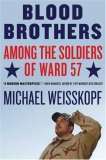
Excerpted from Blood Brothers by Michael Weisskopf. Copyright © 2006 by Michael Weisskopf. Excerpted by permission of Henry Holts and Company. All rights reserved. No part of this excerpt may be reproduced or reprinted without permission in writing from the publisher.




The Flower Sisters
by Michelle Collins Anderson
From the new Fannie Flagg of the Ozarks, a richly-woven story of family, forgiveness, and reinvention.

The House on Biscayne Bay
by Chanel Cleeton
As death stalks a gothic mansion in Miami, the lives of two women intertwine as the past and present collide.

The Funeral Cryer by Wenyan Lu
Debut novelist Wenyan Lu brings us this witty yet profound story about one woman's midlife reawakening in contemporary rural China.
Your guide toexceptional books
BookBrowse seeks out and recommends the best in contemporary fiction and nonfiction—books that not only engage and entertain but also deepen our understanding of ourselves and the world around us.