Summary | Excerpt | Reviews | Beyond the Book | Readalikes | Genres & Themes | Author Bio
Critics' Opinion:
Readers' Opinion:
First Published:
Mar 2004, 256 pages
Paperback:
Mar 2005, 240 pages
 Book Reviewed by:
BookBrowse Review Team
Buy This Book

Jouvet’s work so electrified American investigators that in 1962 Rechtschaffen invited the French scientist to speak in Chicago at the second meeting of the professional association he and Dement had formed in 1960 for the rapidly growing multidisciplinary specialty of sleep and dream research. A year later, the group met in New York, and at that meeting, a figure who’d long been missing from the field wandered through the crowd, attracting little attention until a young researcher happened to spot his name tag and realized he’d just bumped into the man who discovered REM. The young man blurted out "You’re Eugene Aserinsky? I thought you were dead!" Most scientists thought Aserinsky had dropped out because he’d simply lost interest, but the reality was that his career had been derailed by family tragedy. His wife suffered a mental breakdown after the birth of their second child while Aserinsky was still conducting the REM experiments in Chicago, and after being institutionalized several times, she committed suicide. Sadly, though he attempted a comeback, he died in a car accident in 1998 after retiring from a rather lackluster college teaching career.
But the field he’d launched continued to grow exponentially as researchers exchanged ideas in meetings such as those organized by Rechtschaffen and Dement. "At the meetings everyone tried to keep up with everything, no matter how seemingly remote it might be from their own workaday interests," recalled David Foulkes. "The group, despite the gradually increasing disparity of its interests, both worked and played well together."
In keeping with that inquisitive, anything-goes spirit, dream researchers were quick to go wherever the action was. In the early 1960s, that was Lyon, France, where Jouvet was conducting his innovative experiments with sleeping cats. Among those who made the pilgrimage was an ambitious young psychiatrist from Harvard Medical School. Brilliant and opinionated, alternately charming and abrasive, he was about to change the face of dream research.
From The Mind at Night, chapter 1, pages 1-16. Copyright 2004 by Andrea Rock. All rights reserved. No part of this book may be reproduced in any manner whatsoever, except for brief quotations embodied in critical articles with reviews, without written permission from the publisher, Basic Books.






The Flower Sisters
by Michelle Collins Anderson
From the new Fannie Flagg of the Ozarks, a richly-woven story of family, forgiveness, and reinvention.
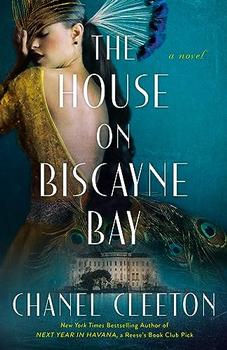
The House on Biscayne Bay
by Chanel Cleeton
As death stalks a gothic mansion in Miami, the lives of two women intertwine as the past and present collide.
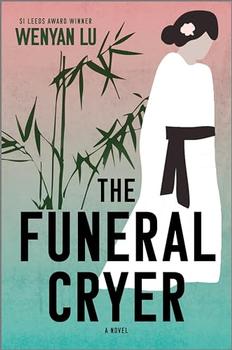
The Funeral Cryer by Wenyan Lu
Debut novelist Wenyan Lu brings us this witty yet profound story about one woman's midlife reawakening in contemporary rural China.
Your guide toexceptional books
BookBrowse seeks out and recommends the best in contemporary fiction and nonfiction—books that not only engage and entertain but also deepen our understanding of ourselves and the world around us.