Author Biography | Interview | Books by this Author | Read-Alikes
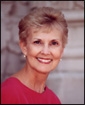
Susan Vreeland is the New York Times bestselling author of eight books, including Clara and Mr. Tiffany and Girl in Hyacinth Blue. She died in August 2017 aged 71.
In her own words ....
Coming out of the Louvre for the first time in 1971, dizzy with new love, I
stood on Pont Neuf and made a pledge to myself that the art of this newly
discovered world in the Old World would be my life companion. Never had
history been more vibrant, its voices more resonating, its images more
gripping. On this first trip to Europe, I felt myself a pilgrim: To me, even
secular places such as museums and ruins were imbued with the sacred.
Painting, sculpture, architecture, music, religious and social history--I
was swept away with all of it, wanting to read more, to learn languages, to
fill my mind with rich, glorious, long-established culture wrought by human
desire, daring, and faith. I wanted to keep a Gothic cathedral alive in my
heart. My imagination exploded with the gaiety of the Montmartre dancers at
Moulin de la Galette, the laborer whose last breath in his flattened chest
was taken under the weight of a stone fallen from the Duomo under
construction in Florence, the apprentice who cut himself preparing glass for
the jeweled windows of Sainte Chapelle, the sweating quarry worker aching
behind his crowbar at Carrara to release a marble that would become the
Pietà.
In a fashion I couldn't imagine then, I have been true to this pledge. I
have brought to life the daughter of the Dutch painter Vermeer who secretly
yearned to paint the Delft she loved. I've given voice to the Italian
Baroque painter Artemisia Gentileschi, raped at seventeen by her painting
teacher, the first woman to paint large scale figures from history and
scripture previously reserved for men. On my own continent, I've entered
deep British Columbian forests with Emily Carr, whose love for native people
took her to places proper white women didn't go. My imagination has followed
Modigliani's daughter around Paris searching for shreds of information about
the father she never knew. I've imagined myself a poor wetnurse, bereaved of
her own baby so that a rich woman, Berthe Morisot, might paint. I've taken
my seventeenth century Tuscan shoemaker to Rome to have his longed-for
religious experience under the Sistine ceiling. I've followed Renoir's
models to cabarets and boat races, to war and elopement, to the
Folies-Bergère and luncheons by the Seine.
Now some facts as to how I arrived there: After graduating from San Diego
State University, I taught high school English in San Diego beginning in
1969 and retired in 2000 after a 30-year career. Concurrently, I began
writing features for newspapers and magazines in 1980, taking up subjects in
art and travel, and publishing 250 articles. I ventured into fiction in 1988
with What Love Sees, a biographical novel of a woman's unwavering
determination to lead a full life despite blindness. The book was made into
a CBS television movie starring Richard Thomas and Annabeth Gish. My short
fiction has appeared in The Missouri Review, Ploughshares, New England
Review, Confrontation, Alaska Quarterly Review, Manoa, Connecticut Review,
Calyx, Crescent Review, So To Speak and elsewhere.
My art-related fiction, products of my pledge on Pont Neuf:
Selected Awards
My work has been translated into twenty-five languages.
So, what have I learned from all of this? That entering the mind and heart
of painters has taught me to see, and to be more appreciative of the
beauties of the visible world. That I can agree with Renoir when he said, "I
believe that I am nearer to God by being humble before his splendor
(Nature)." That people are hungry for real lives behind the paintings. That
readers' lives have been enriched, their sensibilities sharpened, even their
goals for their own creative endeavors given higher priorities in their
lives.
And especially this: Thanks to art, instead of seeing only one world and
time period, our own, we see it multiplied and can peer into other times,
other worlds which offer windows to other lives.
Each time we enter
imaginatively into the life of another, it's a small step upwards in the
elevation of the human race.
Consider this: Where there is no
imagination of others' lives, there is no human connection. Where there is
no human connection, there is no chance for compassion to govern. Without
compassion, then loving kindness, human understanding, peace all shrivel.
Individuals become isolated, and the isolated can turn resentful, narrow,
cruel; they can become blinded, and that's where prejudice, holocausts,
terrorism and tragedy hover. Art--and literature--are antidotes to that.
Susan Vreeland's website
This bio was last updated on 08/31/2017. In a perfect world, we would like to keep all of BookBrowse's biographies up to date, but with many thousands of lives to keep track of it's simply impossible to do. So, if the date of this bio is not recent, you may wish to do an internet search for a more current source, such as the author's website or social media presence. If you are the author or publisher and would like us to update this biography, send the complete text and we will replace the old with the new.
Artemisia tells her own story in this novel. Why did you choose a first
person narrator?
I felt using the first person would allow me to get closer to Artemisia. With
the first person, it's the reader's assumption that all descriptions,
observations, feelings are hers rather than the narrator's. Not wanting a sense
of a contemporary author looking back to that century, I felt the first person
could provide more immediacy. Also, a first person voice would help to
distinguish The Passion of Artemisia from a biography.
What are the difficulties involved in writing a fictional story that is
based on real facts?
First, one must find the story one wishes to tell buried in the known
history. Then, one must be willing to risk criticism when that story requires
departure from fact. Writing historically based fiction is first a matter of
discovery, then focus, then selectivity.
A person's real life involves a huge number of people, far too many to give
focus to a novel. In order to avoid the narrative sprawl that would limit space
for development of important characters, I had to eliminate Artemisia's
brothers, sons, and many of the people for whom she painted in order to reveal
her relationships ...

Vanora Bennett became a journalist almost by accident. Having learned Russian and been hired after university by Reuters, she was catapulted out of the classical-music life of her family and straight into the adrenaline-... (more)
If you enjoyed:
The Passion of Artemisia
Try:
Portrait of an Unknown Woman
by Vanora Bennett

New York Times bestseller and book club favorite Cathy Marie Buchanan is the author of three novels. Her most recent, Daughter of Black Lake, was chosen as Best Fiction for Fall by Entertainment Weekly and Parade magazine. ... (more)
If you enjoyed:
Girl in Hyacinth Blue
Try:
The Painted Girls
by Cathy Marie Buchanan
We recommend 14 similar authors


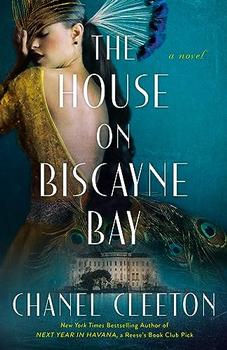
The House on Biscayne Bay
by Chanel Cleeton
As death stalks a gothic mansion in Miami, the lives of two women intertwine as the past and present collide.
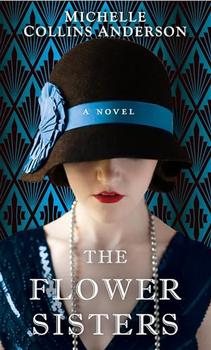
The Flower Sisters
by Michelle Collins Anderson
From the new Fannie Flagg of the Ozarks, a richly-woven story of family, forgiveness, and reinvention.
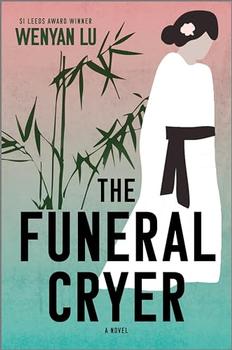
The Funeral Cryer by Wenyan Lu
Debut novelist Wenyan Lu brings us this witty yet profound story about one woman's midlife reawakening in contemporary rural China.
Your guide toexceptional books
BookBrowse seeks out and recommends the best in contemporary fiction and nonfiction—books that not only engage and entertain but also deepen our understanding of ourselves and the world around us.