-
Your next favorite book
is waiting.
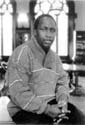
How to pronounce Ngugi wa Thiong'o: NYOO-gee (hard g) wah TEE-ongo--according to African Literature professor who knows the author and speaks Kikuyu/Gikuyu (from The Millions)
Ngugi wa Thiong'o, currently Distinguished Professor of English and Comparative Literature at the University of California, Irvine, was born in Kenya, in 1938 into a large peasant family. He was educated at Kamandura, Manguu and Kinyogori primary schools; Alliance High School, all in Kenya; Makerere University College (then a campus of London University), Kampala, Uganda; and the University of Leeds, Britain. He is recipient of seven Honorary Doctorates viz D Litt (Albright); PhD (Roskilde); D Litt (Leeds); D Litt &Ph D (Walter Sisulu University); PhD (Carlstate); D Litt (Dillard) and D Litt (Auckland University). He is also Honorary Member of American Academy of Letters. A many-sided intellectual, he is a novelist, essayist, playwright, journalist, editor, academic and social activist.
Ngugi burst onto the literary scene in East Africa with the performance of his first major play, The Black Hermit, at the National Theatre in Kampala, Uganda, in 1962, as part of the celebration of Uganda's Independence. "Ngugi Speaks for the Continent," headlined The Makererian, the Student newspaper, in a review of the performance by Trevor Whittock, one of the professors. In a highly productive literary period, Ngugi wrote additionally eight short stories, two one act plays, two novels, and a regular column for the Sunday Nation under the title, As I See It. One of the novels, Weep Not Child, was published to critical acclaim in 1964; followed by the second novel, The River Between (1965). His third, A Grain of Wheat (1967), was a turning point in the formal and ideological direction of his works.
In 1967, Ngugi became lecturer in English Literature at the University of Nairobi. He taught there until 1977 while, in-between, also serving as Fellow in Creative writing at Makerere (1969-1970), and as Visiting Associate Professor of English and African Studies at Northwestern University (1970-1971).
The year 1977 forced dramatic turns in Ngugi's life and career. His first novel in ten years, Petals of Blood, was published in July of that year. The novel painted a harsh and unsparing picture of life in neo-colonial Kenya. It was received with even more emphatic critical acclaim in Kenya and abroad. The Kenya Weekly Review described as "this bomb shell" and the Sunday Times of London as capturing every form and shape that power can take. The same year Ngugi's controversial play, Ngaahika Ndeenda (I Will Marry When I Want), written with Ngugi wa Mirii, was performed at Kamirithu Educational and Cultural Center, Limuru, in an open air theatre, with actors from the workers and peasants of the village. Sharply critical of the inequalities and injustices of Kenyan society, publicly identified with unequivocally championing the cause of ordinary Kenyans, and committed to communicating with them in the languages of their daily lives, Ngugi was arrested and imprisoned without charge at Kamiti Maximum Security Prison at the end of the year, December 31, 1977. An account of those experiences is to be found in his memoir, Detained: A Writer's Prison Diary (1982). It was at Kamiti Maximum Prison that Ngugi made the decision to abandon English as his primary language of creative writing and committed himself to writing in Gikuyu, his mother tongue. In prison, and following that decision, he wrote, on toilet paper, the novel, Caitani Mutharabaini (1981) translated into English as Devil on the Cross, (1982).
After Amnesty International named him a Prisoner of Conscience, an international campaign secured his release a year later, December 1978. However, the Moi Dictatorship barred him from jobs at colleges and university in the country. He resumed his writing and his activities in the theater and in so doing, continued to be an uncomfortable voice for the Moi dictatorship. While Ngugi was in Britain for the launch and promotion of Devil on the Cross, he learned about the Moi regime's plot to eliminate him on his return, or as coded, give a red carpet welcome on arrival at Jomo Kenyatta Airport. This forced him into exile, first in Britain (1982 –1989), and then the U.S. after (1989-2002), during which time, the Moi dictatorship hounded him trying, unsuccessfully, to get him expelled from London and from other countries he visited. In 1986, at a conference in Harare, an assassination squad outside his hotel in Harare was thwarted by the Zimbwean security.
His next Gikuyu novel, Matigari, was published in 1986. Thinking that the novel's main character was a real living person, Dictator Moi issued an arrest warrant for his arrest but on learning that the character was fictional, he had the novel "arrested;" instead. Undercover police went to all the bookshops in the country and the Publishers warehouse and took the novel away. So, between 1986 and 1996, Matigari could not be sold in Kenyan bookshops. The dictatorship also had all Ngugi's books removed from all educational institutions.
In exile, Ngugi worked with the London based Committee for the Release of Political Prisoners in Kenya, (1982-1998), which championed the cause of democratic and human rights in Kenya. In between, he was Visiting Professor at Byreuth University (1984); and Writer in Residence, for the Borough of Islington, London (1985) and took time to study film, at Dramatiska Institute, Stockholm, Sweden. (1986). After 1988, Ngugi became Visiting Professor of English and Comparative Literature at Yale (1989-1992) in between holding The Five Colleges (Amherst, Mount Holyoke, New Hampshire, Smith, East Massachusetts) Visiting Distinguished Professor of English and African Literature (Fall 1991). He then became Professor of Comparative Literature and Performance Studies at New York University (1992 –2002) where he also held the Erich Maria Remarque Professor of languages, from where he moved to his present position at the University of California Irvine. He remained in exile for the duration of the Moi Dictatorship 1982-2002. When he and his wife, Njeeri, returned to Kenya in 2004 after twenty-two years in exile, they were attacked by four hired gunmen and narrowly escaped with their lives.
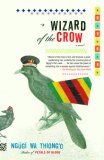
Ngugi has continued to write prolifically, publishing, in 2006, what some have described as his crowning achievement, Wizard of the Crow, an English translation of the Gikuyu language novel, Murogi wa Kagogo. Ngugi's books have been translated into more than thirty languages and they continue to be the subject of books, critical monographs, and dissertations.
Paralleling his academic and literary life has been his role in the production of literature, providing, as an editor, a platform for other people's voices. He has edited the following literary journals: Penpoint (1963-64); Zuka (1965 -1970); Ghala (guest editor for one issue, 1964?); and Mutiiri (1992-).
He has also continued to speak around the world at numerous universities and as a distinguished speaker. These appearances include: the 1984 Robb Lectures at Auckland University in New Zealand; the 1996 Clarendon Lectures in English at Oxford University; the 1999 Ashby Lecture at Cambridge; and the 2006 MacMillan Stewart Lectures at Harvard.
He is recipient of many honors including the 2001 Nonino International Prize for Literature and seven honorary doctorates.
He died in Atlanta at age 87.
Ngugi wa Thiong'o's website
This bio was last updated on 12/27/2017. In a perfect world, we would like to keep all of BookBrowse's biographies up to date, but with many thousands of lives to keep track of it's simply impossible to do. So, if the date of this bio is not recent, you may wish to do an internet search for a more current source, such as the author's website or social media presence. If you are the author or publisher and would like us to update this biography, send the complete text and we will replace the old with the new.

Chimamanda Ngozi Adichie grew up in Nigeria. Her work has been translated into more than fifty-five languages. She is the author of the novels Purple Hibiscus, which won the Commonwealth Writers' Prize; Half of a Yellow Sun, ... (more)
If you enjoyed:
Wizard of the Crow
Try:
Half of a Yellow Sun
by Chimamanda Ngozi Adichie
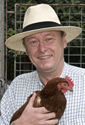
Nicholas Drayson was born in England and has lived in Australia since 1982, where he studied zoology and a PhD in 19th century Australian natural history writing. He has worked as a journalist in the UK, Kenya and Australia, ... (more)
If you enjoyed:
Wizard of the Crow
Try:
A Guide to the Birds of East Africa
by Nicholas Drayson
We recommend 6 similar authors
Theo of Golden by Allen Levi
One spring morning, a stranger arrives in the small southern city of Golden. No one knows where he has come from…or why…

Your guide toexceptional books
BookBrowse seeks out and recommends the best in contemporary fiction and nonfiction—books that not only engage and entertain but also deepen our understanding of ourselves and the world around us.