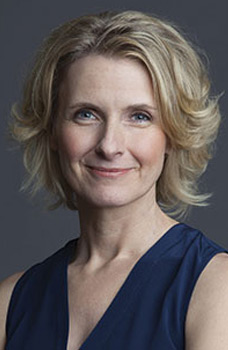
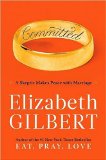
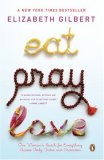
Elizabet Gilbert talks about her memoir, Eat, Pray, Love, her personal, spiritual and emotional journey, and how it led to a renewed self-awareness and direction in her life.
The realization that you did not want to have children serves as a turning point in the reevaluation of your life that led to divorce. Later you quote Virginia Woolf—“Across the broad continent of a woman’s life falls the shadow of a sword”—writing about a woman’s choice between convention and tradition versus “a far more interesting” yet “perilous” life. Do you think this is as true today for the modern, urban American woman?
When modern American women make the deliberate choice not to have children they are still called upon to defend that choice, in a culture where motherhood is still regarded as the natural evolution of a woman’s life. But I remember my own mother musing once that she thought women had been “sold a bill of goods” during the 1970s, in terms of being promised that they could have everything simultaneously—family, career, marriage, privacy, equality, femininity, and autonomy. Reality has taught us that no woman can build an honest life without sacrificing something along the way. Deciding what will be sacrificed is not easy. But the good news is this: increasingly, that decision is ours.
Joseph Campbell spent a lifetime studying myths from around the world, ultimately sketching the archetype of the hero as a protagonist who sets out on a journey that ends in personal—and spiritual—transformation. Do you see echoes of the hero’s tale (well, heroine’s) in your own story?
Back when Campbell (whom I love, by the way) was teaching at Sarah Lawrence College, his female students would sometimes ask, “But what about the heroine’s journey? Don’t women get to participate in this universal questing epic?” Traditional world mythology, however, frankly replies: “Nope.” Women (as life bearers) have always been seen by mythmakers (men) as being automatically perfect for their task; they don’t need to transform. Well, I was never going to be a life bearer and was painfully yearning for the classically soul-changing quest. So throughout my journey, I definitely identified much more closely with the struggling hero archetype than with the self-possessed goddess archetype.
Do you think travel necessitates personal growth because one is forced to respond to and accept the unfamiliar? In your opinion, how much does it depend on an individual’s willingness to embrace opportunity?
No experience in this world has ever been cathartic without the willing participation of the individual. Life does not automatically bestow wisdom or growth upon anyone just for showing up. You have to work ceaselessly on your end to digest and imbibe your opportunities or, I have come to believe, they will gradually slip away and knock on someone else’s more receptive door.
You have a strong distrust of antidepressants, portraying them as Western medicine’s easy answer to despair. In light of the experiences related in the book, do you now believe that seeking help when one needs it is a sign of courage and the first step on the road to healing?
I actually have a great deal of respect for antidepressants; I think they can be enormously mighty tools toward recovery. What I question is the current notion that a little vitamin P is the only thing needed to restore a torn life. We are multifaceted beings, and if we are to heal our suffering we must address our wounds on every imaginable level, seeking help from as many sources as possible, not just from pharmaceutical companies. And, yes, that all begins with the brave admission that one is lost and wants to be recovered.
You ended up structuring your book conceptually using japa mala—the beads used as an aid in many strands of Eastern meditation—as your model. This allowed you to tell your tale using 108 sections, divided into three groups of 36, your age at the time, with each group representing a different leg of your travels. How did you decide to use this device, and how difficult was it to remain faithful to this format?
Brace yourself for the world’s hokiest answer: the idea came to me in meditation in India. The idea arrived fully formed. In one glorious instant I was shown a complete vision of how the book would be organized. This idea was a massive gift to me; the structure kept my storytelling in order, preventing me from rambling digressions. And the idea of the prayer beads kept me on topic emotionally, too, reminding me at every moment that this book was ultimately a spiritual exercise, an offering.
How did you come to the decision to have your sister and, to a lesser extent, your mother serve as points of comparison for your own life?
How could they not be comparisons? I think we all compare ourselves to our mothers and sisters, and, in my case, these are the two most influential women in my life—powerful and inspiring. And yet they’ve made markedly different choices than I have. But I witnessed this truth in them, too—that it was not without a certain level of sacrifice and struggle that they embraced motherhood and marriage. I learned a lot about my own ambivalence by studying theirs from every visible angle, using their experiences to teach me about myself.
The personal encounters you have in Italy, India, and Indonesia seem to affect you deeply, and your guru’s philosophy clearly informs your own. Do you think that self-discovery requires the insights of others? What do you make of this paradox?
I don’t see the paradox; I think sincere self-exploration requires the insight of everyone. One of my guru’s most helpful instructions is to “become a scientist of your own experience,” which I take as an invitation to explore every possible line of human spiritual thinking. The world has been blessed with some extraordinary teachers over history—use them! That said, studying can only take you so far. At some point you have to lay aside the books, hope that your mind has actually absorbed some wisdom, and just sit there in silence, letting your soul ascend to its own leadership. And that’s something nobody can do for you.
Before you leave India, your poet-plumber friend from the ashram writes a few lines of verse as a good-bye. In his poem, he describes you as “betwixt and between.” Do you think one can remain continually betwixt and between or is there a point at which this approach to life would become a burden?
Well, you don’t want to become a hunk of driftwood. When I was in India I ran into some travelers who’d never settled down, and they all had that look of tight madness around the eyes. What you do want to remain, though, whether you are traveling or not, is alert. Pay attention to the signals—is it time to lay down roots? Or time to go exploring again? As for me, I’ve come to trust the power of a lifelong quest; if you keep asking honest questions and keep giving honest answers, you will always be instructed clearly on what to do next, and when and with whom. (In other words: I’m happily and quietly living with my sweetheart, for the time being, in Philadelphia.)
Eat, Pray, Love marks a point of departure from your previous work by focusing on your own life. Was it difficult for you to turn your talents to your own experience, revealing so much to readers about your internal life and personal journey?
Oddly, I never thought of it as a particularly personal story. To me, the arc of the narrative felt completely universal—doesn’t everyone struggle with these same questions, doubts, and longings? So, no, it wasn’t difficult to write this. Though I do feel it would have been impossible not to write it. I was so consumed by questions that I needed the ordering process of writing to help me sort through them. As Joan Didion once said, “I write so I can learn what I think.”
How important does that year in your life seem to you now?
How important was the first breath you ever took the day you were born?
Unless otherwise stated, this interview was conducted at the time the book was first published, and is reproduced with permission of the publisher. This interview may not be reproduced or reprinted without permission in writing from the copyright holder.
Stuart Archer Cohen was born in Cincinnati, Ohio in 1958. After graduating from high school he spent a year hitchhiking around the United States, hopping freight trains and traveling with a circus as a prop man, then attended... (more)
If you enjoyed:
Eat, Pray, Love
Try:
This Is How It Really Sounds
by Stuart Archer Cohen

Rinker Buck began his career in journalism at the Berkshire Eagle and was a longtime staff writer for the Hartford Courant. He has written for Vanity Fair, New York, Life, and many other publications, and his work has won the... (more)
If you enjoyed:
Eat, Pray, Love
Try:
The Oregon Trail
by Rinker Buck
We recommend 22 similar authors

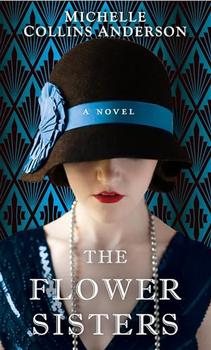
The Flower Sisters
by Michelle Collins Anderson
From the new Fannie Flagg of the Ozarks, a richly-woven story of family, forgiveness, and reinvention.
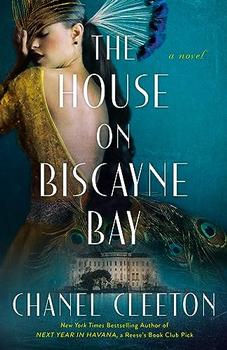
The House on Biscayne Bay
by Chanel Cleeton
As death stalks a gothic mansion in Miami, the lives of two women intertwine as the past and present collide.
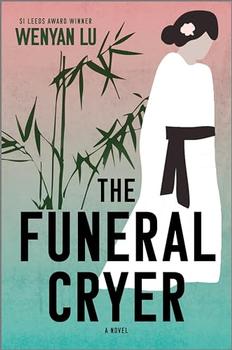
The Funeral Cryer by Wenyan Lu
Debut novelist Wenyan Lu brings us this witty yet profound story about one woman's midlife reawakening in contemporary rural China.
Your guide toexceptional books
BookBrowse seeks out and recommends the best in contemporary fiction and nonfiction—books that not only engage and entertain but also deepen our understanding of ourselves and the world around us.