
-
Your next favorite book
is waiting.
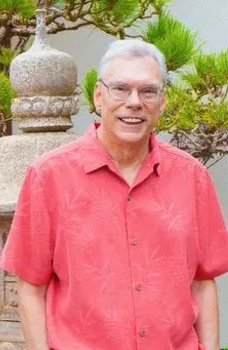
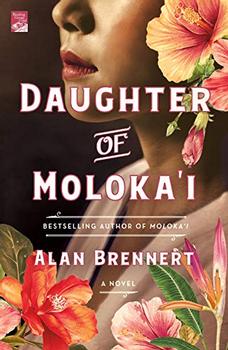
In three separate interviews Alan Brennert talks about Moloka'i, set in a leper colony in early 20th century Hawai'i; Honolulu, which follows the life of a young "picture bride" who arrives in Hawai'i in 1914; and Daughter of Moloka'i, the 2019 sequel to his debut.
A Conversation with Alan Brennert about Daughter of Moloka'i
What inspired you to write a sequel to Moloka'i?
Not long after Moloka'i was published, I was speaking to a book club when one of its members asked me, "Have you ever considered telling Ruth's story?" I had not, and though I found the idea intriguing, so soon after Moloka'i I was ready to move on to other subjects. Two books and a decade later, I was talking to my brilliant agent, Molly Friedrich, about an idea I had for another novel when she said, "You know what you should write? You should tell Ruth's story," and argued that there was potentially a powerful story there to be told. Well, I don't need to be hit on the head with an idea a third time! After some initial thought I began to see a perfect three-act structure to Ruth's life: her childhood in Honolulu and California; her internment during World War II; and the final third of the novel, Ruth's meeting with Rachel and her 22-year relationship with her birth mother, which had only been alluded to in Moloka'i. Two and a half years later, with substantial help in shaping the story from Molly and my editors, Hope Dellon and Elisabeth Dyssegaard, the structure I first envisioned remains.
Was it difficult revisiting characters you'd written over a decade ago?
Quite the opposite; I think they'd been inside my head all along, waiting for the opportunity to tell the rest of their story. When I wrote the first line for Sister Catherine in the prologue, I slipped back into her voice as if no time at all had passed. I did reread Moloka'i—for the first time since I'd corrected proofs back in 2002—to reacquaint myself with key parts of Rachel's life and to listen again to her voice and to that of the adult Ruth. The first dialogue I wrote for Rachel was an extension of a scene in Moloka'i, and she just popped out onto the page, casually continuing a conversation begun years earlier.
For Ruth I had to engage in a bit of reverse-engineering, figuring out from her adult self what kind of child she had been, the childhood and life experiences that had shaped her into the person we met in the first book. It was actually quite a satisfying process, filling in those blank spaces of Ruth's past with people, places, and animals. I began to see this not as a sequel per se, but as a companion or parallel tale that serves as a complement to Moloka'i: together they form one large, overarching, interconnected story.
How was writing Daughter of Moloka'i different from writing the first book?
In Moloka'i—as in Honolulu and Palisades Park—I was writing not merely the life story of a person, but the history of a place as well. Moloka'i had a large cast of characters dating back to the1870s in Kalaupapa, long before my protagonist, Rachel, was even born. But since Ruth lives in a variety of locales, Daughter is more narrowly focused on her life and the point of view of her and her family. As with Moloka'i, there was an intimidating amount of research to be done—into daily life at the Kapi'olani Home for Girls; Florin, California, in the 1920s; and Manzanar and Tanforan relocation centers. At times I felt constrained, not being able to add some interesting historical sidebars because they fell outside the boundaries of Ruth's experience. But what makes Ruth's story so different from Rachel's is the way her life repeatedly turns on a dime: the day Taizo and Etsuko adopt her; their sudden move to California; the jolting loss of her home and freedom; and Rachel's unexpected appearance in her life. It's that ability to cope with the hairpin turns in life, her resiliency, that made her such an interesting character to write, and, I hope, to read about.
What surprised you most about your research into the lives of Japanese immigrants in the early twentieth century?
What struck me most was how similar—depressingly similar—the arguments against Asian immigrants to the U.S. were to those being made against immigrants today. Organizations like the Anti-Japanese League and the Native Sons and Daughters of the Golden West claimed that Japanese farmers were taking land away from white farmers; in reality the Japanese were leasing or buying poor-quality land that white farmers wouldn't touch and using their intensive farming techniques to make the land productive. Today you hear similar complaints that Latino and other immigrants are taking jobs away from American workers. But many of these jobs don't pay enough for American workers and/or are the kind of backbreaking labor, like picking crops, that most Americans don't want to do.
Back in the 1900s, anti-Asian organizations also claimed that Asian culture and religious beliefs were too "alien" and that Asian immigrants were incapable of being assimilated into American culture. But the second generation of Japanese immigrants, the Nisei, fully embraced American culture and thought of themselves as Americans.
This only made their internment after Pearl Harbor all the more shocking to them: they were hardworking, law-abiding citizens, yet the government viewed them all as potential spies, security risks. The truth is that during World War II not a single Japanese American in the United States was ever convicted of espionage or sabotage.
Do you see parallels between Japanese Americans in World War II and Muslim Americans today?
Yes, though not exact parallels. No one can deny that there have been a handful of Muslim Americans who have committed terrorist acts against the United States. But the majority of law-abiding Muslim Americans are tarred by the actions of a few and so face prejudice due to their ethnicity and religion. We also hear the old canard that they're not capable of assimilating into American society. I think it's useful to remember that virtually all new immigrant groups—Irish, Italians, Jews, Poles, Germans—faced similar skepticism and prejudice when they first came to this country. And over time those prejudices faded (mostly) and the groups came to be accepted as part of the patchwork quilt we call American culture. There's a bit of hope to be had when you look at it that way. In all my books I've sought to portray other ethnic groups—Native Hawaiians (as well as Hansen's disease patients) in Moloka'i, Koreans in Honolulu, African Americans in Palisades Park, and the Japanese in this book—in terms that anyone from another culture can relate to and identify with, while treating their cultures with the same respect Americans would want shown to theirs. If a reader comes away from my books with a deeper understanding of our common humanity, then I've accomplished what I set out to do
Alan Brennert discusses Honolulu
Did the idea for Honolulu come out of your research for your
previous book, Moloka'i?
In a way. One of the most colorful periods of modern Hawaiian history was
the so-called "glamour days" of the 1920s and 30s. Though I read about it in my
research for Moloka'i, it was a time period I couldn't really explore in
depth in that book, since my main characters were held in isolation at Kalaupapa.
These were the years when Hawai'i made its deepest impression on the American
consciousness: the years of Matson liners, the China Clipper, Hollywood
celebrities vacationing in Honolulu, and the Hawai'i Calls radio show
that broadcasted popular hapa-haole music to the mainland. I found myself
wanting to tell a story against that romantic backdrop.
But Honolulu also presents a very different picture of Hawai'i in
those "glamour" days.
Yes, there were almost two Honolulus existing alongside one
another—or more accurately, interwoven, like the Korean patchwork quilts I write
about in the book. Because at the same time this romantic, glamorous image of
paradise was being exported to the American public, many Native Hawaiians and
immigrants to Hawai'i labored on plantations for low wages or lived in poverty
in Honolulu tenements. So Honolulu, the novel, is partly about this
collision of image and reality...and how, in fact, the reality was actually far
richer and more captivating.
Is this why you've used so many actual historical figures in the book?
They're not "historical" figures in the conventional sense; my whole point
in using them is that many of these people have been largely lost to
history. Chang Apana, for instance, was one of the great characters in modern
Hawaiian history: a small, two-fisted Chinese-Hawaiian police detective who
became one of the most celebrated police officers of his day. But most people
today—if they know of him at all—know him primarily as the real-life inspiration
for Earl Der Biggers's "Charlie Chan." The fantasy has eclipsed the reality. Yet Apana was really a much more colorful and fascinating character than his
fictional counterpart, and that's who I wanted to bring to light—along with
other real-life people like "Panama Dave" Baptiste, May Thompson, and Joseph
Kahahawai.
Your protagonist, Jin, is a young Korean woman who comes to Hawai'i as a
"picture bride." Was she based on any specific person?
Like Rachel Kalama in Moloka'i, Jin is a fictional creation, but is
inspired by any number of actual women who emigrated to Hawai'i between 1903 and
1924—Chinese, Korean, and Japanese. I chose to make her Korean because there had
already been several fictional representations of Japanese picture brides, but
once I started researching Korean culture of that era I saw the rich potential
it held as a dramatic motivation for Jin's journey. It's been said that Korea in
those days tried to be "more Confucian than the Chinese," and for women it was
an especially oppressive environment—which is what motivated many of them to
seek a better life elsewhere, through matchmakers who promised a life of
adventure and affluence in Hawai'i.
How many picture brides actually made this journey?
Estimates range from between six hundred and a thousand. But these women
were just a small part of a larger influx of immigrants—Asian, Portuguese,
Spanish, Filipino—brought to Hawai'i by the sugar barons who needed laborers to
work on the plantations. Those immigrants formed the basis of a polyglot
population that today mirrors the kind of multi-ethnic society America is
becoming. It's a subject that's more pertinent than ever since our new President
is himself a product of Hawai'i's uniquely multicultural society. Honolulu
tells of how that culture came to be—and how its story is really the story of
America itself.
Alan Brennert discusses Moloka'i
What prompted your interest in the subject of leprosy, or
Hansen's disease as it is now called?
Well, first and foremost, I love Hawai'i. The first time
I set foot there, twenty-four years ago, I felt as if I were coming home.
The place and the people have drawn me back year after year, and the history
of the Hawaiian people is one that holds a special fascination for me. I
visited Moloka'i for the first time in 1996, but it wasn't until three years
later that I began reading about Kalaupapa, the leprosy settlement on the
island's north shore. And the more I read, the more I came to understand
that here was a compelling, true-life story that had never fully been told
before.
Did your research include a trip to Kalaupapa itself?
Yes, of course. As well as many, many days spent at the
Hawai'i State Archives, the Bishop Museum, the Hawai'i Historical Society,
the Honolulu Medical Library, and other institutions. When I first began my
research, I searched in vain for one book that might present a comprehensive
overview of the history of Kalaupapa, from its beginnings in 1866 to the
present. It didn't exist. I had to write it, or at least an outline of it.
Before I could write my novel, I first had to write myself a history of
Kalaupapa.
With the help of bookfinder.com, I acquired an extensive
library of books--on Kalaupapa, Hansen's disease, Hawaiian history--dating
back to the 1880s. From disparate sources I cobbled together a timeline of
the real-life history of Kalaupapa and the people who lived there. It's
nearly thirty pages long and is a detailed chronology of the people and
events that make up the history of the settlement. I was quite flattered
when the librarians at the Bishop Museum expressed interest in obtaining a
copy for their archives, which I was happy to send them.
How much of Moloka'i is based on fact, and how
much is fiction?
Nearly everything in it has a basis in fact. The details
of life on Moloka'i came in part from letters and journals in the Hawai'i
State Archives, where I actually held in my hands letters on yellowed paper,
written over a century ago by leprosy patients exiled from home and family.
It was moving and humbling. I wanted to do right by these people who have
been largely forgotten by history--I wanted to present their story as no one
else has.
I read oral histories and biographies of patients, distilled
them down to their common elements, and made that the armature of Rachel
Kalama's life—on which I then expanded and embroidered. Rachel is entirely
a fictional character, but the events and people that shape her life are
inspired by actual people and events. Many of the book's supporting
characters are actual people: Brother Dutton, Mother Marianne, Ambrose
Hutchison, Lawrence Judd, J.D. McVeigh, Drs. Oliver and Swift and Goodhue
and Fennel and Sloan, and many more. Even what happens to the character of
Leilani is based on actual medical case histories.
The most famous name associated with Moloka'i is Father
Damien de Veuster, the Catholic priest who went to Kalaupapa to minister to
the sick, and who himself died of Hansen's disease. Yet he has only a very
small role in your novel. Why?
As fine a man as Damien was, he was just one man who died
of leprosy...out of thousands of other men and women who lived and died
there, pretty much anonymously. But because Damien was white, and a priest,
he has commanded the world's attention all these years. I like to think that
he'd find this as unjust as I do. I felt while writing the book that I was
in some small way giving voice to those whose voices have been lost to time,
and I hope they'd approve of what I've done.
What relevance does the story of Kalaupapa hold for us
today?
Leprosy was once considered as incurable as AIDS is now;
both unfairly stigmatize the people who suffer from them. Leprosy victims in
the 19th century were quarantined as zealously as SARS patients are today.
But the prejudice, fear, and abrogation of civil rights suffered by Hansen's
patients is far and away more terrible than anything AIDS or SARS patients
have yet suffered, and casts a cautionary light on our own society's
attitudes toward those with fatal, communicable diseases.
Unless otherwise stated, this interview was conducted at the time the book was first published, and is reproduced with permission of the publisher. This interview may not be reproduced or reprinted without permission in writing from the copyright holder.


Jamie Ford is the great-grandson of Nevada mining pioneer Min Chung, who emigrated from Hoiping, China to San Francisco in 1865, where he adopted the western name Ford, thus confusing countless generations. His debut novel, ... (more)
If you enjoyed:
Daughter of Moloka'i
Try:
Hotel on the Corner of Bitter and Sweet
by Jamie Ford
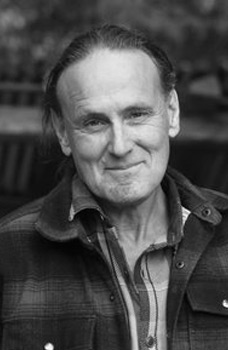
David Guterson is the author of thirteen books, including the PEN/Faulkner Award winner Snow Falling on Cedars, which was made into a major motion picture, translated into twenty–five languages, and has sold more than 4... (more)
If you enjoyed:
Daughter of Moloka'i
Try:
Snow Falling On Cedars
by David Guterson
We recommend 22 similar authors




When you are growing up there are two institutional places that affect you most powerfully: the church, which ...
Click Here to find out who said this, as well as discovering other famous literary quotes!

Can you name the title?
Test your book knowledge with our daily trivia challenge!
Your guide toexceptional books
BookBrowse seeks out and recommends the best in contemporary fiction and nonfiction—books that not only engage and entertain but also deepen our understanding of ourselves and the world around us.
