
-
Your next favorite book
is waiting.
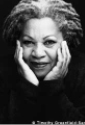
How to pronounce Toni Morrison: TOE-ni MAWR-uh-suhn
An interview with Toni Morrison in which she explains why she chose the black migration from east to west in the late 19th century as one of the central topics in her award winning book 'Paradise', and whether she believes paradise is possible on earth. This is followed by a video clip about her 2008 novel, A Mercy.
An interview with Toni Morrison about her novel Paradise, followed by a video clip in which she talks about her 2008 novel, Mercy.
An Interview with Toni Morrison
Paradise is set in Oklahoma for historical reasons, yet its vast
open spaces and straight, endless roads are well-suited for the novel's themes
of isolation and exposure, and your descriptions of the landscape are moving and
evocative. What did you learn in your research about Oklahoma that you didn't
already know? Did you visit there? If so, what were your impressions of the
state?
I have visited Oklahoma and was impressed by its natural beauty -- so unlike
the "Grapes of Wrath" scenes. What I learned was the nature of the
promise it held for African-Americans looking for safety and prosperity -- some
highly successful stories and some failures.
The persecution of one community by another is, unfortunately, nothing
new. But you approach this subject from an unusual perspective that originates
in a somewhat forgotten moment in our nation's history: the black migration from
east to west in the late 19th century. How did you arrive at this topic? What
came first: the history or your message?
The migration was familiar, but its consequences were provocative to me.
It's hard to fault the founders of Haven and Ruby for wanting to find a
secure, protected place for their families to grow and thrive. Do you think it's
possible for a community to ward off negative influences without giving into the
intolerance and bigotry that plagued Ruby? Is the attempt to establish a utopian
community inherently wrong? What do you think of the different kinds of
communities that are popping up all over the country: gated communities,
intentional communities, or the Florida town of Celebration?
Exclusivity, like in Paradise, is about deciding who is unworthy. The
seeds of destruction lie in the definition of "chosen-ness" and can
easily blossom into bigotry. It's not inevitable but it needs constant care to
avoid.
Your novels seem to be gradually moving away from linear narratives toward
those that are more circular. Is this part of your development as a writer or do
you think you'll return to linear narratives? How have you created a narrative
technique that helps you tell the stories you want to tell?
The narrative itself demands the structure. If a tale is better told in a
straightforward manner, I would choose a linear construction.
How do you respond to criticism that too many of the novel's male
characters are selfish and narrow-minded, while the women -- even the less
likable ones -- are conciliatory and sympathetic?
Such comments seem to me "selfish and narrow-minded." It's like
complaining that Othello is "selfish" and Desdemona
"sympathetic" -- irrelevant.
Which part of Paradise was most difficult for you to write and why?
Which parts were the easiest? When you set out to write a novel as ambitious as
this, how do you maintain your energy for the story without sacrificing either
the quality or the passion of the writing?
The opening chapter is the most difficult because it carries an enormous
burden, but none of it is easy. One needs enormous -- but not continuous --
powers of concentration over several years (in this case, five years) to
maintain the requirements of the narrative.
What is your idea of Paradise? Does it, or can it exist on earth?
It should and ought to.
Unless otherwise stated, this interview was conducted at the time the book was first published, and is reproduced with permission of the publisher. This interview may not be reproduced or reprinted without permission in writing from the copyright holder.


Chimamanda Ngozi Adichie grew up in Nigeria. Her work has been translated into more than fifty-five languages. She is the author of the novels Purple Hibiscus, which won the Commonwealth Writers' Prize; Half of a Yellow Sun, ... (more)
If you enjoyed:
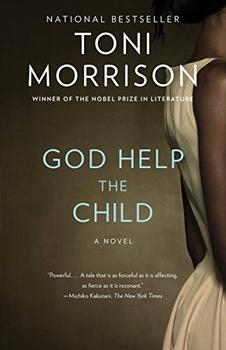
God Help the Child
Try:
Americanah
by Chimamanda Ngozi Adichie
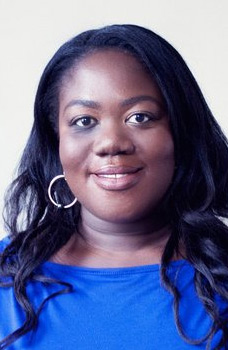
Afia Atakora was born in the United Kingdom and raised in New Jersey, where she now lives. She graduated from New York University and has an MFA from Columbia University, where she was the recipient of the De Alba Fellowship.... (more)
If you enjoyed:
Beloved
Try:
Conjure Women
by Afia Atakora
We recommend 43 similar authors



If we did all the things we are capable of, we would literally astound ourselves
Click Here to find out who said this, as well as discovering other famous literary quotes!

Can you name the title?
Test your book knowledge with our daily trivia challenge!
Your guide toexceptional books
BookBrowse seeks out and recommends the best in contemporary fiction and nonfiction—books that not only engage and entertain but also deepen our understanding of ourselves and the world around us.
