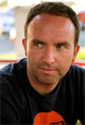
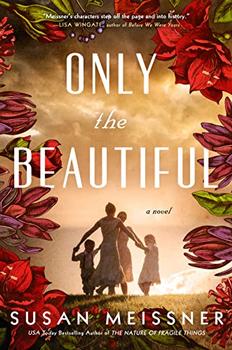
Among other questions, Jim Gavin, author of Middle Men, addresses the role his Catholic upbringing plays in his writing.
The stories in your collection move from adolescence to middle age. Was this arc intended, and did you have a particular structure in mind when you began?
I didn't have a plan before I began writing any of these stories, but at some point I started thinking of them in terms of the old guild system, the movement from apprentice to journeyman to master. Many different jobs and pastimes are evoked, but the primary vocation here is life, and what it means to be a full person. The first three stories are apprentice tales. They are brighter and more overtly comic. The protagonists are naïve and vain and clueless about the grim realities surrounding them and the people in their lives. They are racing towards the future where all their dreams will come true. The next three stories are journeyman tales. In these, the mood grows darker. The protagonists have come of age, they know a little bit more about life; they've amassed various triumphs and failures but they've had to revise their sense of the future. They still don't know who they are, and what's waiting for them, and for the most part, they are just drifting along and holding on to their old dreams and vanities. The last story, "Costello," is about a master. He has lived past his dreams. He takes the world as it is and gets on with the business of life. I didn't feel the need to make this structure explicit anywhere, but in almost all the stories there is some kind of mentor relationship going on, even if the knuckleheaded protagonists don't quite realize or appreciate it. I think the young characters all have in common a certain dreamy resistance to reality, which sustains them with a sense of hope through tough times but also catches up to them in terrible ways. They are all failures in some sense, but it's not for a lack of trying. They are looking for a way into the world, not a way out. And if they have any virtue at all, it is the wisdom and humility that comes through failure. The Lilys have a record called the "A Brief History of Amazing Letdowns" which I think would be a great alternative title for the book. The characters in these stories never get what they want, but they usually find something more important than the actual thing they were chasing.
The collection opens with a vision of martyrdom and Catholic themes and imagery play throughout. What role has your Catholic upbringing played in coming to write these stories?
It might be the most important factor. My parents made a lot of sacrifices to put me and my sisters through Catholic elementary school and high school, and later I went to Loyola Marymount University, a Jesuit school. I have fond memories of all those places, but that has more to do with the people I was lucky enough to meet than with any real understanding of the Church. In typical lapsed fashion, I had to drift away from the Church to finally become interested in its history and theology. Sixteen years of Catholic school and I was never assigned the Divine Comedy! I had to discover all that on my own, and sadly I think that's pretty common. Everything that is beautiful and inspiring about the Church has been buried under the rubble of a few conservative talking points. All the characters in the collection come out of this parochial environment, and though Catholicism isn't always foremost on their minds, they can't escape its influence, and they see the world accordingly. Hokey anecdote time: my great aunt is a nun, and just an amazing person in general Many years ago, when I was in high school, she visited and we all went to mass. At the time, my mom was heavily involved with our parish school and constantly at odds with the pastor, an arrogant asshole who made everybody's life miserable. My mom referred to him, with her usual subtlety, as "Father Hitler." As we pulled into the parking, Father Hitler walked in front of our station wagon. My dad slowed down. My mom said, "Hit him." We all laughed, but then my aunt said, "Oh look at that poor man. He's suffering." I thought she was crazy at the time, but that's because she could see what I couldn't: we're all suffering and we all need mercy. I think that's true beyond the perameters of any religion, but Catholicism dramatizes this struggle in a beautiful and mysterious way. If nothing else, it's a useful starting point for a ficiton writer. Most of the characters in these stories are looking for mercy, and some of them are lucky enough to find a person who is selfless enough to provide it.
What is the significance of the title? Why are these Middle Men?
These characters are all caught in the middle, stuck half way between the heaven they assume they're moving towards, and the hell that is actually waiting for them. I mean this in terms of money. The context of this book is the American middle class, at least as I understand it. Neither of my parents went to college, and none of my friends had parents who went to college. They were electricians and plumbers and truck drivers, but at the time, those jobs provided more than enough for people to own a house in a decent neighborhood. The kids I grew up with were all expected to do better than their parents, to go to college and use their brains instead of their hands. My family always lived month to month, with no savings, and after my dad lost his job, my parents spent the next fifteen years trying and failing to climb out of debt. We did our best, and managed to hold onto the house for a while, but the bank finally took it last year. In this way, I think we were very typical of the middle class, working more and more for less and less, and always living beyond on our means. And yet we had it so much better than so many people and I've never considered myself anything but extremely lucky and thankful for everything I had growing up and all the opportunities I had to get a good education. Anyway, I say all this because throughout the book, money gnaws at the souls of the characters. It's not always the most important thing in their life, or their sole motivation, but it colors every decision they make. In Ulysses, Stephen Dedalus is constantly tabulating the coins in his pocket, trying to figure out his next move. My relationship to money is ignorant and often deranged and in that sense I suppose my ideal reader would be anyone who has ever ever tried to make a student loan payment with a credit card, only to have it denied because the loan and credit card were issued by the same bank, and so instead of dealing with the situation in any kind of rational way, you spend the next year not answering the phone and throwing away all the letters from the student loan people, and while this is happening you're working multiple jobs and reading books and watching the Simpsons and drinking with friends and falling in love and losing people you love and eating lots of fast food and dreaming of some kind of magical windfall that will allow you to pay off you and your family's debts all at once, even though deep down you know it will never happen because you're fucked like everybody else which is ok because you have friends and family and Withnail and I and offshore winds and Paul Pierce's step back jumper. Or some version of that, anyway.
Unless otherwise stated, this interview was conducted at the time the book was first published, and is reproduced with permission of the publisher. This interview may not be reproduced or reprinted without permission in writing from the copyright holder.

Nickolas Butler was born in Allentown, Pennsylvania, raised in Eau Claire, Wisconsin and educated at the University of Wisconsin-Madison and the University of Iowa Writer's Workshop. He is the author of the ... (more)
If you enjoyed:
Middle Men
Try:
Shotgun Lovesongs
by Nickolas Butler

Novelist, screenwriter, columnist and short story writer Michael Chabon was born May 24, 1963 in Washington, DC. He grew up in the suburbs of Columbia, Maryland with his parents Robert, a physician, lawyer, ... (more)
If you enjoyed:
Middle Men
Try:
Telegraph Avenue
by Michael Chabon
We recommend 9 similar authors

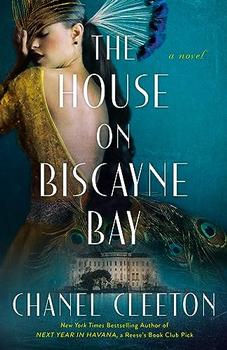
The House on Biscayne Bay
by Chanel Cleeton
As death stalks a gothic mansion in Miami, the lives of two women intertwine as the past and present collide.
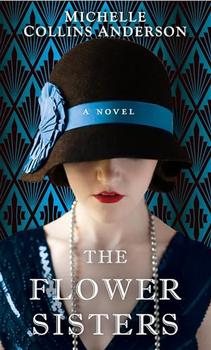
The Flower Sisters
by Michelle Collins Anderson
From the new Fannie Flagg of the Ozarks, a richly-woven story of family, forgiveness, and reinvention.

The Funeral Cryer by Wenyan Lu
Debut novelist Wenyan Lu brings us this witty yet profound story about one woman's midlife reawakening in contemporary rural China.
Your guide toexceptional books
BookBrowse seeks out and recommends the best in contemporary fiction and nonfiction—books that not only engage and entertain but also deepen our understanding of ourselves and the world around us.