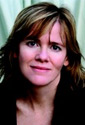
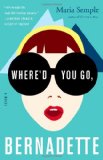
Maria Semple talks with Greg Olear about her latest novel, Where'd You Go, Bernadette?, an endlessly funny romp with surprising depth beneath its surface.
GO: I'm going to start with a question I was asked when Fathermucker came out, of my portrayal of New Paltz in that book: are you concerned that all of Seattle will turn up the "freeze" when they read Bernadette? Because you destroy that place.
MS: I'm not at all worried. First off, the people who seem to love the book the most are the ones from Seattle. Not only do they find the book funny, but I think they find it especially hilarious that I'd do something so ballsy as move to their city and shred it. Second, the book ends up being very pro-Seattle, and not that you asked, but that's how I feel about the place now. (Although I didn't when I first moved here three years ago.) Also, I think there's a real sweetness to the book that rises above the individual rants.
GO: How about Canadians?
MS: Yeah, Canadians will probably be offended. But who cares?
GO: When I teach, I stress the idea that when we read a novel, we should have an idea of what it is that we're reading. Gatsby is Nick Carroway sitting in St. Paul jotting down his recollections of the previous summer; Catcher is a transcript of Holden Caulfield spilling his guts to a therapist in a sanitarium. Many if not most novels don't concern themselves with this. You use it to great effect in Bernadette, which is a sort of a 21st century epistolary mash-up novel. Tell us about that process.
MS: As soon as I realized the book was an epistolary novel, I wrote about twenty pages in a wild rush. But then something started to bug me. Who was putting these documents together? Me, the author? That seemed weird and indefensible. So I realized they had to be the work of someone.
Around that time, I was having a recurring conversation with my sister about some puzzling event in our childhood. One of those, "Remember the time we were in Squaw Valley and Mom's friend Sally drove up from LA without stopping even thought she'd just broken her leg in three places? Now that you think about, wasn't that kind of strange?" My sister, brother and I - all in our forties now - are still having these conversations about our childhood all with the same underlying question: what the hell was that all about?
Soon after, when I was sat down to write, I thought, Aha! The whole book can be the daughter's attempt to figure out the truth about a murky event that nobody wants her to know the truth about. Once it became clear that the daughter Bee would be our archivist, I realized she had to be the narrator, too.
GO: The eponymous Bernadette is an architect - the world's most famous female architect in what has historically been, as you note, a male-dominated profession ("Even Ayn Rand's architect was a man!"). Do you have architectural training? How did you research this?
MS: I have no architectural training but I went through a long period where I liked to fix up houses. Plus I'm a house snob. Nobody can point out what's wrong with a house quicker than I. It's not something I'm proud of, incidentally. But the slight ugliness of the attitude fit perfectly with the character of Bernadette. I knew I'd have something to write to if I made her an architect.
Also, and mainly, I wanted to write about a woman who was unable to overcome crushing artistic failure and as a result, became a real trouble maker to herself and those around her. An artist who's not creating.
GO: Bernadette Fox's signature achievement is the Twenty Mile House (the contemplation of which I'm sure made Jonathan Franzen dizzy with delight). Was that your idea? Because it's a pretty awesome idea.
MS: I knew I had a character who was an architect who was unable to overcome failure and she was living in Seattle in the year 2012 with a 15-year-old daughter. I also knew that the family had moved from LA. So I sat down with Paul Lubowicki, our architect, great friend and genius-at-large. I told him I needed to have a woman architect working in LA in the 90?s who was arguably ahead of her time. Arguably is a really important word, because I wanted it to be a gray area. I didn't want to say this woman was the most brilliant and important architect of all time, because who would believe that? I asked Paul what was going on in architecture in the mid-90?s in LA.
Paul said green wasn't happening yet and I kept pushing him in that direction, trying to come up with some believable early form of green building. But he got stuck on the fact that I needed my character to be a woman working alone. He said that wasn't happening at all back then. He convinced me that if I wanted to write with any authority about this fictional character, I needed to deal with the fact that she was a woman.
And the 20 Mile House thing… I don't know. I think I'm so offended by the amount of waste that goes into building a house, that I needed to work that in. So all those things… the woman working alone + LA in the mid-nineties + my aversion to waste = 20 Mile House.
GO: When I read a really good book - and this happens only sometimes, even when the book is good - there are certain moments during the experience of reading when I feel a lightness in my chest and goosebumps on my arms, and I say to myself, often out loud, "Wow - that's cool. I love that." Examples: in Kavalier and Clay, when the former escapes from Prague; in Middlesex, during the escape from Smyrna. There are a number of these moments in Bernadette, I'm pleased to report. The explanation of the Twenty Mile House and Elgin Branch's TEDTalk, to name but two. Is this something you experience when you read books, and is it an effect you hope to achieve?
MS: With every book, there's a stage early on when your head is afire with all the possibilities of what it can be. Sometimes, suddenly, you get some big ideas. In the case of Where'd You Go, Bernadette, those ideas were: the magazine article that was an oral history of Bernadette's career; the TEDTalk; Bernadette's letter explaining what she's been doing for 20 years; the intervention scene; the Rockettes; and Bernadette's final latter.
The moment I thought of these things, I immediately flinched, because I thought, There's no way I can write that, it's too hard. But I couldn't turn back. I just had to roll up my sleeves and hack away. And many, many drafts later, the scenes were convincing.
The TEDTalk, for instance. The husband was a big Microsoft guy who gave a TEDTalk. For a while, I thought I could get away with never talking about what the TEDTalk was. But I mentioned it so many times that it would be a wank if I just glossed over what exactly everyone was so excited by. And again, I remembered something I read in college, in the New York Times, about monkeys being able to move a ball on a video screen just by thinking about it. Thanks to the magical internet, I was able to find that exact article and I did some research on Brain Computer Interface and came up with a reasonable but mind-blowing 2012 version of this. Speaking of the New York Times, just last week there was a big cover story on the exact thing that Elgie is presenting in his TEDTalk. That made me happy, to know I had gone in the right direction.
GO: Elgin Branch is an awesome name. To me, it's a smashing together of Elgin Baylor and Elton Brand, a basketball flavored name. True?
MS: I love that name, too. I love all my names and work hard to get there. Names in novels are devilishly complicated. They have to stand alone and also work with the other names in the book. For instance, you don't want them sounding too similar to each other. You don't want too many ending in the sound "ee." You want them to have different numbers of syllables. Mind you, I'm doing all this for the reader. I hate it when a writer names one character Mark and another Michael. (This happens, can you believe it?!) Those names are totally interchangeable to me and so half of my reading experience is trying to remember, "Is Michael the husband or the brother?" At the same time, you don't want the names to be too cutesy and unique or else it becomes cloying.
Elgin Branch - there was a guy working on one of our houses years ago named Elgie. I thought that was a super-cool name, and figured it was short for Elgin. I must have stored it away. And Branch, that name came in response to Bee's name. I liked the name Bee and needed to come up with a last name for her. I went on many long walks, going through possible last names in my head. The requirements in that case: like all names, they need to be recognizable and impossible to mispronounce. (On a side-rant, I recently read and loved the novel Brooklyn by Colm Toibin but was maddened by the heroine's name, Eilis. I had no idea how to pronounce it, and when you're reading, you're always pronouncing names in your head.) Anyway, because Bee ends with a soft ee sound, I wanted a hard consonant sound for the first syllable of her last name. Bee Avery, for example, sounds bad to me, and so does Bee Thayer. I wanted something strong for the last name and B seemed like a good letter for this.
I bought, on eBay, a Social Register of Denver from the 1970s and flipping through it helps me immensely with American last names. I think I found "Branch" by thumbing through the Denver Social Register.
GO: The many basketball references in the two books suggest you're a fan of roundball. What teams/players do you like? (P.S.: Go New York go New York go).
MS: Football! The Denver Broncos! John Elway era.
GO: Virginia Woolf once noted that although health is such an important factor in people's lives, it's under-utilized in literature. You're one of the few writers I know who incorporate illness into your work—not as some big plot point, but as part of the lives of your characters. In This One Is Mine, Sally is diabetic, Teddy has hepatitis, and Jeremy has Asperger's; in Bernadette, Bee is born with the heart defect, and Soo-Lin's father went blind. Is this intentional?
MS: I've never done this consciously, but it's weird now that you mention this. I liked the idea of a teenager who had gone through a series of operations as a child, and her parents are still traumatized it, but she doesn't remember any of it.
Also, very early on I had an image of Bee being small. I liked a small girl fighting for the honor of her mother. It looked right in my imagination. I think I might have unconsciously stolen it from A Prayer for Owen Meany. He has that voice, but isn't he small, too?
GO: He is. There's a terrific scene in This One Is Mine in which David, the enraged husband of the protagonist, goes to a sweat lodge. We expect that David—and through David, you—will take a flamethrower of ironical snark to the spiritual experience of a sweat lodge, but you don't do that. Instead, you give full voice to the totality of the experience. You honor the religious aspect. There's a similar moment in the new book, at a Rockettes show of all places.
MS: I am in no way a religious person but there's always been something to me so poignant/repulsive/heartbreaking/enviable about religious people. (You can see I'm pretty mixed-up on the subject). But I do know that all people want to feel love and connection. I also believe that the resting state of all people is love. But that in the course of our messed-up childhoods and the humiliations of adolescence and disappointments of adulthoods we drift away from this primal loving state. All I've ever experienced myself is glimpses of it. And yes, you do get these glimpses at cheesy obvious times like yoga classes or sweat lodges or chanting circles. But you also get them at the most random seeming times. It happened to me once at the Rockettes Christmas Show, in a very similar way to what Bee describes.
GO: Like Bernadette, you went to Choate. Was your experience there as pleasant as hers?
MS:
I loved Choate. I intended to write nice things about Choate, and the book started off that way, with Bernadette signing its praises. But when I realized that Bee was going to Choate, in what ended up being very bad circumstances, I had no choice but to make her experience at Choate a bad one. Sorry, Choate!
GO: Did you, like Bernadette, go to Antarctica? If so, what did you make of it? My father-in-law, during his world travel phase, did. He did not like it. All he said was, "Too cold."
MS: Again, loved it! I had the opposite reaction to your father-in-law. "Surprised it isn't colder!"
GO: Your father is Lorenzo Semple, Jr. He wrote, among other things, Three Days of the Condor, Flash Gordon, Never Say Never Again, and the Batman show which reruns I watched obsessively when I was a boy, and which remains brilliant. What was it like growing up having a screenwriter as a dad? Because, I mean, holy cool-bring-your-father-to-career-day-in-grade-school, Batman!
MS: I had a enviable childhood in the sense that we had birthday parties at the actual Batcave and Thurston Howell III would come over for dinner. My dad worked at home when he wasn't on location, so my main experience was, "Be quiet! Your father is working!" And more than anything, perhaps, it taught me that you could have a writer as a career. Plus, he gives really, really good notes. Especially on my novels.
GO: In the acknowledgements, you thank Mia Farrow. Do you have a pet goldfish named Mia Farrow, or is this Mia Farrow Mia Farrow you're talking about, and if so, what's the deal?
MS: I met Mia one summer in Bora Bora, on location for my father's movie, Hurricane. She took a liking to me, and me to her, and we stayed in touch for a long time, but then fell out of touch.
When I was in the early stages of writing Where'd You Go, Bernadette, Mia called out of the blue and we had some very deep phone calls which shook me to my core. She remembered me so vividly as a fifteen year old, and reflected back to me not just the emotional pain I was obviously in, but my sweet, strong, quiet nature. I really wouldn't have thought this about myself (and it's certainly not how I would describe myself now) but it was something Mia saw through to. And so that's where Bee came from… the fifteen year old version of myself that Mia told me about.
In many ways, that was the riskiest thing about writing the book (or so it felt at the time)… the decision to make Bee sweet, strong and loving. I thought, if I have a fifteen year old narrator, don't I have to stuff her with teenaged attitude and awful au courante slang? But after reconnecting with Mia, I decided to go deep and write Bee from the quiet, sweet place inside me. As a result, Bee's the real heart of the book. And of course, as I was writing it, it seemed obvious that it was exactly the right personality for the daughter of unhinged Bernadette. Wildness seems to skip a generation and all that.
GO: Part of your bio reads "wrote for Arrested Development," which is sort of like wearing a medal that says "I am smart and really funny." I've heard you deflect compliments about that show—which rests comfortably in the rarefied comic-genius strata with The Simpsons, Extras, the last season of Curb and maybe a few eps of The Chappelle Show—to Mitchell Hurowitz, but I suspect you're being modest. Is there any part of that show—a single line is all I require—that you can claim authorship of?
MS: I'm not one of those writers who can (or would) quote myself. I honestly can't remember anything specific lines from Arrested or the other shows I worked on. I remember the writers, the room jokes and of course, what I ordered for lunch.
Interview by Greg Olear, first published in The Nervous Breakdown on August 18, 2012. Greg Olear is the Los Angeles Times bestselling author of the novels Totally Killer and Fathermucker and founding editor of The Weeklings. Interview reproduced with the permission of Greg Olear, all rights reserved.
Unless otherwise stated, this interview was conducted at the time the book was first published, and is reproduced with permission of the publisher. This interview may not be reproduced or reprinted without permission in writing from the copyright holder.

Robert Boswell has published seven novels, three story collections, and two books of nonfiction. He has had one play produced. His work has earned him two National Endowment for the Arts Fellowships, a Guggenheim Fellowship, ... (more)
If you enjoyed:
Where'd You Go, Bernadette
Try:
Tumbledown
by Robert Boswell
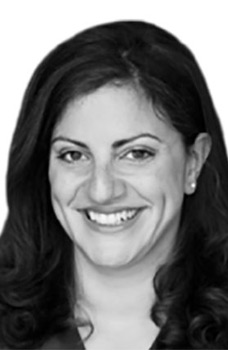
Taffy Brodesser-Akner is a staff writer for The New York Times Magazine. She has also written for GQ, ESPN the Magazine, and many other publications. Fleishman Is in Trouble is her first novel. (more)
If you enjoyed:
Where'd You Go, Bernadette
Try:
Fleishman Is in Trouble
by Taffy Brodesser-Akner
We recommend 16 similar authors

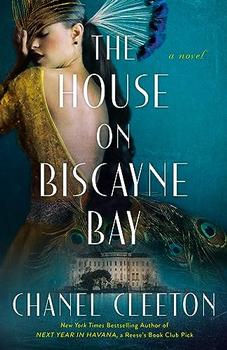
The House on Biscayne Bay
by Chanel Cleeton
As death stalks a gothic mansion in Miami, the lives of two women intertwine as the past and present collide.
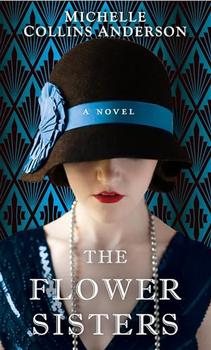
The Flower Sisters
by Michelle Collins Anderson
From the new Fannie Flagg of the Ozarks, a richly-woven story of family, forgiveness, and reinvention.
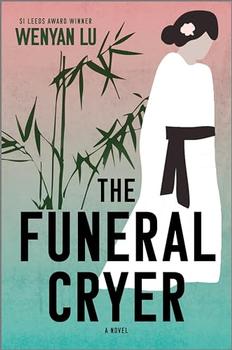
The Funeral Cryer by Wenyan Lu
Debut novelist Wenyan Lu brings us this witty yet profound story about one woman's midlife reawakening in contemporary rural China.
Your guide toexceptional books
BookBrowse seeks out and recommends the best in contemporary fiction and nonfiction—books that not only engage and entertain but also deepen our understanding of ourselves and the world around us.