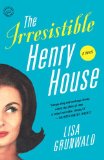
Lisa Grunwald discusses the shocking (and now outdated) practice that inspired her novel, The Irresistible Henry House - using real, orphaned babies to teach college classes on mothering.
When you talk to people who've read The Irresistible Henry House, what's the first question they usually ask?
It's almost always whether the story was actually based on a real practice, whether people actually used real babies to teach college classes on mothering. The answer is yes, but I've sent a lot of incredulous people to the Cornell University website where I first found the photograph that helped inspire the novel.
How did that discovery come about?
In 2005, I was doing research for an anthology of American women's letters. Specifically I was hoping to find a letter from a home economics student. There was an online exhibit at the Cornell website called "What Was Home Economics?" Among other photographs was this captivating image of a baby called "Bobby Domecon" - the last name a combination of "Domestic" and "Economics." (Historian Joan Jacobs Brumberg at Cornell told me that it's pronounced "Dough-me-con.") I quickly learned that at Cornell, from the 1920s through the 1960s, babies supplied by local orphanages were used to teach mothering skills to students, who would take turns bathing and feeding and dressing their charges. Last time I checked, the site was still up at www.cornell.edu, and it's well worth a look.
Did you ever think about tracking down some of the real children?
I certainly thought about it. Before I was a novelist, I was a journalist, and the reporter in me was really drawn to the idea of writing a nonfiction book. But two things changed my mind. First, I just loved the idea of the practice house as the premise for a novel and as the starting point for a fictional character. How would he ever learn to trust someone? How would he feel about women? How would he ever be able to draw a distinction between being loved and being used? And where might all that lead him - romantically, professionally? It was just - yes, irresistible to me to ponder these questions. And the second thing? Well, I suspected that it would be virtually impossible to find enough of those now-grownup children to make a nonfiction book complete. After their time in the practice houses, the babies were returned to their orphanages and adopted like any other children, or put into foster care. Very few records were kept.
Since the novel's publication, have you heard anything more about the practice?
I did find a series of articles about a case at Eastern Illinois State College, where the superintendent of the Child Welfare Division had objected to the practice. This didn't deter a home ec teacher named Ruth Schmalhausen, who passionately defended the practice. At the time - this was the mid-fifties - it was really very common. The program was available at some fifty colleges around the country. In relating the Schmalhausen controversy, Time magazine took what I thought was a somewhat snarky position about the superintendent's objections, writing "Heaven only knows how many neuroses little David might develop." It was one of those moments during the research when I really felt the distance we'd come in the way we think about childhood.
Some critics have compared Henry to Forest Gump and T. S. Garp. How accurate do you find those comparisons?
Those are extraordinarily memorable characters in fiction, and to think that Henry has been mentioned alongside them just thrills me. But certainly some of the comparison comes from the fact that all three novels are centered around young men whose stories coincide with, and in certain ways reflect, the changes that occurred in this country's social and cultural history.
Did you have to do research on those changes, too, or are you and Henry of the same generation?
I'm a half-generation younger than Henry. He was born in 1946, and I was born in 1959, so many of the cultural milestones he encounters are things I encountered, but from a much younger perspective. And I loved doing the research. As Henry grows up, we see the new childcare book by Benjamin Spock and the new magazine Playboy from Hugh Hefner. We hear music from Bing Crosby and the Beatles. We witness the March on Washington, the riots at Berkeley, the opening of Hair and the release of Yellow Submarine.
And ultimately what does all that have to do with Henry?
It's the chaotic but passionate backdrop against which he tries to find a place and a person with whom he feels authentic, trusting, and trustworthy. It's a journey.
And do you know how it ends? What happens after the last page?
If I know, I'm not telling.
Interview conducted by Random House Reader's Circle and is reproduced with permission.
Unless otherwise stated, this interview was conducted at the time the book was first published, and is reproduced with permission of the publisher. This interview may not be reproduced or reprinted without permission in writing from the copyright holder.

T.Coraghessan Boyle is the author of twenty-eight books of fiction, including, most recently, After the Plague (2001), Drop City (2003), The Inner Circle (2004), Tooth and Claw (2005), The Human Fly (2005), Talk Talk (2006), ... (more)
If you enjoyed:
The Irresistible Henry House
Try:
Drop City
by T.C. Boyle
George Hagen was born in 1958 in Harare, Zimbabwe. His parents are from South Africa, and, like the itinerant family described in his novel, The Laments, they couldn't stay put anywhere. By 1964 he was living in the suburbs ... (more)
If you enjoyed:
The Irresistible Henry House
Try:
The Laments
by George Hagen
We recommend 7 similar authors

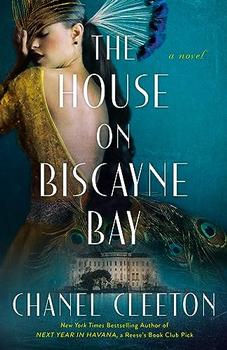
The House on Biscayne Bay
by Chanel Cleeton
As death stalks a gothic mansion in Miami, the lives of two women intertwine as the past and present collide.

The Flower Sisters
by Michelle Collins Anderson
From the new Fannie Flagg of the Ozarks, a richly-woven story of family, forgiveness, and reinvention.

The Funeral Cryer by Wenyan Lu
Debut novelist Wenyan Lu brings us this witty yet profound story about one woman's midlife reawakening in contemporary rural China.
Your guide toexceptional books
BookBrowse seeks out and recommends the best in contemporary fiction and nonfiction—books that not only engage and entertain but also deepen our understanding of ourselves and the world around us.