Uruguayan-American Carolina De Robertis discusses her debut novel, The Invisible Mountain, her inspiration and some of the elements that made it possible for this ambitious project to come to fruition.
Did you purposefully set out to retell the history of Uruguay through the eyes of women?
In a way. I knew, when I began, that I wanted to write a narrative inspired by the family stories I had heard while growing up, from my parents’, grandparents’, and great-grandparents’ generations. It quickly became clear that the history of Uruguay itself was also central to the project and that women would form the heart of the book. In my family’s oral tradition, the male ancestors tended to come with long, elaborate stories, while the women were often summed up in a brief sentence or two. Where did they come from? What did they see in their world, and breathe back into it? What treasures lie buried in their silence? One of the marvelous things about fiction is its ability to excavate, explore, or reinvent such treasures, when the original truths have been lost.
The novel spans the lives of three different women over 90 years. Was it challenging to develop a project of such a broad scope?
Let’s put it this way: it was an adventure, and like many true adventures, it involved setting out without a map, a compass, or an inkling of how long or arduous the road would be. If I had known what would be required, how many years (eight) and how many drafts (I lost count), I would have been too terrified to begin. The truth is that I had no idea what I was doing when I started: I began, not because I thought I could actually write this novel, but because I was enraptured by something I could not yet see, could not hold in my hands but longed to. It was a reckless leap into the creative process, armed only with my own hunger and curiosity. Fortunately, this allowed me to embark and saved me from getting daunted until it was too late to turn back.
The narrative mentions many real-life people and events and is partly based on your own family’s history. How did you balance the story’s historical, autobiographical, and fictional elements?
My family history provided the impetus—the initial spark that gave birth to the characters—and lit up the essence of their lives. Extensive historical research provided them with a ground to walk on, a climate to inhabit. The sociopolitical landscape of the book is true to historical reality, and some of the historical figures who make appearances have even kept their names: Evita and Che, of course, but also less famous figures such as Ernesto Bravo, a young man brutalized and framed by the Peronist police in 1951, and Dan Mitrione, the torture trainer sent by the United States in 1970. Finally, of course, there was the element of fiction, of sheer invention, which is more limber than oral or formal history and so has freer ways of exploring truth. The end result is a kind of braid, woven from three intricate strands: family stories, actual history, and pure imagination.
Have you traveled to Uruguay?
I grew up in England, Switzerland and California. My parents attempted an assimilationist approach to coping with the immigrant experience, and I visited Uruguay only twice as a child and teenager. Nevertheless, my second visit, at the age of 16, imbued me with images and sounds and smells and textures and relationships that changed the way I approached the world and my place within it. Since then, the longing to return has never left me.
Do you feel connected to your Uruguayan roots?
When I was in my mid-twenties, my parents disowned me for marrying a woman, and the journey of writing about Uruguay and Argentina became an even more urgent journey of reclaiming roots I had been cut from. I returned three times while writing the novel, and each time I connected with my wonderful extended family, who did not follow my parents’ suit. I conducted research in every way I could: finding and reading books, sparking conversations, asking questions, sifting through old photographs, taking road trips, prowling the streets, smelling the streets, watching strangers, listening to the songs of a neighborhood. All of these experiences have poured into the novel. In some ways, this book is my sprawling, intimate love letter to the nation, whose culture, people, and legacies continue to capture and amaze my heart.
Some aspects of The Invisible Mountain are reminiscent of works by Gabriel García Márquez, Isabel Allende, and Junot Díaz. Where do you place yourself within the continuum of authors writing about Latin America?
I am immensely nourished by, grateful for, and indebted to a range of Latin American authors. There are tremendous riches in the Latin American tradition, as well as in contemporary literature emerging from Latin America and from bicultural Latino writers in the United States, and I could spend many lifetimes plumbing these riches. At the same time, writers have always read widely and drawn from many streams of literature, and Latin American writers are no exception. Gabriel García Márquez was deeply influenced by the magic realism of Metamorphosis (though Kafka never receives that label), and Jorge Luis Borges was inspired by The Arabian Nights and William Faulkner. I always remember these examples and hold them close to my heart, because my own sources of inspiration also transcend borders.
What is your next project?
My second novel, which is well underway, tells the story of a young Argentinian woman raised in a military family, whose world is shaken when a dripping, haunted man appears in her living room. He turns out to be the ghost of a desaparecido—one of thousands the government kidnapped, tortured, and threw from airplanes into the sea in the 1970s—risen from his watery grave, and his presence forces her to confront the hidden, violent past that connects them. In some ways, this is a very different book; for one thing, it spans three decades rather than nine. But some of the underlying themes—such as the interplay of historical forces and everyday life, the truths hidden inside silence, and the twisting path toward authenticity—seem to be returning to the fore.
Unless otherwise stated, this interview was conducted at the time the book was first published, and is reproduced with permission of the publisher. This interview may not be reproduced or reprinted without permission in writing from the copyright holder.

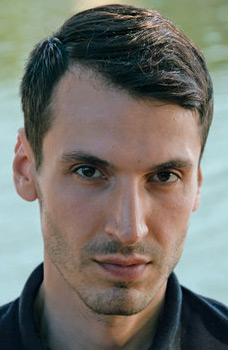
Pajtim Statovci was born in Kosovo to Albanian parents in 1990. His family fled the Yugoslav wars and moved to Finland when he was two years old. He holds an MA in comparative literature and is a PhD candidate at the ... (more)
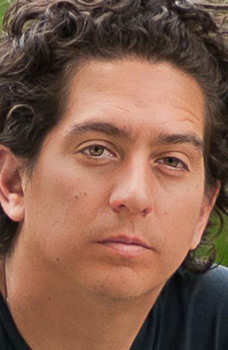
Born in Lima, Peru in 1977, Alarcón was raised in Birmingham, Alabama. He is Associate Editor of Etiqueta Negra, an award-winning magazine published in his native Peru, and in 2013 served as a Fellow in the Investigative... (more)
If you enjoyed:
The Invisible Mountain
Try:
At Night We Walk in Circles
by Daniel Alarcon
We recommend 15 similar authors

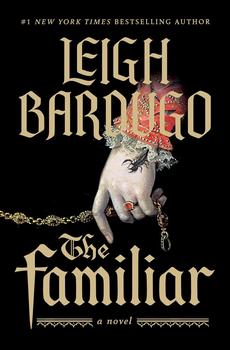

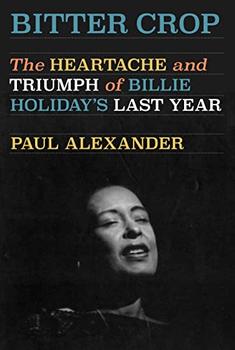
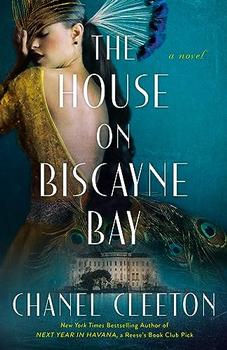
The House on Biscayne Bay
by Chanel Cleeton
As death stalks a gothic mansion in Miami, the lives of two women intertwine as the past and present collide.
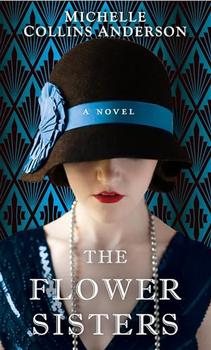
The Flower Sisters
by Michelle Collins Anderson
From the new Fannie Flagg of the Ozarks, a richly-woven story of family, forgiveness, and reinvention.
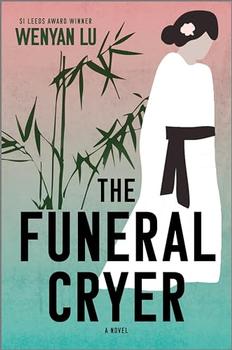
The Funeral Cryer by Wenyan Lu
Debut novelist Wenyan Lu brings us this witty yet profound story about one woman's midlife reawakening in contemporary rural China.
Your guide toexceptional books
BookBrowse seeks out and recommends the best in contemporary fiction and nonfiction—books that not only engage and entertain but also deepen our understanding of ourselves and the world around us.