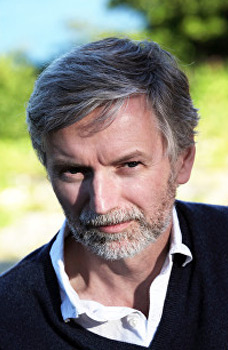
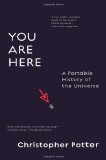
Christopher Potter discusses You Are Here - a layman's exploration of the universe and our relationship to it, as seen through the lens of today's most cutting-edge scientific thinking.
Why did you write this book?
Like many writers do, I wrote the book to see if I could find answers to some
questions that had been bothering me. Some of them are the kind of questions
that bother children, who then eventually put them to one side and think about
other things. But these questions have gone on bothering me into adulthood.
Where did the universe come from? Where are we in the universe? How could
something come from nothing? Will the universe come to an end? I suppose it's
because science does actually have answers to these sorts of questions that I
got interested in science in the first place.
Of course I'm not an expert, so writing this book became my way of finding out
how much a general reader - an interested non-scientist - could learn about
science if left to his or her own devices.
Was it possible to tell the story of science all in one short book with no
equations (well, there is one), and without getting bogged down in
technicalities? That was the impulse that kept me writing.
But isn't this a book about the universe?
I use the universe as a way of talking about all of scientific knowledge. In a
way, when we look to the horizon of the universe we are looking out to the
farthest extent of our scientific knowledge, to the farthest extent of our
understanding of the universe. As our knowledge grows so does the universe. The
universe is always bigger than our understanding of it, which is hardly
surprising given that we are in it, and part of its output.
Science sets out from the position that the world is made out of things that
move. Science ultimately tries to find out what those things are made of, and
what we mean by motion. It turns out it's really rather hard to answer those two
questions.
A world made out of moving things is what we call the material world. It is the
part of Nature that science describes. Some scientists might argue that there is
nothing else, that the world science describes and the world of Nature are one
and the same thing, and my book is partly an attempt to balance such extreme
materialism.
Summarize our current understanding of the material universe in a single
sentence
I would say: The universe is a patch of light that evolved.
Our story of the universe begins with a Big Bang: a very hot patch of light that
rapidly expands. That expanding patch of light has been expanding and evolving
for about 14 billion years. It has evolved into all the structures of matter we
find in the universe, including (incidentally but perhaps not ultimately)
ourselves who tell this story.
Why you?
For twenty-five years I was an editor of books. For almost twenty of those
years I worked at 4th Estate, where I published novelists (Annie Proulx, Michael
Cunningham, Carol Shields, Michael Chabon, Hilary Mantel) and writers of
non-fiction (Dava Sobel, Simon Singh, Matt Ridley, Peter Singer, James Gleick).
As a publisher, I often found myself trying to explain the ideas of writers I
published on one side of the science divide to writers on the other. Over the
years I realised I liked doing it. I also realised that many of my friends, even
though they were really interested in science, and had thoughtful questions to
ask about it, felt there weren't science books that were addressed to them. I
feel I understand those who are ambivalent about science, who were put off at
school (as I nearly was), who would like to know more but have not yet found a
way in.
I'd always hoped during my time as a publisher that I'd find someone to write a
book that crossed the divide. I suppose after years of looking without success I
decided I'd better do it myself.
There are other histories of science. How does your differ?
As far as I know mine is the only one that covers so much of the story:
electromagnetism, Einstein's theories of relativity, quantum theory, the
evolution of life, theories of consciousness and so on, and all in so few pages.
The style is unusual: I'm more interested in the ideas behind an experiment
rather than the experiment itself. To that extent the book is philosophical, but
not in a rarefied way. Children are philosophers: they ask 'why?' as soon as
they can speak. All children wonder about their place in the universe from their
early years. Who didn't write out his or her home address, ending with 'the
earth, the Solar system, the Galaxy, the Universe?' Science started out as
philosophy but for the last four hundred years or so we've had a methodology
that we apply to what's out there, and out of that scientific method we have won
the world of central heating, medicine, and i-Phones as well as the world of
precision bombing and global warming.
There are many excellent popular science books but I don't think anyone has
tried to write a popular book about the nature of the scientific endeavor
itself: What is it that scientists do when they do what they do?
All other forms of knowledge flow into each other, but science knowledge appears
to be a different. We take the material world so much for granted we never
question what it is. And who would dare question such a world when there is so
much of it? To question it would be to question progress itself. But perhaps
now, as we wonder whether the earth has a future, is the time we must ask
ourselves: at what cost science? We cannot unravel the material world, and who
would want to? Materialism is the greatest story ever told. But we can try to
understand what we mean by a material world and what we are in relationship to
it.
These sorts of philosophical question, however, are what I hope the reader will
ponder after reading the book. What really makes the book unique is its
structure: that the reader is taken on a quest across the universe, and learns
about science en route.
How is the book structured?
I start the journey by considering us, we human beings, who live here on earth,
among things with which we are familiar. By considering things larger and larger
in size, I eventually take the reader away from this comfortable zone into outer
space. Only gradually does the universe become more abstract, and unfamiliar.
Planets, galaxies, even structures of galaxies are not difficult to understand,
even if the size of them is mind-blowing. Out of our understanding of how these
structures relate to each other I begin to fill in some of the story of science:
the history of scientific ideas and how they have been put into practice. Once
we discover what the largest structures are in the universe the reader will
discover that we are forced to ask what the universe looks like if we travel in
the other direction, to the smallest parts of matter. Currently science still
struggles to join together theories that describe the smallest parts of the
universe to those that describe the universe at large, but out of the attempt
comes our best scientific account so far of how the universe may have evolved
(randomly from nothing) into the universe as we see it around us today.
The book, then, is a journey across the universe through all orders of size from
the smallest things to the largest things, and through all of time from the
birth of the universe to its ending. I hope that I have found a way of telling
the story of the universe that is informative, entertaining, at times dizzying,
even amusing.
Is it possible to cross the divide between art and science, or between
religion and science?
Even intellectuals can find science and scientists intimidating. W.H. Auden once
said that when he found himself in the company of scientists he felt 'like a
shabby curate who [had] strayed by mistake into a drawing room full of dukes.'
When we read a book by a scientist I think often we have to overcome some sense
of inadequacy, which we don't feel when we read a novel, no matter how
high-minded that novel might be. Science is ultimately written in the terrifying
language of mathematics that we, the general public, do not speak, but that
doesn't mean we need be excluded from a debate about the nature of the
scientific enterprise itself.
In a world that has become ever more uncertain and unsettled, this may be the
moment to remind ourselves that those scientists and those bishops who talk
about certainty, do not describe the world as it is. True prophets and
philosophers remind us that the nature of nature is uncertainty and change.
Death, as Freud continually reminds us, is what certainty looks like. Life is a
process of continual renewal and change.
Unless otherwise stated, this interview was conducted at the time the book was first published, and is reproduced with permission of the publisher. This interview may not be reproduced or reprinted without permission in writing from the copyright holder.
Bill Bryson was born in Des Moines, Iowa. He moved to England, where he worked for The Times and The Independent, and wrote for many major British and American publications.
Bill Bryson's bestselling books include A Walk ...
(more)
If you enjoyed:
You Are Here
Try:
A Short History of Nearly Everything
by Bill Bryson
Margaret Lazarus Dean is the author of The Time It Takes to Fall. She is a recipient of fellowships from the NEA and the Tennessee Arts Commission and is an associate professor of English at the University of Tennessee. Her ... (more)
If you enjoyed:
You Are Here
Try:
Leaving Orbit
by Margaret Lazarus Dean
We recommend 7 similar authors


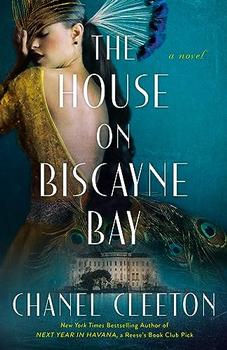
The House on Biscayne Bay
by Chanel Cleeton
As death stalks a gothic mansion in Miami, the lives of two women intertwine as the past and present collide.
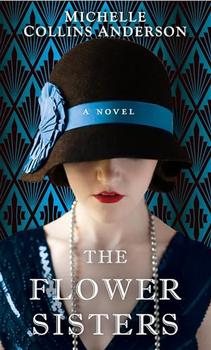
The Flower Sisters
by Michelle Collins Anderson
From the new Fannie Flagg of the Ozarks, a richly-woven story of family, forgiveness, and reinvention.
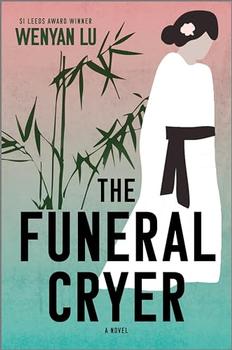
The Funeral Cryer by Wenyan Lu
Debut novelist Wenyan Lu brings us this witty yet profound story about one woman's midlife reawakening in contemporary rural China.
Your guide toexceptional books
BookBrowse seeks out and recommends the best in contemporary fiction and nonfiction—books that not only engage and entertain but also deepen our understanding of ourselves and the world around us.