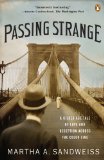
An interview with Martha Sandweiss in which she discusses her book Passing Strange, a biography of Clarence King who lived a double life - as the celebrated white explorer, geologist and writer Clarence King; and as a black Pullman porter named James Todd, married to Ada with whom he had five children.
What drew you to the story of Clarence King?
Many years ago, in graduate school, I read a marvelous biography of King, one of the great heroes of western exploration. The author devoted only about five pages of this five hundred page book, however, to a discussion of King's relationship with an African American woman named Ada. It struck me that a thirteen-year relationship that produced five children deserved more attention than that, even if it was a secret life that would be difficult to uncover. In our celebrity-obsessed world, public figures find it very difficult to have truly private lives. I decided to return to the story of Clarence King because I was curious to learn more about his secret life, but also because I was curious to figure out why it was so much easier for public figures to maintain their privacy in the late nineteenth century.
What turned out to be the most surprising aspects of King's life for you?
I uncovered the fact of King's racial passing the very first day I turned to this project. No one had ever considered the possibility that this fair-haired, blue-eyed man might have represented himself as a person of African American descent. No fact proved as surprising to me as that! I used the census document that disclosed King's racial masquerade to me as the basis for the opening anecdote of the book.
You suggest that at this particular historical moment, King's personal life is a richer vein to mine than his scientific accomplishments and his more public life. Why do you think no one has told the story of King's racial passing before?
King's friends, as well as his earliest biographers, idolized the man, regarding him as an ideal mix of physical courage, charming wit, and dazzling intelligence. I don't think they wanted to push too hard at those aspects of his life that might challenge their ideal image of the man. Only one of King's friends knew about King's secret marriage before King's death. None knew about his racial masquerade. And though some of King's later biographers knew the general outline of his life with Ada Copeland, none cared to ask many questions about her or to explore the world she and King shared. They viewed his private life as essentially irrelevant to his professional life.
It remains unclear just how much Ada knew of her husband's deceptions while he was alive. What is your own view of the extent of her knowledge about James Todd's other life?
I think that Ada knew something was unusual about her husband. After all, she never met any of his friends or family members, and she must have noted that she and her husband never traveled together in very public places. But I do not believe that she knew James Todd was really the celebrated Clarence King. King revealed his true name to her for the first time in a letter written from his deathbed.
Nonetheless, we might also ask whether Ada truly believed her husband to be a man of African American descent. I think she did. She would have known many people of African American heritage in New York who had very light skin, and known that complexion might not always be an accurate marker of ancestry. She would also have known that within the African American community, light skin offered certain social privileges. The confidence with which she moved into the world as a black middleclass matron suggests to me that she thought herself married to a light-skinned black man. An interracial marriage would have been much more difficult for her to manage.
You repeatedly note how much King was admired by his contemporaries—by men like John Hay, Henry Adams, and many others. But you also include a quote from Harry Herbert Crosby who called King "the most lavishly overpraised man of his time" (p. 296). Where does King stand in your own estimation?
I see King as a brilliant thinker and an immensely talented explorer. I suppose I might concur with those who argue that in his later years he squandered his prodigious talents, at least with regard to his scientific career. As we now know, he was directing his energies and his imagination towards his secret family. But I also see him as a tragic figure, a man unable to rise above the prejudices of his time to do the right thing for his family. Even if I can forgive him for his subterfuge, acknowledging that he felt caught between the competing demands of his two worlds, I find it difficult to forgive him for not providing for his wife and his four surviving children in his will.
How difficult was your research on Ada Copeland? What were the challenges of finding public information about a former slave?
As many Americans researching their family trees know, it can be very difficult to find reliable records for enslaved people. They generally had no surnames, no birth records, none of the other sorts of civil or religious documents with which we can trace the lives of so many other people living in the United State during the early and mid-nineteenth century. As my readers will see, I had to circle around Copeland's early years, using scattered historical sources and the recollections of other people to augment the scant evidence I had about Copeland herself. I went down to Georgia to attend the reunion of her extended family. But no one there had any family stories about the girl named Ada who had moved north so very long ago. In the course of my research, however, I did track down Ada's great granddaughter and discovered—to my astonishment—that she had vivid memories of this woman who had been born in 1860! When I began my research I had no idea that Ada King lived to be 103. I never suspected I would meet someone who could describe her character and personality to me.
How would you explain King's remarkable affection for dark-skinned women and his disdain for more "civilized" white women?
This is a question I'd prefer to leave to the psycho-biographers! As I've noted in the book, King had a very close relationship with a black nursemaid as a boy. He also had a very demanding, hypochondriacal mother with whom he grew quite close after the early death of his father. He later assumed the emotional and financial responsibility for his mother's care, a burden that weighed heavily on him all his life. Ada Copeland was about as different from King's mother as one could imagine, in terms of social class, race, and personal wherewithal. She was strong and self-reliant, and clearly held out the promise of a different sort of family life.
How difficult was it to tell this story while being unable to really know what King's life with Ada Copeland was like? How much did you have to use your imagination, as well as a scrupulous adherence to the historical facts, to write this book?
While working on this book, I often wished to be a novelist who could invent, with splendid omniscience, everything going on inside my characters' heads. But I am not a fiction writer. I am a historian whose work rests firmly upon footnoted sources. When I don't know precisely what happened at a particular moment, I signal to my readers that I am engaging in informed historical speculation by using words like perhaps, must have, would have, or likely. Two beliefs lay behind this. First, I imagine that since I know more about this story than my readers do, I have an obligation to give them my best hypothesis as to what happened. But second, since I am a historian I feel compelled never to assert something with certainty unless I have very persuasive evidence.
To what extent is racial passing still occurring in America today?
Racial passing occurs in societies in which greater benefits accrue to people of one racial identity than to those of another. Certainly, racial inequalities still exist in the United States. There's no denying that. But I like to think that we live in a world in which the sharp racial boundaries that marked Clarence King's and Ada Copeland's worlds are being erased. When Americans become truly oblivious to racial identity there will be no more reason to claim a false racial heritage.
What do you think Clarence King would think of your book, if he could read it?
He dreamed of an America in which people would be identified not as black or white, but simply as Americans. Perhaps he would shudder at his deepest secrets being disclosed, but I like to imagine he would be glad to see what happened to his children and grandchildren and pleased to see his family's story become a part of a larger American conversation about race. With a president of the United States who himself comes from an interracial marriage (and who chooses to self-identify as black), we now live in a world that even Clarence King could not have imagined possible. I think he might breathe a sigh of relief that his story could now be told, and without any great threat to his historical reputation as a scientist or writer.
Unless otherwise stated, this interview was conducted at the time the book was first published, and is reproduced with permission of the publisher. This interview may not be reproduced or reprinted without permission in writing from the copyright holder.
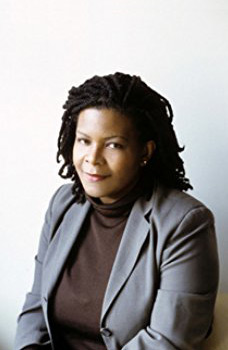
Annette Gordon-Reed is the Carl M. Loeb University Professor at Harvard. Gordon-Reed has won sixteen book prizes, including the Pulitzer Prize in History in 2009 and the National Book Award in 2008, for The Hemingses of ... (more)
If you enjoyed:
Passing Strange
Try:
The Hemingses of Monticello
by Annette Gordon-Reed
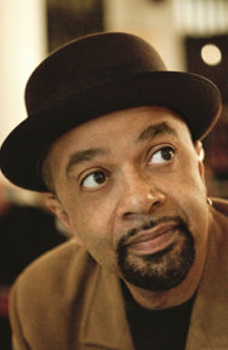
James McBride is an accomplished musician and author of the National Book Award–winning The Good Lord Bird, the #1 bestselling American classic The Color of Water, and the bestsellers Song Yet Sung and Miracle at St. ... (more)
If you enjoyed:
Passing Strange
Try:
The Color of Water
by James McBride
We recommend 6 similar authors

The Flower Sisters
by Michelle Collins Anderson
From the new Fannie Flagg of the Ozarks, a richly-woven story of family, forgiveness, and reinvention.

The House on Biscayne Bay
by Chanel Cleeton
As death stalks a gothic mansion in Miami, the lives of two women intertwine as the past and present collide.

The Funeral Cryer by Wenyan Lu
Debut novelist Wenyan Lu brings us this witty yet profound story about one woman's midlife reawakening in contemporary rural China.
Your guide toexceptional books
BookBrowse seeks out and recommends the best in contemporary fiction and nonfiction—books that not only engage and entertain but also deepen our understanding of ourselves and the world around us.