
-
Your next favorite book
is waiting.

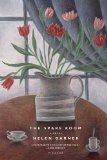
Helen Garner talks about her first fictional work - The Spare Room - and what led her to explore the themes of friendship and death in this book.
The Spare Room is your first novel for 15 years. Why did you decide to write it now and why this subject?
I had been publishing fiction, and making a living between books by writing feature journalism, since 1977, and thought of myself as both a novelist and a journalist. In the early 1990s I published a book called The First Stone, about a Melbourne University sexual harassment case; it took issue with a certain kind of victim feminism of the time, and to my great surprise (and a lot of people’s severe annoyance) it stayed on the best-seller list for months. Then I published Joe Cinque’s Consolation, an account of two Canberra murder trials, which was also well received. By then I thought I’d found my metier, and wondered if I would ever get back across the border into fiction. But then a friend I loved died of cancer. I needed to write about it. I didn’t want to write memoir or non-fiction: I wanted to go back to the freedom of fiction, where you can claim ownership of the material, and handle it in any way that enables you to create a larger, deeper truth.
The narrator, like you, is named Helen. Why did you call her that?
I called her Helen because, although the book is a novel (see above), I didn’t want people to think I was inventing one particular aspect of the story - namely, the anger that the narrator feels in the face of her dying friend’s stubborn refusal to face the facts. I was shocked by these ugly emotions and I wanted to own up to them, in the hope that other people would know them and confess them too, and this has turned out, very gratifyingly, to be the case.
This is an extremely sad book but is written with a lightness of touch and is also very funny in parts. It is poignant without being sentimental. This is a great achievement with such heavy subject matter and we wondered whether it was difficult to write?
Actually I wrote it quite fast - I think it took me about eight months. The story was burning a hole in me - I desperately needed to find a shape for it, to create some sense out of the pain of it (which is why anyone writes, in my opinion, with varying degrees of closeness to their own experience.) I loved writing it - I mean I couldn’t wait to get to the desk each morning and keep shaping, shaping, shaping. And cutting. Because when you’re writing about someone dying, you have to fight a tremendous urge to soften the story, to blur the ugly bits and make it sentimental. I kept radically attacking what I’d written. I wanted to keep the mad laughter but strip off anything mushy or misty-eyed. This is one reason why the book’s so short. When I got to the last bit, where I had to write about Nicola dying, I kept procrastinating. I wrote a lot of stuff that was all right in itself, I mean as writing, but I had a strong sense that I was barking up the wrong tree. And one day I woke up and saw it was a failure of nerve. I knew I had to tackle Nicola’s death head on. So I gritted my teeth and threw myself at it. When I got to the end I was panting. Then I lay on my office floor and cried for ages.
How important is it to tell the truth?
For some people (e.g. narrating Helen in the novel) it’s so important that it’s almost an ethical duty. This makes her, in some readers’ view, much too forceful in a situation where delicacy and patience were required. Several readers have found something fundamentalist, even arrogant, in the way Helen deals with Nicola’s inability to accept that she is going to die. I understand this response - I certainly wasn’t meaning to put forward her behaviour as a model to others in similar situations! But as a general principle I believe that truth frees us, if we can be brave enough. The passage on p. 89 that starts ‘Death will not be denied’ pretty much sums up what I think, though I know it is a very tough statement; it’s an ideal that I myself have had trouble living up to, and have hesitated to apply in complicated situations.
Helen is a great character study and the ending of the novel was perfect. Did you feel that she was, ultimately, enriched or diminished by those three weeks?
Oh, enriched, enriched, enriched.
Who are your literary influences?
I don’t know about influence - it seems to happen osmotically throughout a whole life. But here’s a list of writers I love, off the top of my head and in no particular order: Janet Malcolm and Gitta Sereny (in non-fiction); Tolstoy, Chekhov, George Eliot, Raymond Carver, Philip Roth, Alice Munro, Hilary Mantel, Primo Levi, Colm Toibin, Katharine Mansfield.
In The Spare Room, you explore themes of friendship, family, love and loss to name a few. What drew you to these topics?
You hit your sixties and people you love are dying around you. Parents, old friends, even sisters or brothers. There are suicides. You feel an urgent need to think about death, what it might mean, and what it can do to the people still living. When the chips are down you find out what friendship is, what love is. And you learn very deep things about yourself, some of them not so pretty.
In your portrayal of a middle aged woman caring for a terminally ill friend, what emotions did you wish to illuminate?
I wanted to shine a light on practical friendship - the kind of love which is not romantic or sexual but which has tremendous power to console, through tenderness and a history of shared laughter. But like all real love, it also has the power to enrage, almost beyond endurance.
How do you anticipate your book will be received? How do you think readers will react to the deeply emotional topics of death and dying?
I hope readers will trust the story enough to open themselves to it. I found it painful to write. I kept having to make myself dig in deeper. I wanted to lay bare the pitiful ruses people use to hide from the truth. Also, people caring for the dying aren’t supposed to get angry. They’re supposed to be saintly and eternally patient. There’s anger in the book, as well as a lot of wild laughter. And there’s a great freedom in facing the inevitable.
The language in The Spare Room is pared right back - every word is necessary and weighted with meaning. How did you achieve this level of clarity?
What I dreaded most of all was becoming sentimental. I kept finding myself wandering off into gentler, sweeter paths that led nowhere. So I scrubbed and I chopped and I slashed it back to what I hope is the essence. It thrills me that people say it made them laugh as well as cry. The membrane between tears and laughter is very fine.
Unless otherwise stated, this interview was conducted at the time the book was first published, and is reproduced with permission of the publisher. This interview may not be reproduced or reprinted without permission in writing from the copyright holder.


Emily Chenoweth is a former fiction editor of Publishers Weekly. Her work has appeared in Tin House, Bookforum, and People, among other publications. She lives in Portland, Oregon. (more)
If you enjoyed:
The Spare Room
Try:
Hello Goodbye
by Emily Chenoweth

Nancy Hassett Dahm is a registered nurse who specializes in cancer care. Her experience in caring for over 400 cancer patients, since 1991, is the basis of knowledge for this book. Over the years, she has developed ... (more)
If you enjoyed:
The Spare Room
Try:
Mind, Body and Soul
by Nancy H. Dahm
We recommend 14 similar authors



Knowledge is of two kinds. We know a subject ourselves, or we know where we can find information on it.
Click Here to find out who said this, as well as discovering other famous literary quotes!

Can you name the title?
Test your book knowledge with our daily trivia challenge!
Your guide toexceptional books
BookBrowse seeks out and recommends the best in contemporary fiction and nonfiction—books that not only engage and entertain but also deepen our understanding of ourselves and the world around us.
