Dan Koeppel, author of Banana: The Fate of the Fruit That Changed the World, talks about all things bananas, including Banana Republics, the fruit's role in the Garden of Eden, the source of slipping on banana peel gags, and its current status as an endangered species.
What initially got you interested in writing about the
Banana?
I read a small article in a science journal about an incurable
disease that - even though the general public hadn’t heard of it - had the
potential to destroy the world’s banana crop. I ended up with a magazine
assignment, and wrote a story on the disease. I love bananas, and I couldn’t
believe that they could disappear.
Is it true that the bananas we eat now are not the same as
the bananas from fifty years ago?
That’s right. The banana our grandparents ate was a different -
and most people say better tasting - breed called the Gros Michel. But that
banana was wiped out by a variant of the blight, called Panama Disease, that now
threatens our version of the fruit, called the Cavendish.
Is it really possible that the banana could one day be
extinct?
The Cavendish banana was adopted because it was immune to Panama
Disease. But bananas are generally very weak, because, like human identical
twins, each one is an exact genetic duplicate of the other. What makes one
banana sick makes all bananas sick. So if something really virulent comes along,
it can be a huge problem.
What are Banana Republics?
Through the 1950s, the big American banana companies - including
the ones known today as Chiquita and Dole - were so hungry for land to grow
their fruit that they asserted dictatorial, and often brutally repressive, power
over the Latin American nations where their plantations were located. Often this
would be behind-the-scenes, through puppet governments. Nations controlled by
the big fruit growers became known as "Banana Republics."
What is Panama Disease and can it be stopped?
Panama Disease is a fungus, specifically of the Fusarium
variety (three are lots of types of fusarium fungus - your garden tomatoes can
catch them. The fungi don’t travel between species, so you can’t be infected by
a banana, or anything else.) The version of Panama Disease that is now
threatening our bananas appeared first in Southeast Asia, attacking newly
planted Cavendish farms, and spreading from there. Right now, there is no cure.
What are some examples of how has the banana industry
affected history politically?
In 1929, at the behest of the banana companies, an estimated
1,000 striking banana workers and their families were massacred by Colombian
troops. The political instability that followed still plagues the South American
nation today, and is partly responsible for the rampant terrorism and
drug-related crime that makes Colombia such a dangerous place. Similar
interventions, with similar - though less dramatic - consequences, occurred in
Honduras, Panama, Guatemala, Nicaragua, and other countries in Central and South
America between 1900 and the 1970s.
What is some of the folklore or mythology surrounding the
banana?
The banana is a plant that has been revered for over 5,000
years. There’s a lot of evidence that the original Hebrew versions of the bible
considered the fruit to be the one that tempted Adam and Eve in Eden. In Africa,
where millions of people, even today, rely on the fruit as their main source of
nutrition, bananas are said to be a gift from a god called Kintu; each banana
breed eaten in Africa has a different significance, ranging from increasing
fertility to celebrating weddings to secretly tempting a wayward spouse to
return home. In Hindu mythology, the banana is known as the "fruit of the wise
man." Buddha himself is said to have meditated under a banana tree.
How did slipping on banana peels become such a universal
cultural joke?
Everybody thinks this is just a slapstick gag, but in fact,
after the fruit became popular in the U.S. (around 1890), there was so much
banana litter that walking on city streets became a real hazard. Ordinances
against throwing away banana peels were enacted, and sanitation departments -
some of them the first ever for their municipalities - were organized around
solving the problem.
Unless otherwise stated, this interview was conducted at the time the book was first published, and is reproduced with permission of the publisher. This interview may not be reproduced or reprinted without permission in writing from the copyright holder.


Nicholas A. Basbanes is an award-winning investigative journalist and was literary editor of the Worcester Sunday Telegram. His articles have appeared in The New York Times, the Los Angeles Times, The Washington Post, and ... (more)
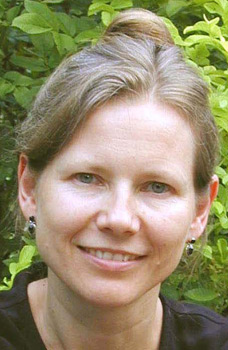
Barbara Freese is an Assistant Attorney General of Minnesota. She is known for her debut Coal: A Human History.
Freese not only helped enforce her state's environmental laws but also became fascinated by the very substance ...
(more)
We recommend 9 similar authors




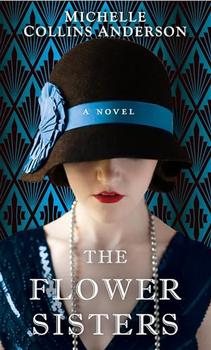
The Flower Sisters
by Michelle Collins Anderson
From the new Fannie Flagg of the Ozarks, a richly-woven story of family, forgiveness, and reinvention.
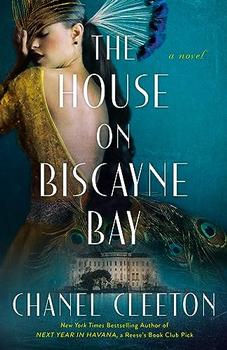
The House on Biscayne Bay
by Chanel Cleeton
As death stalks a gothic mansion in Miami, the lives of two women intertwine as the past and present collide.
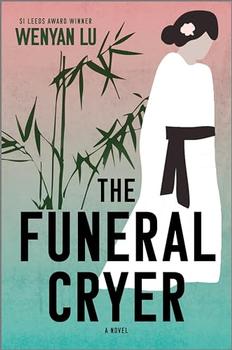
The Funeral Cryer by Wenyan Lu
Debut novelist Wenyan Lu brings us this witty yet profound story about one woman's midlife reawakening in contemporary rural China.
Your guide toexceptional books
BookBrowse seeks out and recommends the best in contemporary fiction and nonfiction—books that not only engage and entertain but also deepen our understanding of ourselves and the world around us.