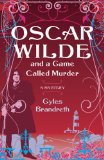
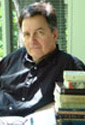
Gyles Brandreth answers questions about his new mystery series starring Oscar Wilde, published simultaneously in hardcover and paperback.
How did the idea to write a murder mystery series, with
Oscar Wilde as one of the main characters, come about?
How did it come about? It's a long story, so I'll try to keep it
short.
Since I was a boy, I have been an avid admirer of both the works
of Oscar Wilde and the adventures of Sherlock Holmes. (For the first ten years
of my life I lived a stone's throw from Tite Street, the London home of Sherlock
Holmes. When I was ten, my family moved to Baker Street and we lived on the
block that includes 221B.)
Anyway...about ten years ago, in the late 1990s, by chance, I
picked up a copy of Memories and Adventures, the autobiography of Arthur
Conan Doyle, published in 1924, and discovered, on page 94, that Arthur Conan
Doyle and Oscar Wilde were friends. I was amazed. It would be hard to imagine an
odder couple.
They met in 1889, at the newly built Langham Hotel in Portland
Place in London's West End. They were brought together by an American publisher,
J. M. Stoddart, who happened to be in England commissioning material for Lippincott's Magazine. Evidently, Oscar, then thirty-five, was on song that
night and Conan Doyle, thirty, was impressed -- and charmed. The upshot of the
evening was that Mr. Stoddart got to publish both Arthur Conan Doyle's second
Sherlock Holmes story, The Sign of Four, and Oscar Wilde's novel, The
Picture of Dorian Gray, and I was inspired to write the first of the Oscar
Wilde Murder Mysteries.
What details about the real Oscar Wilde do you find most
interesting? Did you strive to portray him as accurately as possible in the
novel, or did you enhance his character to match the story?
I hope the Oscar Wilde in my murder mysteries is the
real
Oscar Wilde. I have tried to present him as I believe he was. I have tried to
get inside his skin -- and his head and his heart. I think if you are going to
spend many months writing about somebody you've got to be a little in love with
them. You've certainly got to want to spend time in their company. Oscar Wilde
was a remarkable man -- brilliant, flawed, endlessly fascinating. For me it has
been an honor, challenge, and delight to spend time in his company. Oscar said
he had put his talent into his work and his genius into his life. I want to
reveal his genius!
Wilde has been a figure of fascination to me for as long as I
can remember. I was born in 1948 in a British Forces Hospital in Germany, where,
in the aftermath of the Second World War, my father was serving as a legal
officer with the Allied Control Commission. He counted among his colleagues H.
Montgomery Hyde, who, in 1948, published the first full account of the trials of
Oscar Wilde. It was the first nonfiction book I ever read! In 1961, when I was
thirteen, I was given the Complete Works of Oscar Wilde and read them
from cover to cover -- yes, all 1,118 pages. I can't have understood much, but I
relished the language and learned by heart his "Phrases and Philosophies for the
Use of the Young," for example: "Wickedness is a myth invented by good people to
account for the curious attractiveness of others."
What elements of the real Oscar Wilde's character do you
hope to be able to convey to the reader? How do you think someone would view
Oscar Wilde after reading this book?
Famously, Oscar Wilde was a brilliant conversationalist. He was,
also, by every account, a careful listener and an acute observer. And he had a
poet's eye. He observed; he listened; he reflected: and then -- with his
extraordinary gifts of imagination and intellect -- he saw the truth.... That's
why I think he makes a brilliant detective in the tradition of Sherlock Holmes.
And just as Holmes had his weakness for cocaine, Wilde has his weaknesses, too.
What makes Wilde particularly attractive as a character to write
about is that he was such an original and engaging human being. What makes him
particularly useful -- and credible -- as a Victorian detective is that he had
extraordinary access to all types and conditions of men and women, from the most
celebrated to society's outcasts, from the Prince of Wales to common
prostitutes.
What elements of Robert Sherard's life and personality do
you hope to convey to the reader?
Dr. Arthur Conan Doyle is central to
Oscar Wilde and a Death
of No Importance -- as he will be to the sequels in the series -- but, in my
book, he is not Wilde's Dr. Watson. That role falls to Robert Sherard, a
journalist, poet, ladies' man, and Wilde's first, most frequent and most loyal
biographer. Sherard first met Wilde in 1882 in Paris and, throughout their
friendship, which lasted until Wilde's death in 1900, he kept a detailed journal
of their time together.
I feel a real kinship with Robert Sherard. We have several
things in common. We went to the same Oxford College. As young men we both went
out of our way to "collect" some of the great figures of the day. I have been a
writer and reporter very much in Sherard's tradition. (I am also a Francophile
as he was.) I trust (for my wife's sake!) that I am not quite the ladies' man
that Sherard turned out to be -- but Sherard's heterosexuality is important to
the story. Because Oscar Wilde was imprisoned on account of his homosexuality,
he is seen by some exclusively as a gay martyr/icon. He is, of course, much more
than that. The homosexual demimonde of the 1880s and 1890s will certainly
feature in some of my stories, but these aren't in any sense "gay murder
mysteries." These are for the general reader -- and Sherard represents the
general reader.
Why did you choose to tell the story through the eyes of
Robert Sherard instead of through Oscar's eyes?
My model for these stories are the great stories created by
Arthur Conan Doyle. Oscar Wilde is my Holmes. Robert Sherard is my Watson. And
just as Holmes was a hero to Watson, so Wilde is a hero to Sherard. Sherard
reports the action as it happens -- and can give us an account of Oscar's genius
in action in a way that Oscar himself would never have considered doing.
Throughout the book, there are many succinctly worded
quotes that seem as if the real Oscar Wilde may have actually said them. Did you
pull any of these from historical information about Mr. Wilde, or are they
written based on what you believe he would have said?
Some of the lines I give to Oscar are ones that history tells us
he came up with himself -- or variations on them. Others are lines of my own
devising. I hope you can't tell the difference!
I feel quite justified in using Wilde's own words -- and for a
reason. In the 1960s, I was a pupil at Bedales School in England, where, in
1895, Cyril, the older of the Wilde's two sons, had been at school. The founder
of Bedales, John Badley, was a friend of Wilde's and was still alive and living
in the school grounds when I was a boy. Mr. Badley told me (in 1965, at around
the time of his hundredth birthday) that he believed much of Oscar's wit was
"studied." He recalled staying at a house party in Cambridge with Oscar and
travelling back with him to London by train. Assorted fellow guests came to the
station to see them on their way. At the moment the train was due to pull out,
Wilde delivered a valedictory quip, then the guard blew the whistle and waved
his green flag, the admirers on the platform cheered, Wilde sank back into his
seat and the train moved off. Unfortunately, it only moved a yard or two before
juddering to a halt. The group on the platform gathered again outside the
compartment occupied by Wilde and Badley. Oscar hid behind his newspaper and
hissed at his companion, "They've had my parting shot. I only prepared one."
Oscar worked on his witticisms and, frequently, he tried out
lines and ideas on his friends and then, if he liked them, used them again in
his essays, stories, and plays. One of the big challenges for me with these
books is to bring Oscar's voice to life. Wherever possible, I have let him help
me!
The book takes place in the 1890s. What led you to pick
this point in history to write about?
My story begins in 1889 because that's when Oscar Wilde and
Arthur Conan Doyle met -- and it is also one of the most exciting periods in
history.
I am planning nine books in the series and they will cut back
and forth across Oscar Wilde's remarkable career -- from the first murder he
encounters as a brilliant young Oxford undergraduate in the 1870s to the time,
shortly before his death in 1900, age only forty-six, when, to secure food and
drink, under the name Sebastian Melmoth, he solves crimes for money.
Eventually the Oscar Wilde Murder Mysteries will follow Wilde's
travels across Europe and America and touch on many of the extraordinary -- and
traumatic -- events in his roller-coaster life: his upbringing in Ireland; his
audience with the pope at the Vatican; his adventure-filled lecture tour of the
United States; his triumphs as a poet and playwright in London, Paris, and New
York; his fall from grace; his trial at the Old Bailey; his imprisonment; his
exile...
If you read the Oscar Wilde Murder Mysteries I hope you will get
to know (and admire) Wilde as I do. I also hope you will get a rich -- and
realistic -- flavor of the remarkable era in which he lived -- the age of Jack
the Ripper, Queen Victoria, and Mark Twain.
This book reads like a jigsaw puzzle -- all the pieces of
the mystery unite at the end to reveal the killer. What was your motivation for
writing in this style? Were you a fan of Arthur Conan Doyle and his famous
character, Sherlock Holmes?
I was brought up in London. Until I was twelve, I lived in
Oscar's part of town. Then my parents moved to Baker Street and from the kitchen
window of our apartment I could see into the window of what I believed to be
221B Baker Street, the address of the world's foremost consulting detective,
Sherlock Holmes.
As a boy, I read every one of Conan Doyle's Sherlock Holmes
stories -- again and again. At school, when I was thirteen, I wrote a play
called A Study in Sherlock. Detective fiction has always been my
favourite form of fiction. I love the novels of Agatha Christie. I adore the
Lord Peter Wimsey stories created by Dorothy L. Sayers. Among contemporary
writers of detective fiction, my favorite is probably P. D. James.
How much of the information about Bellotti's club is based
on real events?
I am not going to tell you! I want you to believe all of it. I
don't want you to be looking for the moment when fact meets fiction. By the time
I had finished, it all seemed wholly real to me. Perhaps it was...
Upon finishing this book, readers will inevitably wish to
explore the writings of Wilde, Conan Doyle, and Sherard. What works do you
recommend they start with?
This first book is set in 1889-90 when Oscar is writing
The
Picture of Dorian Gray and Arthur is writing The Sign of Four, so I'd
start with those two. As far as I know, none of Robert Sherard's books is any
longer in print, but the one he was writing in 1889 was a mystery intriguingly
titled Agatha's Quest.
Unless otherwise stated, this interview was conducted at the time the book was first published, and is reproduced with permission of the publisher. This interview may not be reproduced or reprinted without permission in writing from the copyright holder.

Boris Akunin is the pen name of Grigory Chkhartishvili, who was born in the Republic of Georgia in 1956. A philologist, critic, essayist, and translator of Japanese, Akunin published his first detective stories in 1998 and ... (more)
If you enjoyed:
Oscar Wilde and a Death of No Importance
Try:
Murder on the Leviathan
by Boris Akunin
Roberto Ampuero is an internationally bestselling, award-winning author. He has published eleven novels in Spanish and his works have been translated around the world. The Neruda Case is his first novel published in English. ... (more)
If you enjoyed:
Oscar Wilde and a Death of No Importance
Try:
The Neruda Case
by Roberto Ampuero
We recommend 12 similar authors
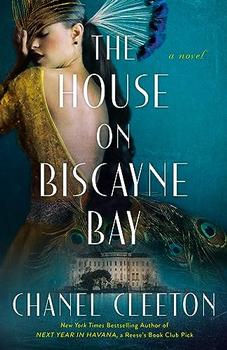
The House on Biscayne Bay
by Chanel Cleeton
As death stalks a gothic mansion in Miami, the lives of two women intertwine as the past and present collide.
The Flower Sisters
by Michelle Collins Anderson
From the new Fannie Flagg of the Ozarks, a richly-woven story of family, forgiveness, and reinvention.
The Funeral Cryer by Wenyan Lu
Debut novelist Wenyan Lu brings us this witty yet profound story about one woman's midlife reawakening in contemporary rural China.
Your guide toexceptional books
BookBrowse seeks out and recommends the best in contemporary fiction and nonfiction—books that not only engage and entertain but also deepen our understanding of ourselves and the world around us.