
-
Your next favorite book
is waiting.

In a range of interviews, both video (with actor Dominic West) and text, Charles Cumming talks about his spy novels: The Trinity Six, The Hidden Man, A Spy By Nature and The Spanish Game.
Various interviews with Charles Cumming about The Trinity Six, The Hidden Man, A Spy By Nature and The Spanish Game
Charles Cumming, author of The Trinity Six, discusses The Cambridge Spy Ring
Dominic West speaks with Charles Cumming about The Trinity Six
Charles Cumming talks about his spy novels: The Hidden Man, A Spy By Nature and The Spanish Game
BookBrowse Note: A Spy by Nature was published in the UK in
2001 but not released in the USA until 2007. It's sequel, The Spanish Game was
released in the USA in 2008. The Hidden Man was published in the UK in 2003 but
is not yet released in the US.
What gave you the idea for The Hidden Man?
The Hidden Man began life as a screenplay. Like any self-respecting arts
graduate in his early twenties, I started writing film scripts more or less as
soon as I'd left university. This is about 10 years ago. At the time, it wasn't
really possible to walk down the street without bumping into six or seven people
who were also hoping to make it big in the movie business. (It's like the famous
Peter Cook joke: Two guys are at a party. One says, “I'm working on a novel” and
the other replies, “Neither am I.”) Anyway, I was moonlighting as a waiter in a
Polish restaurant and drawing housing benefit, so the whole experience felt very
authentic. Except the screenplay was lousy. I forget what it was called, but a
distinguished film critic (and family friend) to whom I sent the manuscript was
honest enough to tell me it was sophomoric. Nevertheless, the basic hook of the
story remained with me – a son whose father abandons him at a very young age,
only to re-appear many years later. At that stage, it was just one son, not two,
and the father certainly didn't work for MI6. I think he was in hosiery.
Is the book autobiographical in any sense?
Only inasmuch as Ben is an artist who spends a lot of time working on his own in
London. That sense of his daily routine is pretty much based on my life as a
writer. Everything else is fictitious. Alice Keen, for example, is an ambitious,
adulterous, scheming vixen, but anyone who knows my wife will tell you that
she's about as far removed from that description as it's possible to imagine. I
don't have a brother, both of my parents are still alive, and my father
certainly didn't walk out on me when I was seven years old.
Your first novel, A Spy By Nature, was written by a first person
narrator in the continuous present tense. The Hidden Man is a more
traditional novel told by a 3rd person narrator in the past tense. Was that a
conscious decision?
Very much so, but it cost me a lot of hard work. I'd become so familiar with
Alec Milius, the hero of A Spy By Nature, that I began to think that I
wouldn't be able to write any other kind of story, in any other kind of style.
The first person allows you into a character's thoughts and can create an
extraordinary sense of intimacy with the reader. At the same time, I found
descriptive prose much easier to write when looked at from Alec's point-of-view.
So it was a challenge that I set myself, as much as anything else, to write a
book in what you describe as the more “traditional style”; that is to say, from
several different points of view, with many different characters, each carrying
equal weight in the story. The third person also makes it easier to create
suspense, through the use of dramatic irony and so on. But the project started
badly. I couldn't find my voice and had to scrap about 20,000 words of the first
draft. The Hidden Man also became extremely complicated in plot terms.
Trying to tie it all up was like trying to solve a Rubik's Cube with a blindfold
on.
But you've succeeded…
I hope so. It's a complex story for such a short book; you have to concentrate.
In any case, I firmly believe that plot is of secondary importance to character.
It's not what happens, it's who it happens to. If the reader isn't interested in
the principal players, then the writer has failed in his task; no matter what
twists and turns the story might take. For me, the reunion dinner between Ben
and his father at The Savoy is far more important dramatically than anything I
might have to say about MI5 or Russian organized crime. That's been borne out by
the reaction to the book: people have responded to Alice and Ben's marriage, to
the rivalry that exists between the two brothers. They talk about that long
before they talk about cryptonyms and dead drops.
If the book has a flaw, what is it?
Graham Greene said that there's always one character who refuses to come to
life, no matter how hard the writer might try to lend him depth or substance. In
that respect, Taploe was always a problem. I was worried that he would come
across as a caricature. But I was having lunch the other day with somebody who
had worked in the Security Service. We were discussing the book and she pointed
out that Thames House was stuffed with small-minded bureaucrats in the Taploe
mould. I could have hugged her.
The novel turns on the rivalry between MI5 and SIS. What point were you
trying to make here?
In-fighting within any organization is bound to be counter-productive, but it's
catastrophic within an intelligence community. Look at the lack of communication
between the CIA and the FBI in the run-up to September 11th. Thankfully, things
appear to have improved, at least on this side of the Atlantic. MI5 are still
touchy about SIS desk officers in London treading on their toes, but there seems
to be far greater co-operation between the two services now than there was, say,
10 years ago. On a more personal note, it struck me that people whom I had
observed rising to the top of organizations tended to become selfish and corrupt
in direct proportion to the level of their responsibility. In other words,
people look after number one long before they look after Queen and Country.
A long section of The Hidden Man is concerned with the CIA and MI6's
secret war in Afghanistan during the Soviet occupation. How did you research
this?
Most of the information is in the public domain, and I've listed a number of
sources at the end of the novel. Kurt Lohbeck's book about the CIA was
indispensable, and I also found a fascinating pamphlet published by the RAND
Corporation about morale and behavior in the Soviet army during the occupation.
This formed the basis of Robert Bone's long letter to Ben about Dimitri and
Mischa Kostov. This sequence was also influenced by Haruki Murakami's amazing
book, The Wind-Up Bird Chronicle, which contains two stunning set-pieces
about human behavior in war.
Will we be seeing any of the characters in The Hidden Man again?
I don't think so, but never say never. Ben will just carry on painting and
putting up with Alice. I don't think he's an Alec Milius type. It should be
fairly obvious by the time you finish the book that he's not cut out for spying.
The
Spanish Game is a follow-up to your first novel, A Spy by Nature. How
did you find the process of writing a sequel?
Of the four novels I have written, The Spanish Game was by far the
easiest because I already knew the central character. I knew how Alec would
react to any given situation. I knew his voice, his strengths, his many
weaknesses. That said, the first few chapters were difficult to put together,
because I needed to lay out the back-story for readers who had not come across
A Spy By Nature, while at the same time acknowledging those who would
have remembered what happened in the first book and just wanted to get on with
the action. It was a challenging process, particularly because Alec is the one
doing the talking. How does a character relate his own personal history without
sounding dull or artificial? This is where Alec's sense of paranoia was very
useful. 'I feel this way about the world,' he is saying, 'because this happened
to me.'
The plot of The Spanish Game involves the Basque separatist group ETA.
Can you tell American readers a little bit about the Basque country and what ETA
is fighting for?
The Basque country is situated on the north coast of Spain, straddling the
border into south-eastern France. It has never existed as an independent state.
Nevertheless, many Basques believe that 'Euskal Herria' should declare
independence from Spain, (just as many Catalonians think that Catalonia
(including, of course, Barcelona) should be an independent state). The Basque
language is completely different to Spanish. So is the food, the landscape, the
music. When you go to Pais Vasco, it really does feel like a different country.
General Franco, who ruled Spain after the Spanish Civil War, took a very
heavy-handed approach to the Basque question, banning the use of the Basque
language and stamping out any expressions of independence. ETA grew out of this
oppressive regime in the 1950s and 60s, at a time when Marxist guerrilla groups
were all the rage. Many ETA members lived in the French Basque country to escape
the reach of Spanish justice. ETA's brutal campaign of violence has led to over
800 deaths and the organization has been weakened in recent years after a spate
of arrests. There have been several ceasefires, none of which have ever lasted
or led to constructive talks on the question of independence.
Alec Milius is an anti-hero. It's rare to read a thriller with such an
unsympathetic protagonist. Why did you decide to make Alec so unlikeable?
It wasn't a conscious decision. With A Spy By Nature, I wanted to create
a protagonist who was truthful about his own feelings, who didn't try to hide
his more base instincts. I think we're all capable of mean-spiritedness,
ambition, envy and greed so, in this sense, Alec is a very realistic character.
However, in The Spanish Game, he is several years older than he was in
A Spy By Nature and should, perhaps, have matured as a person, become less
self-pitying and paranoid. I still believe that he is an honest, frank and
fascinating character, but for every reader who becomes enthralled by him, there
is another who flings the book across the room in disgust!
Will Alec Milius return?
Yes. It's always been my plan to write a trilogy of Milius novels. The final
installment will take place in the United States, because the books are about
the relationship between Great Britain and America and it makes sense to
conclude the story there. I like the idea of Alec having a family – a wife who
knows about his past and has forgiven him. A child, perhaps. To expand on my
previous answer, I would like Alec to have come to terms with the limits of his
own personality and to have accepted his fate. In other words, I think he will
be more likeable in the final installment. The question is, can this last? Can
he find redemption or will his selfishness and pride get the better of him once
again?
Unless otherwise stated, this interview was conducted at the time the book was first published, and is reproduced with permission of the publisher. This interview may not be reproduced or reprinted without permission in writing from the copyright holder.
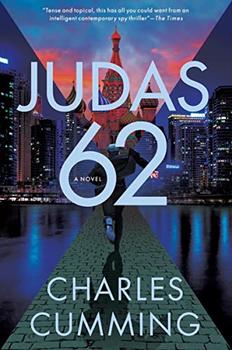
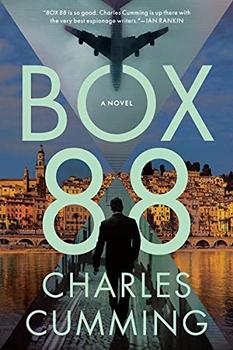
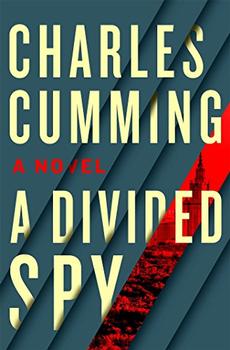

John Altman is a musician and freelance writer living in New York City. A graduate of Harvard, he comes from an extended family of writers, including the novelists Karen Bender, Aimee Bender, and Robert Anthony Siegel.
In...
(more)
If you enjoyed:
The Spanish Game
Try:
A Gathering of Spies
by John Altman
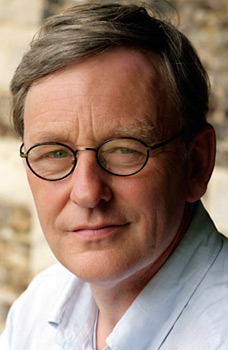
William Brodrick, in a career change that reverses that of his character Father Anselm's, was an Augustinian friar before leaving in order to become a practicing barrister. (more)
If you enjoyed:
A Colder War
Try:
The 6th Lamentation
by William Brodrick
We recommend 31 similar authors
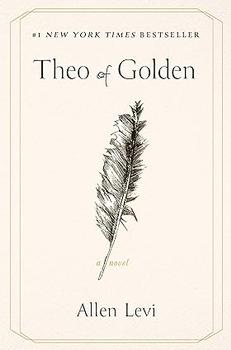
Theo of Golden by Allen Levi
One spring morning, a stranger arrives in the small southern city of Golden. No one knows where he has come from…or why…




Your guide toexceptional books
BookBrowse seeks out and recommends the best in contemporary fiction and nonfiction—books that not only engage and entertain but also deepen our understanding of ourselves and the world around us.

