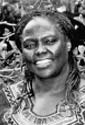
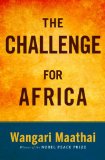
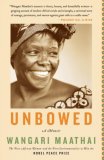
Wangari Maathai, founder of the Green Belt Movement, Nobel Peace Prize winner, and author of Unbowed, discusses her book and her work.
Why did you decide to write a memoir at this point in
your life? Was it something you knew all along you would do at some point in
your life?
Writing my memoirs was a response to the many questions I continue to be
asked about sharing my life, work and experiences, especially after the prize.
Although I had thought about writing it before, I kept postponing it. At first
I worked on a book that focused on the work and experience of GBM entitled "The
Green Belt Movement: Sharing the Experience & the Approach". Through the
questions people asked me, I realized they were interested in knowing why and
how I started the movement, what inspired me, what my background was and what
sustained my interest. The Nobel Peace Prize allowed me to reflect even more on
these questions.
What were some of the challenges in the writing process? It must not be
an easy task to remember and retell (so clearly) all those events that
took place in your life and your country's history.
Time was the biggest challenge in the process. I worked on
this project even as I continued all my other activities in addition to
responding to the new interest in our work generated by the Nobel Peace Prize.
A lot of travel was necessitated and all of a sudden my workload significantly
increased. I however felt it was the right time to work on the project. It is
not easy to forget events that shape your personality, psyche and values. These
memories are constantly being tapped in the course of your life to define who we
are. The writing process was also facilitated by the help I received from
many sources—family, friends, supporters - just as I have throughout my life.
This book is so much more than a story of your life, which memoirs
usually are. In fact, it is through your story that we learn a great deal
about your country and Africa in general. Therein, in my opinion, lies its
strength. Was this your intention?
Not really. But it would have been difficult to convey the experiences of my
life without unraveling the historical and political context within which my
life was unfolding. These realities shaped and created who I became. I hope
when people read my book they will identify their own experiences in my life's
journey and will be encouraged to embrace and make the best of theirs. I also
hope it will help in their understanding of Africans experiences. Many Africans
grew up in the colonial and post-colonial period and this book may help others
understand how that experience shaped who we are today.
You devote a chapter to
your experience living and studying in the United States in the late 1960s and
explain how it transformed you as a person. What were some of the things about
America and its people that inspired you to care about the world as much as you
do? Also, do you feel any different today in light of America's
often-criticized foreign policy?
America represents many things to different people. For
me, its diversity, economic influence, expansiveness, beauty, endurance and its
ability to nurture and neglect at the same time are some of the characteristics
of the United States that made a permanent impact on my mind. So were events
such as civil rights movement, the Kennedy presidency and the American college
experience.
I remember my time in America and the people I met with great affection. I
feel I carried its energy and confidence back with me to Kenya, and that helped
me in my efforts to make changes in my own country. America still has that
energy and drive, and has the capacity, especially because of the commitment of
its people, to promote greater peace and harmony in the world.
You say at one point that poverty
in Africa and other parts of the
world is not only the result of bad governance but also an outcome of the
global economic system. What more can be done to correct this, and not
only by those with power and influence but also by the average person who
simply wants to make a difference? As you say, "it is one thing to understand
the issues. It is quite another to do something about them."
The
leadership in Africa can do a lot and indeed there has been some progress.
Globally, politics notwithstanding, Africa can do with
more genuine friends both at the bilateral level and within global institutions
such as WTO and Bretton Woods Institutions among others. With greater
understanding, individual citizens can do a lot to push their governments to be
more responsible and accountable beyond their borders. Those of us with
influence (e.g. academic, political, celebrities etc) can do a lot to
influence policy both locally at the global level.
The Green Belt Movement, which you founded in 1977, is going strong
after so many years. Can you briefly discuss its mission and future goals?
create a value-driven society of people who consciously work for continued
improvement of their livelihoods and a greener, cleaner Kenya. Looking forward,
the GBM is working to facilitate the sharing of the GBM experience with the rest
of the world. As an African grass roots organization that has demonstrated the
success of its holistic approach to the interrelated problems of environmental
degradation, poverty and women's rights, and governance, we have established The
Green Belt Movement International (www.greenbeltmovement.org)
to ensure that the work of the GBM in Kenya expands and is sustained,
facilitate the sharing of the work with other parts of Africa and beyond, to
institutionalize the work and experiences of GBM so future generations can
continue to learn and be empowered by this example and to continue to support
important global campaigns and struggles that represent the linkage between the
environment, democracy and peace, such as the Congo Forest Basin Ecosystem and
The African Union's ECOSOCC.
You spend a great deal of time in your
book discussing the importance
of education, which is "a ticket out" of poverty in many parts of the
world. But you also say that education, "if it means anything, should not
take people away from the land." Is this still happening? Aren't educated
people much more environmentally aware today than in the not-so-distant
past, or is there still much more to be done. What are your thoughts on
this?
At
least in Africa where people's livelihoods were dependent on primary natural
resources like (land, soil, water, forests) and where, due to lack of advanced
technology, labor was intensive, education was perceived to be a gateway to
light work which led to a better quality of life. Running away from the rural
landscapes became a goal for the educated and the governing elite. That is what
I mean by saying education should not alienate us from the primary natural
resources. When we do get alienated, not only do we destroy those resources and
thereby undermine our quality of life, but we also become insensitive to their
destruction. Therefore, education is important but it must be an education that
ensures we are not alienated from the resources upon which our survival depends.
What achievement are you most proud of and
why? Winning Nobel Peace
Prize in 2004 is probably at the top of that list. Congratulations on
that.
My
most important achievement is having been fortunate enough not to have lost my
focus despite the many distractions along the way. I also most proud of my 3
children and the extended family, which never failed to encourage me.
What's next in store for you?
Being a Peace Laureate means
that I am now a permanent ambassador for Peace wherever I go. It's a wonderful
responsibility. It entails sharing my work, inspiration, my thoughts on peace,
democracy and sustainable management of resources. I have already been
requested by several African Heads of States to serve as goodwill ambassador for
the Congo Basin Forest Ecosystem. The African Union has also asked me to assist
in mobilizing civil society in Africa towards the formation of a common forum to
promote unity and better management of African affairs. In Kenya, I enjoy
representing grassroots people in parliament. It helps me not to lose sight of
the real issues that affect a majority of the African people and indeed much of
the developing world. It would be otherwise easier to escape into an ivory
tower. So, I have a lot to do! in addition to serving my country these new
responsibilities will keep me busy for many years to come.
More about the Green Belt Movement
What is the Green Belt Movement?
The Green Belt Movement is
one of the most prominent women's civil society organizations, based in Kenya,
advocating for human rights and supporting good governance and peaceful
democratic change through the protection of the environment. Its mission is to
empower communities worldwide to protect the environment and to promote good
governance and cultures of peace.
How It All Started?
The Green Belt Movement (GBM)
was started in 1977 by Dr. Wangari Maathai, the first African woman and the
first environmentalist to receive the Nobel Peace Prize (in 2004). What began
as a grassroots tree planting program to address the challenges of
deforestation, soil erosion and lack of water is now a vehicle for empowering
women. The act of planting a tree is helping women throughout Africa become
stewards of the natural environment.
But that's just the first
step.
By protecting the
environment, these women are also becoming powerful champions for sustainable
management of scarce resources such as water, equitable economic development,
good political governance, and ultimately….. peace.
Our Achievements
Today, more than 40 million
trees have been planted across Africa. The result: soil erosion has been
reduced in critical watersheds, thousands of acres of biodiversity-rich
indigenous forest have been restored and protected, and hundreds of thousands of
women and their families are standing up for their rights and those of their
communities and so are living healthier, more productive lives.
Yet, so much remains to be
done. Forests are still being lost, democracy is fragile, and poverty is still
widespread.
Our Vision for the Future
Our goal in the next decade
is to plant 1 billion trees worldwide. A healthy natural world is at the heart
of an equitable and peaceful society. And protecting the environment is
something every individual can take part in.
For More Information,
visit greenbeltmovement.org.
Or contact Carrie Collins
(301) 664-9000,
ccollins@BCC-Associates.com
Unless otherwise stated, this interview was conducted at the time the book was first published, and is reproduced with permission of the publisher. This interview may not be reproduced or reprinted without permission in writing from the copyright holder.

Chimamanda Ngozi Adichie was born in Nigeria in 1977. She is from Abba, in Anambra State, but grew up in the university town of Nsukka where she attended primary and secondary schools and briefly studied Medicine and ... (more)
If you enjoyed:
Unbowed
Try:
Half of a Yellow Sun
by Chimamanda Ngozi Adichie

Peggielene Bartels was born in Ghana in 1953 and moved to Washington, D.C., in her early twenties to work at Ghana's embassy. She became an American citizen in 1997. In 2008, she was chosen to be King of Otuam, a Ghanaian ... (more)
If you enjoyed:
Unbowed
Try:
King Peggy
by Peggielene Bartels
We recommend 13 similar authors




The Flower Sisters
by Michelle Collins Anderson
From the new Fannie Flagg of the Ozarks, a richly-woven story of family, forgiveness, and reinvention.
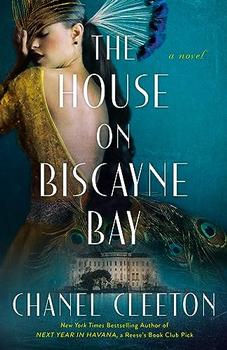
The House on Biscayne Bay
by Chanel Cleeton
As death stalks a gothic mansion in Miami, the lives of two women intertwine as the past and present collide.
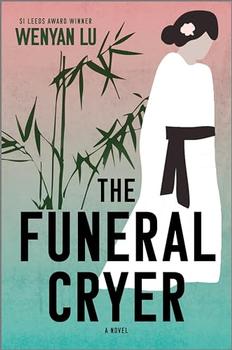
The Funeral Cryer by Wenyan Lu
Debut novelist Wenyan Lu brings us this witty yet profound story about one woman's midlife reawakening in contemporary rural China.
Your guide toexceptional books
BookBrowse seeks out and recommends the best in contemporary fiction and nonfiction—books that not only engage and entertain but also deepen our understanding of ourselves and the world around us.