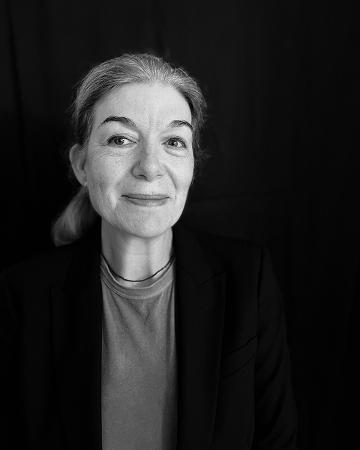
Claire Messud discusses what inspired her to write The Emperor's Children and why she chooses to write about people who are "interesting" rather than nice.
Q: In The Emperor's Children, the introduction of a few outsiders into the
world of the main characters drastically alters the lives of everyone. What were
their lives like before the appearance of Bootie and Ludovic Seeley on the
scene?
Well, Marina had been living at home for the better part of a year, trying to
get her book finished; and Julius and Danielle were living pretty much as they
had done for some time, each in their apartment. But the three of them spent a
lot of time together – more time than they do once the book is underway -- in
the way very close, old friends do when they are single and childless.
Q: The first chapter is called "Our Chef is Very Famous in London", which
gets to the heart of things that a reputation one place may not carry to
another. What made you decide to start the book with that?
Danielle – like Marina and Julius also, albeit in slightly different ways –
is very much a New Yorker. Her whole sense of the world, post-college, has been
focused entirely on New York. I wanted to begin the novel in a rare moment, for
her, in which she has some perspective on her own life, some sense of its
provincialism. All our lives are provincial, no matter where we live; but New
Yorkers can often indulge the fantasy that they are exempt from this. It's
harder to do from the other side of the world.
Q: What is The Emperor's Children about, to you? Where did the initial
inspiration for the novel come from?
That's a big question. I don't think I have a simple answer. What's it about?
I hope it's about what it's like to be alive in a certain place in a certain
time. It's about a group of people with certain aspirations and expectations and
limitations, and the way they contend with what is thrown at them. Probably in
my mind it's about ambition, and what it means, or meant, and didn't, in that
particular historical moment. And about confronting limitations. And about
making a self. All those things. As for where the inspiration for the novel came
from, it's lost in the mists of time. I began the novel (with the same
characters but in a different form) in early 2001, a long time ago; and later
that year abandoned it, because it seemed impossible to continue. It took me a
year or more to come back to it, after failing with a couple of other things;
and by then it seemed to have an organic necessity, an urgency in my mind, that
has kept me from worrying, ever since, about where the idea for it came from.
Q: Murray Thwaite is reminiscent of a few journalistic bigwigs… was there
anyone in particular you wanted him to bring to mind? And if so, will you ever
tell?
As anybody who writes fiction knows, it's a magpie affair. To create a
character, you take a shiny button here, a strand of hair there, a bit of tinsel
from the garbage can, and build something which, you hope, will look like a
person. All the characters in this book (and in my other books too) were created
this way; and all of them – including Murray – contain elements of myself in
them. I wouldn't go so far as saying "Murray Thwaite, c'est moi", but he
certainly feels like a part of me.
Q: You live in Boston but chose to write a novel about New York City,
focusing on its upper crust. Why this world?
I've only lived in Boston for a few years. I lived in DC before that. And
London before that. It may seem illogical, then, to have chosen New York, but I
feel as though it's a picture of my parallel life, of a life I might have had. I
went to college in Connecticut, and all my friends moved straight to New York.
Most of them are still there. My parents also live in Connecticut; my dad was a
commuter. All in all, I've spent a lot of time in New York. It was always the
city towards which I turned. And the dynamics of a group of close friends from
college – that's also a world I know.
Q: We don't really see the story from, say, Ludo's perspective. Why?
Geez, would you want to? I shudder to think what the world looks like from
Ludo's perspective.
Q: Not to put too fine a point on it, but the characters here aren't exactly
warm, fuzzy, and loveable; many make some despicable decisions and/or comments
in the course of the novel. What compelled you to write about such a lot?
I adamantly believe that characters should be interesting, rather than nice.
I also believe that these guys, for all their faults and limitations, are no
worse than most of us. If they were your cousins, you'd see them clearly and
criticize them and still love them. That's how I feel about them. I have no
interest in sentimental, saccharine portrayals – life's too short for untruths.
I was just trying to portray people as I see them, motivated by conflicting
impulses, given to shabby thoughts or actions, but not, for the most part, bad
people.
Q: OK, so our heroes and heroines aren't all bad—there's an element of
likeability there too! Do you have a favorite? If so, will you share him/her
with us?
Ach. A parent mustn't play favorites. I have a few, in fact. But I'd have to
say I have a soft spot for Bootie.
Q: Did you set out writing The Emperor's Children with the characters in
mind, or did the plot form them? Is this usually the case as you write—and how
does it affect the way your stories take shape?
Everything I write is different, so I can't really generalize about where I
begin. But character is very important to me – it's why I write, I think; that
and language. And if you really know a character, then you figure out how they
would behave in a given situation. And the plot comes out of that, really. It's
about trying to observe your people closely, honestly, and without imposing your
will artificially upon them. If you make a character do something that character
wouldn't do, your book is a fake.
Q: Our three main characters—Marina, Julius, and Danielle—are on the cusp of
thirty. Do you see that age as the portal to true adulthood?
True adulthood? Show me a true adult! But I do think that in contemporary
American society, among the bourgeoisie, many young adults aren't forced fully
to take on the mantle of adulthood in their twenties. It's wrong to generalize;
but for Marina, Julius and Danielle, at least, the combination of their vast
ambition and their professional meandering leads them, at around 30, suddenly to
feel it's time to get their lives together, with a sort of panic they might not
have felt if they'd noticed earlier how quickly time was passing.
Unless otherwise stated, this interview was conducted at the time the book was first published, and is reproduced with permission of the publisher. This interview may not be reproduced or reprinted without permission in writing from the copyright holder.
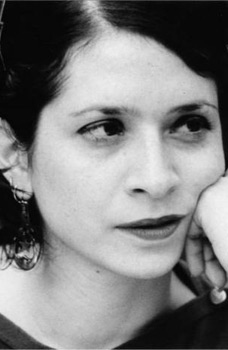
Chloe Aridjis is a Mexican–American writer who was born in New York and grew up in the Netherlands and Mexico. After completing her Ph.D. at the University of Oxford in nineteenth–century French poetry and magic ... (more)
If you enjoyed:
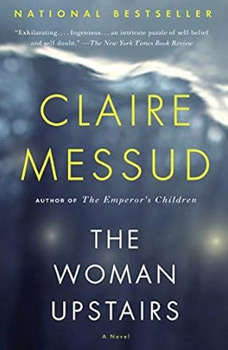
The Woman Upstairs
Try:
Asunder
by Chloe Aridjis
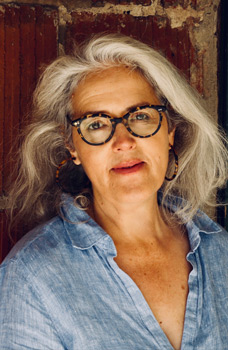
Sarah Blake is an American writer. Her debut novel Grange House, set in Victorian era Maine, was published in 2001. Her second, The Postmistress, a story set in Second World War Massachusetts and London, was published in 2010... (more)
If you enjoyed:
The Emperor's Children
Try:
The Guest Book
by Sarah Blake
We recommend 28 similar authors


The House on Biscayne Bay
by Chanel Cleeton
As death stalks a gothic mansion in Miami, the lives of two women intertwine as the past and present collide.
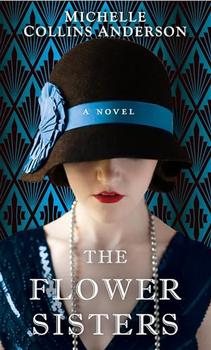
The Flower Sisters
by Michelle Collins Anderson
From the new Fannie Flagg of the Ozarks, a richly-woven story of family, forgiveness, and reinvention.

The Funeral Cryer by Wenyan Lu
Debut novelist Wenyan Lu brings us this witty yet profound story about one woman's midlife reawakening in contemporary rural China.
Your guide toexceptional books
BookBrowse seeks out and recommends the best in contemporary fiction and nonfiction—books that not only engage and entertain but also deepen our understanding of ourselves and the world around us.