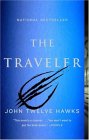
John Twelve Hawks, author of The Traveler discusses his first novel and why he, like his protagonists, chooses to live 'off the grid'.
A Conversation with John Twelve Hawks, author of The Traveler
The Traveler evokes a variety of films and books–everything from George
Orwell to the Matrix. Where did you take your inspiration from?
George Orwell is a favorite writer of mine and I liked the first Matrix,
but the creation of the novel goes much deeper than that. When I sat down to
write The Traveler I didn't think about being published. I simply wanted to
understand the world around me. Sometimes the best way to find the truth is to
create a fiction.
Can you describe the differences between the three main character types in
the book: Travelers, Harlequins, Tabula?
Travelers are a small group of people who have the ability to send their
spirit to other worlds. The Harlequins are an ancient order of warriors who
defend The Travelers. The Tabula is an organization that believes that mankind
is a tabula rasa — a blank slate that can be scrawled with their ideas.
They are determined to destroy The Travelers. These three groups are fictional
but their struggle takes place within a very realistic environment.
Is John Twelve Hawks your real name?
I wasn't given the name John Twelve Hawks at birth. It's an adopted name —
just like the names the Harlequins chose at a certain time of their lives. This
name has great personal significance for me, but it's not relevant to
understanding the book.
One of your characters, Gabriel, lives "off the Grid," avoiding detection
by what you call the "Vast Machine." Can you explain what you mean by this and
why you yourself have chosen to live this way as well?
For me, living off the Grid means existing in a way that can't be tracked by
the government or large corporations. The Vast Machine is the very powerful —
and very real — computerized information system that monitors all aspects of our
lives.
I live off the Grid by choice, but my decision includes one factor that is
relevant to the publication of The Traveler. I want people to focus on the book
itself and not on its author. The typical "personal slant" of most media arts
coverage trivializes the power of ideas — and there are a great many provocative
ideas in this novel. Everyone who reads The Traveler is going to be entertained
by an exciting story. A smaller group is going to be inspired to see our
computerized world in a new way.
How do you correspond with your publisher and how do you plan to
correspond with readers?
I have never met my editor or any of the staff at Doubleday. I talk to them
using a satellite phone or we communicate through the internet. I haven't really
thought about how I'm going to answer reader questions but it will probably be
through a non-traceable website.
Your message in the book about the end of privacy in our society is
frightening. How much of what you portray is true and how much is pure
invention?
It's all true — based on years of research. Email messages are scanned by a
program called Carnivore and programs linked to surveillance cameras use
algorithms to identify you instantly. Some of the facts in The Traveler — such
as the description of the new "computational immunology" program developed by
the Royal Mail in Britain — have never been described in any book.
What, if any, suggestions do you have for people who are concerned about
identity theft, the Patriot Act, phone and internet surveillance and other
invasions of everyday privacy? Some of your characters agitate against the Vast
Machine. Would you advise this?
This first step is to be aware of what is going on. Most of us have given up
our privacy without even knowing it. At some point, we need to express our
opinions to our elected officials. The growing power of the Vast Machine is
actually not an issue that is tied to a particular political party. A
traditional conservative like former Georgia Congressman Robert Barr is on the
same side of the privacy issue as the ACLU. The most important thing is that we
not succumb to the baseless fear that is used to justify our loss of personal
liberty. People objected when the government proposed something called the
Total Information Awareness system: a computerized program that would track
virtually all of our electronic transactions. When the name of the program was
changed to the Terrorist Information Awareness system — just one new word
— all the criticism vanished.
The settings in the book are captured in vivid detail–the Charles Bridge
in Prague, the California desert, the back alleys of East London. Was travel a
big part of your research?
My agent once asked me how long it took me to write The Traveler and I
answered: "All my life." I didn't do any particular research for the locations
in the novel. I simply drew on the memories of different places where I've
visited, lived or worked. Virtually all the locations in the book are real. For
example, there is a system of abandoned missile silos in Arizona and Jeremy Bentham's dead body is on public display at University College London.
The scenes of violence in the book also seem very real — not
Hollywood fantasies.
I studied martial arts for several years and have fought both in tournaments
and on the street. Maya and the other Harlequins have been trained since
childhood to fight, but they're not super human; they can be hurt or killed.
Readers have told me that they've found the scenes of violence in The Traveler
to be incredibly exciting because they're not sure what's going to happen. This
duplicates my own experience creating the book. Every time I began to write a
scene that involved fighting I had no idea if my characters were going to
survive.
Family seems to be both a blessing and a curse in the novel. As Maya says: "Damned by the flesh. Saved by the blood." Care to elaborate?
It was only after I finished the first draft of The Traveler that I realized
how many of the characters are haunted by their fathers. Maya loved her father,
Thorn, but he also destroyed her childhood. Gabriel and Michael Corrigan thought
that their father was killed by the Tabula, but now there are signs that his
ghost is alive. A crucial secondary character named Lawrence Takawa changes his
entire life in honor of a father he has never met.
At one point in the novel, your protagonist Maya explains that there is a
secret history of the world, a history of "warriors defending pilgrims or other
spiritual seekers." Do you believe this? What do you think is the role of faith
in modern society?
There has been a continual battle throughout history between institutions
that try to control our lives and those visionaries who emphasize the value of
the human spirit. Right now, there's a determined attempt to reduce all human
behavior to biochemistry. If Joan of Arc was alive today she'd be put on Prozac.
Faith can give us a larger perspective on our own lives as well as the world
that surrounds us.
You seem to combine Eastern religion, mysticism and new age spirituality
in your discussion of Gabriel's education. The novel also suggests that Jesus,
Mohammed, Buddha, even an obscure Rabbi from Poland may have all been
Travelers–which begs the question: What (if any) is your religious affiliation?
When I was in my twenties, I was an atheist and proud of it. Now I believe in
God and pray every day but I'm not a member of any organized religion. Travelers
are guided by teachers called Pathfinders and I've dedicated the trilogy to my
own personal Pathfinders. I've had several and they've included a Catholic
priest, a Presbyterian minister, a scholar who was an orthodox Jew, and a
Buddhist monk. I'm not going to minimize the differences between religions but
they all have one thing in common: they teach the power of compassion and
encourage that quality in our own hearts.
This is the first book in a trilogy. Any hints for readers about what they
can expect from Books Two and Three?
In Book Two, a tough Irish Harlequin named Mother Blessing will enter the
story; she's already forcing her way into my dreams. Expect some surprises
involving Maya, Gabriel, and the Tabula mercenary, Nathan Boone. I'm not
manipulating these characters to fit a plot. They seem to have their own ideas
about what they want to do.
Unless otherwise stated, this interview was conducted at the time the book was first published, and is reproduced with permission of the publisher. This interview may not be reproduced or reprinted without permission in writing from the copyright holder.
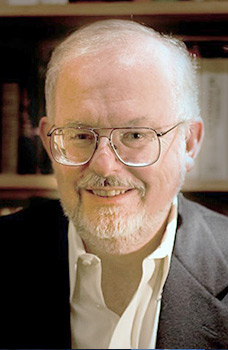
Greg Bear was born in San Diego, California, on August 20th, 1951, to Wilma M. and Dale F. Bear. His father was in the navy so as a child he had traveled extensively to Japan, the Philippines and Alaska, as well as touring... (more)
If you enjoyed:
The Traveler
Try:
Darwin's Children
by Greg Bear
Nobody had ever won the Hugo and Nebula awards for best novel two years in a row until Orson Scott Card received them for Ender's Game and its sequel, Speaker for the Dead, in 1986 and 1987. The third novel in the series, ... (more)
If you enjoyed:
The Traveler
Try:
Ender's Shadow
by Orson Scott Card
We recommend 7 similar authors

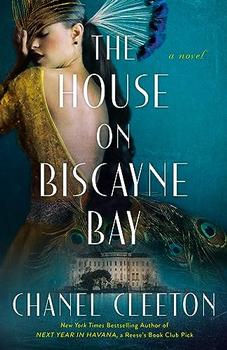
The House on Biscayne Bay
by Chanel Cleeton
As death stalks a gothic mansion in Miami, the lives of two women intertwine as the past and present collide.
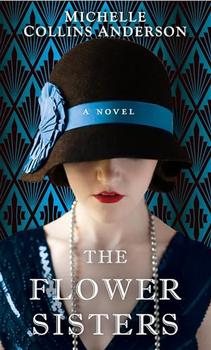
The Flower Sisters
by Michelle Collins Anderson
From the new Fannie Flagg of the Ozarks, a richly-woven story of family, forgiveness, and reinvention.
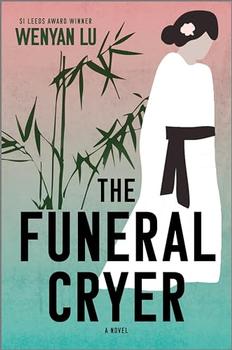
The Funeral Cryer by Wenyan Lu
Debut novelist Wenyan Lu brings us this witty yet profound story about one woman's midlife reawakening in contemporary rural China.
Your guide toexceptional books
BookBrowse seeks out and recommends the best in contemporary fiction and nonfiction—books that not only engage and entertain but also deepen our understanding of ourselves and the world around us.