
-
Your next favorite book
is waiting.

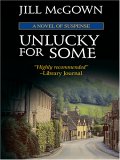
An essay by Jill McGown in which she talks about her childhood in Campbeltown, Argyll, Scotland; and how she came to be a published author.
"If you really want to hear about it, the first thing you'll probably
want to know is where I was born, and what my lousy childhood was like, and how
my parents were occupied and all before they had me, and all that David
Copperfield kind of crap, but I don't feel like going into it."
J D Salinger: The Catcher in the Rye
Do you really want to hear about it? I suppose you do, or you wouldn't be
here. So, all right, here goes.
I was born on the 9th of August 1947 in Campbeltown, Argyll, Scotland.
Campbeltown is on the Mull of Kintyre, made famous by Paul McCartney and Wings,
and I knew the piper who plays the solo on the record, so there! The McCartneys
moved to Campbeltown after I'd left, so I can't claim to know the great man
himself.
In those days Campbeltown was principally a fishing town which got a lot of
summer visitors. We went to Rothesay on the Isle of Bute for our summer
holidays, and I expect some people from Rothesay came to Campbeltown; it was a
bit like Mark Twain's thing about people taking in one another's washing. We
sailed on the turbine steamer Duchess of Hamilton, or the paddle steamer
Waverley, up Kilbrannan Sound, calling at Lochranza on Arran, Ardrossan in the
Firth of Clyde, and other romantic places on the way. Passengers on the Duchess
of Hamilton were allowed to go down to the engine room, which I remember as
being very clean and shiny and not at all like you'd imagine.
Rothesay was much more sophisticated than Campbeltown; it had the Entertainers,
for a start, a sort-of end-of-the-pier show that starred people like Jimmy Logan
and Andy Stewart. If you don't know who they are, you are probably under fifty,
and possibly not Scottish. But even more sophisticated than that - Rothesay had
neon ads. Well…it had one. It was for Typhoo tea, and I could have watched it
for hours. The teapot lifted up in mid-air and poured tea into a cup…it was
like magic.
Campbeltown had its own delights for small children, but they were of the
healthy, outdoor type - burns and hills and crab-infested rock pools, that sort
of thing. I am, and always have been, an urban creature; I have a friend who
says that if I go to the bottom of the garden, I think I've been on safari. This
is entirely true, and was just as true then as now. My idea of fun was going to
the pictures, or trundling about the courtyard of the block of flats in which we
lived on a hired tricycle. And while I liked picnics on the glorious beach at
Machrihanish and paddling and splashing about in the sea, I could have done
without the chore of having to get out of an uncomfortable, wet, sandy bathing
costume before I could get dry and put my proper clothes back on.
Machrihanish is five miles from Campbeltown, on the other side of the Kintyre
peninsula, and was reached by bus; as a child, I would wait expectantly and then
squeal with delight when I saw the sea. The fact that I had boarded the bus on
the quayside at Campbeltown was beside the point - the Machrihanish sea was
different. It was the Atlantic, blue and sparkling with white-tipped waves; the
water in Campbeltown Loch was dark grey-green and so sheltered as to be almost
still. But what I liked best about Machrihanish was going to my aunt's big house
overlooking the ocean and picking out tunes on her piano while avoiding her
psychotic cat.
My father was a fisherman - he and his brother owned a fishing boat called the
Felicia, and one of my earliest memories is of eating delicious prawns the size
of chipolata sausages out of a jar stuffed full of them. They were fishing for
herring, and the prawns weren't worth anything; times have changed.
My mother was a secretary, and she had come to Campbeltown from Glasgow, so we
went there from time to time to visit her brother and sister. Glasgow had the
twin attractions of the subway (which is what the Scots and Americans call an
underground railway), and trams. I loved both, and could never make up my mind
which way I wanted to go anywhere.
Trams made a wonderful clanking sound, and both ends were the front; when they
reached the terminus, the conductor would go along the length of the tram,
smacking all the seats so that they faced the other way for when it left again.
Subway trains were noisy and frightening; I would hang on to my mother's hand,
and watch for the light in the tunnel. When the one-eyed monster appeared and I
could hear the rumble getting louder and louder, it scared me to death, and I
loved it.
Campbeltown didn't have any sort of railway, and nor, come to that, has Corby,
not for people, anyway. Corby is the only constituency in Britain without a
railway station, and, I'm told, the largest town in Europe without one. Somehow,
Corby's like that; it's always been what the Scots call a stepbairn, and never
seems to have what its brothers and sisters take for granted.
We moved to Corby when the herring fishing was at an all-time low, and my father
had to find work elsewhere. The Lloyds Ironworks had been built on the doorstep
of what had been the tiny village of Corby in Northamptonshire, and in time the
ironworks became Stewarts and Lloyds, who turned it into the biggest integrated
iron and steelworks in Europe. At the beginning of the twentieth century, Corby
had 820 inhabitants. At the end of it, it had 53,000.
And in the middle of that century Stewarts and Lloyds was recruiting workers
from anywhere it could, but mostly from Scotland. Thus Corby, in the heart of
England, has Celtic and Rangers supporters' clubs, an annual Highland Gathering,
shops that routinely sell oatcakes, potato scones and Scotch pancakes, and an
accent which has undeniable Scottish overtones, regardless of the forebears of
the speaker, who might be Londoners or Lithuanians.
My early schooling was a little fragmented - Campbeltown had one infants school
(called, by everyone, 'the wee Grammar'), and from there children went to one of
the primary schools. After I had attended my primary school for two years, some
of us were relocated to another one, so when I moved to Corby at the age of ten,
I was on my fourth school in five years. Lifelong friendships are not formed
that way, but you do acquire useful social skills.
Oddly enough, I was forced to take more to do with nature in Corby, which was
devoid of anything for children to do except Saturday morning pictures. I and
two friends (another girl and a boy) would play in the woods that are everywhere
in Corby - sometimes the deciduous Thoroughsale Woods, where we climbed trees,
and looked for acorns and conkers, sometimes the pine wood, where it was so
silent you could hear twigs crackle beneath your feet, and we collected pine
cones, talked, and played invented games. Children nowadays aren't encouraged to
play out of doors without adult supervision, which is understandable, but a
little sad. No harm ever befell us while we played - in fact, I had a happy
childhood all round, and I'm thinking of suing someone over it. What use would I
be on a chat-show?
From junior school, I went to Corby Grammar School, where I was taught Latin by
Colin Dexter who went on to write the Morse books, though I didn't know that
when I wrote my first book. Our writing careers have taken exactly the same
course, so I live in hope that they will continue to do so! I left Corby Grammar
as soon as I could, because I didn't like it, and went to what was then
Kettering Technical College, emerging two years later with shorthand and typing
RSA certificates and three O-levels. I wasn't what you'd call a dedicated
student.
I went to work first for Corby Development Corporation, and then, a couple of
years later, as a secretary in a solicitors' office. Five years after that I
found myself, like fifteen thousand other people, working in what had become,
with nationalisation, the British Steel Corporation. I worked there for almost
ten years, during which time a voluntary redundancy programme was set up, and it
became my job to collate the paperwork and counsel those who had taken voluntary
redundancy as to their benefits and options. But when the steel making side was
closed down, the voluntary scheme became compulsory and my job itself, along
with thousands of others, was made redundant.
So there I was, with my redundancy pay, and a choice. I could look for another
job in a town that at that time had twenty-five per cent unemployment, or I
could take the opportunity to write a novel. As you'll have gathered - since I
still live, not just in Corby, but in the same house that we moved to when I was
ten - I am not adventurous. But this adventure had been thrust upon me, and I
chose to write the novel, and forgo the regular salary.
That was twenty-one years ago. It's been touch and go at times, but I've made a
living of sorts by my novels ever since.
Unless otherwise stated, this interview was conducted at the time the book was first published, and is reproduced with permission of the publisher. This interview may not be reproduced or reprinted without permission in writing from the copyright holder.

Kate Atkinson won the Whitbread (now Costa) Book of the Year prize with her first novel, Behind the Scenes at the Museum. Her four bestselling novels featuring former detective Jackson Brodie became the BBC television series ... (more)
If you enjoyed:
Unlucky For Some
Try:
Started Early, Took My Dog
by Kate Atkinson
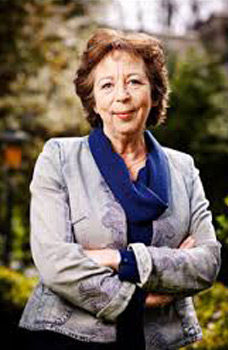
Renate Dorrestein was born in Amsterdam on January 25, 1954, and raised in a Roman Catholic family. Her father was a lawyer, her mother a teacher and housewife. Renate began to write when she was in elementary school. Upon ... (more)
If you enjoyed:
Unlucky For Some
Try:
A Heart of Stone
by Renate Dorrestein
We recommend 6 similar authors



Failure is the condiment that gives success its flavor
Click Here to find out who said this, as well as discovering other famous literary quotes!

Can you name the title?
Test your book knowledge with our daily trivia challenge!
Your guide toexceptional books
BookBrowse seeks out and recommends the best in contemporary fiction and nonfiction—books that not only engage and entertain but also deepen our understanding of ourselves and the world around us.
