Carlos Ruiz Zafón discusses the premise and promise of The Shadow of the Wind, his sixth novel which has been published in at least twenty countries.
This is your sixth novel, and it has been sold in twenty countries and
translated into several languages. What do you think accounts for its worldwide
appeal? Do you find that readers here in the States respond differently from
Spanish readers?
I think it is all about the story, the characters, the pleasure of the
language and of the imagination, the experience of the read. American readers
respond to The Shadow of the Wind in the very same way as Italian, Spanish,
Norwegian, Australian, French, British, or German readers do. The pleasure of
reading a great story and to experience the characters' adventures is universal.
Daniel promises to show Bea a Barcelona that she's never seen. From the
paintings of Joan Miro to the imaginative architecture of Antoni Gaudí, what is
it about Barcelona that lends itself to fantasy? Do you believe, as Daniel says
to Bea, that "the memory of this city will pursue you and you'll die of
sadness"?
Barcelona provides an enchanting, mysterious, and romantic setting for the
story because many things about the place, its streets, its history, and its
people are unique. It is also my hometown, a place I know like the palm of my
hand, and I wanted to use this fantastic backdrop as an organic character, very
much like the great novelists of the nineteenth century did in creating the
London of Dickens, the Paris of Victor Hugo and Balzac, etc. Hopefully, after
reading the novel the memory of Barcelona and the joy of the story will pursue
the readers as well.
Daniel says, "Once, in my father's bookshop, I heard a regular customer say
that few things leave a deeper mark on a reader than the first book that finds
its way into his heart" (p. 8). What book was that for you? Are there any
forgotten books you would like to rescue from obscurity?
I would say than rather than just one book, for me what did the trick was the
world of storytelling, of language, of ideas. All books, all stories, all words
and ideas, all the possibilities of the mind—such an infinite universe of
wonders is what did me in and I haven't looked back. And I would like to save
all books, those that are banned, those that are burned, or forgotten with
contempt by the mandarins who want to tell us what is good and what is bad.
Every book has a soul, as Daniel's father says, and I believe every book is
worth saving from either bigotry or oblivion.
Your work has been compared to Charles Dickens, Victor Hugo, and Umberto Eco.
Comparisons could also be drawn between Shadow and the works of filmmaker Pedro Almodovar—the overt sexuality, the parents' sins visited on the children, the
prismatic storytelling. Do you agree with any of these comparisons? Who, if
anyone, do you consider your biggest influence?
I think many direct and indirect influences go into each author's work. In my
case I believe I incorporate many elements from many different traditions of
storytelling, from the Victorian novelists to the metafictional literary games
that remind some readers of The Name of the Rose, as well as other techniques
that come from a cinematic approach. My ambition is to blend all of those
storytelling tools to provide the reader with a more intense, more engaging, and
ultimately deeper reading experience. The wider the author's arsenal of tools
and the better technically equipped the storyteller is, the better the tale will
be. I believe the craft is the most important element in any artist's work, and
I try to learn from everything, to incorporate and develop as many techniques as
I can into my own voice. I don't ask for credentials or classic status: from
Dickens to Orson Welles, from Gothic fiction to Japanese anime. If it works, I'm
in.
This book is obviously an ode to books and to the art of reading. You have
Bea state that "the art of reading is slowly dying, that it's an intimate
ritual, that a book is a mirror that only offers us what we already carry inside
us, that when we read, we do it with all our heart and mind, and great readers
are becoming more scarce by the day" (p. 484). Do you believe this to be true?
Do you share Fermín's disdain for television?
I believe it is in our hands. Now more than ever, I believe it is up to us to
decide if we want to think by ourselves, or if we want to accept and submit to
what others would rather have us believe. As for TV, well, I share many of
Fermín's views. I'd say TV is a very powerful medium, which can be used, and
sometimes it is used, to accomplish great things. Unfortunately, those are
exceptions to the rule. But blaming TV as an abstract entity is nonsensical.
It's our hand on the remote. There's a world out there outside the tube. Life's
short: Wake up and live.
The Aldaya Mansion, the allegedly cursed Angel of the Mist, seems to be a
character in its own right. It has a life of its own, creaking, moaning, and
breathing fire in its belly. Where did you draw your inspiration for your
novel's gothic centerpiece? Are you attracted to haunted houses, the
supernatural, and other horror story trappings? Do you believe in curses?
I don't believe in the supernatural, but I think it provides excellent
material for literary purposes. Ghost stories are great tools to explore
symbolic and atavistic elements in a narrative. Shakespeare, Dickens, and Henry
James used ghosts and phantasmagoric trappings in order to add layers of meaning
and effectiveness to their stories. At the end of the day, it is all fiction,
poetry, and magic. Real curses, however, don't dwell in dark basements but in
our hearts and conscience. We make our own moral choices, sometimes far spookier
than any horror tale, and the terrors of this world are far too real and
ordinary.
There are many casualties of love in your novel, not just the star-crossed
love between Julián and Penélope, but also the love that makes Miquel Moliner
and Nuria Monfort both lay down their lives for Julián. Why do you think we are
fascinated with ill-fated tragedies of love?
Because that's the stuff that thing called life is made of. Love, deception,
tragedy, joy, passion, murder, jealousy, lust, fear, generosity, friendship,
betrayal ... Human nature provides the lyrics, and we novelists just compose
the music.
Fermín once says of the cinema, "Between you and me, this business of the
seventh art leaves me cold. As far as I can see, it's only a way of fueling the
mindless and making them even more stupid. Worse than football or bullfights.
The cinema began as an invention for entertaining the illiterate masses. Fifty
years on it's much the same." Yet your narrative is cinematic in scope, its
images lifelike and grand. You are also a screenwriter. Would you like to see
your novel become a movie? If so, who would you have portraying the characters,
and who would make the movie?
I have no particular wish to see a film made of the novel. I don't believe
everything has to become a movie, a video game, a TV show, a T-shirt, or a piece
of merchandising as a matter of course or just because the almighty dollar says
so. I believe nothing can tell a story, explore the universe of its characters
and its many wonders with the depth, joy, and effectiveness of a novel if it is
done right. This is a book for people who love to read, who love books and
reading, and it will remain so. Nobody can make a better film of this novel than
the one you'll start to see when you begin to read its first pages. Film is a
very interesting narrative language, and I use many of its elements—techniques
from the grammar of images—to enrich the construction of the novel, but it is
just one more piece in a much bigger puzzle. The greatest multiplex in the
universe is inside your mind, and the only ticket you need is a good,
well-written novel.
To ask you a question you once asked author Christopher Fowler: The world
ends next month and you've time to write one last book/story. What would it be
about?
You always write about yourself, know it or not, so I would just floor it to
make the doomsday deadline and finish the novel I'm working on right now, which
picks up this literary experiment of blending genres and traditions from where
The Shadow of the Wind left it and takes it one, or two, steps further.
Unless otherwise stated, this interview was conducted at the time the book was first published, and is reproduced with permission of the publisher. This interview may not be reproduced or reprinted without permission in writing from the copyright holder.
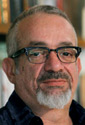
Rabih Alameddine is the author of the novels An Unnecessary Woman; I, the Divine; Koolaids; The Hakawati; The Wrong End of the Telescope; and the story collection, The Perv. In 2019, he won the Dos Passos Prize. (more)
If you enjoyed:
Shadow of the Wind
Try:
The Hakawati
by Rabih Alameddine
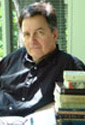
Roberto Ampuero is an internationally bestselling, award-winning author. He has published eleven novels in Spanish and his works have been translated around the world. The Neruda Case is his first novel published in English. ... (more)
If you enjoyed:
Shadow of the Wind
Try:
The Neruda Case
by Roberto Ampuero
We recommend 16 similar authors

The House on Biscayne Bay
by Chanel Cleeton
As death stalks a gothic mansion in Miami, the lives of two women intertwine as the past and present collide.
The Flower Sisters
by Michelle Collins Anderson
From the new Fannie Flagg of the Ozarks, a richly-woven story of family, forgiveness, and reinvention.

The Funeral Cryer by Wenyan Lu
Debut novelist Wenyan Lu brings us this witty yet profound story about one woman's midlife reawakening in contemporary rural China.
Your guide toexceptional books
BookBrowse seeks out and recommends the best in contemporary fiction and nonfiction—books that not only engage and entertain but also deepen our understanding of ourselves and the world around us.