
-
Your next favorite book
is waiting.
Summary | Excerpt | Reviews | Beyond the book | Read-Alikes | Genres & Themes | Author Bio
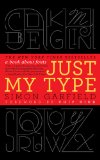
A Book About Fonts
by Simon Garfield Book Reviewed by:
A hugely entertaining and revealing guide to the history of type that asks, What does your favorite font say about you?
Fonts surround us every day, on street signs and buildings, on movie posters and books, and on just about every product we buy. But where do fonts come from, and why do we need so many? Who is responsible for the staid practicality of Times New Roman, the cool anonymity of Arial, or the irritating levity of Comic Sans (and the movement to ban it)?
Typefaces are now 560 years old, but we barely knew their names until about twenty years ago when the pull-down font menus on our first computers made us all the gods of type. Beginning in the early days of Gutenberg and ending with the most adventurous digital fonts, Simon Garfield explores the rich history and subtle powers of type. He goes on to investigate a range of modern mysteries, including how Helvetica took over the world, what inspires the seeming ubiquitous use of Trajan on bad movie posters, and exactly why the all-type cover of Men are from Mars, Women are from Venus was so effective. It also examines why the "T" in the Beatles logo is longer than the other letters and how Gotham helped Barack Obama into the White House. A must-have book for the design conscious, Just My Type's cheeky irreverence will also charm everyone who loved Eats, Shoots & Leaves and Schott's Original Miscellany.
Introduction
On 12 June 2005, a fifty-year-old man stood up in
front of a crowd of students at Stanford University
and spoke of his campus days at a 'lesser institution' - Reed
College in Portland, Oregon. 'Throughout the campus,' he
remembered, 'every poster, every label on every drawer,
was beautifully hand calligraphed. Because I had dropped
out and didn't have to take the normal classes, I decided to
take a calligraphy class to learn how to do this. I learned
about serif and sans serif typefaces, about varying the
amount of space between different letter combinations,
about what makes great typography great. It was beautiful,
historical, artistically subtle in a way that science can't
capture, and I found it fascinating.'
At the time, the student, who would later drop out of
college, believed that nothing he had learned would find
a practical application in his life. But things changed. Ten
years after his college experience, that man, by the name
of Steve Jobs,...
As its tagline describes, Just My Type is precisely that - a book about fonts and almost everything one could possibly want to know about them. Garfield's breezy writing serves up many entertaining trivia - the role of hand gloves in font design; which font is used in the signs for the television sitcom The Office (and why); how Gotham played a large part in President Barack Obama's election campaign; and how the look of the entire city of London was changed by one beautiful font. Since each of the 22 chapters discusses a particular font (or two) and often its associated designer, the book can be read out of sequence and still make sense. Though at times, especially toward the end, the book can feel a little strained - as if Garfield were trying to cram all his research into the pages before time ran out...continued
Full Review
 (837 words)
(Reviewed by Poornima Apte).
 Chip Kidd
Whether you're a hardcore typophile or a type-tyro, there's something here for you: be it the eye-opening revelations of Eric Gill's utter and complete perversity, or the creation of the typeface that helped Mr. Obama gain entrance to the White House. Lynne Truss
There is even a photograph of a quick brown fox literally jumping over a lazy dog. What a clever, clever book. Maira Kalman
Did I love this book? My daughter's middle name is Bodoni. Enough said.
Chip Kidd
Whether you're a hardcore typophile or a type-tyro, there's something here for you: be it the eye-opening revelations of Eric Gill's utter and complete perversity, or the creation of the typeface that helped Mr. Obama gain entrance to the White House. Lynne Truss
There is even a photograph of a quick brown fox literally jumping over a lazy dog. What a clever, clever book. Maira Kalman
Did I love this book? My daughter's middle name is Bodoni. Enough said.These days, typefaces are designed using computer programs such as Macromedia Fontographer, but in the early days of type, each was made by hand using basic tools. There were three products that together formed the backbone of the process by which type was developed: the mold, the matrix, and the final piece also known as a "sort."
To create one letter, a basic punch in the shape of the letter was chiseled into some kind of pliable metal, usually copper. This formed the matrix for one letter and could be used over and over again. Many such matrices packed a mold.

Essentially, a mold contained many matrices for different letters in a grid pattern. The bottom part of the mold housed all the letter matrices and the top part ...
If you liked Just My Type, try these:
by Simon Garfield
Published 2018
As managing time becomes the greatest challenge we face in our lives, this multi-layered history helps us tackle it in a sparkling new light.
by Michael Rosen
Published 2016
Michael Rosen takes you on an unforgettable adventure through the history of the alphabet in twenty-six vivid chapters, fizzing with personal anecdotes and fascinating facts
by Mary Roach
Published 2014
The irresistible, ever-curious, and always best-selling Mary Roach returns with a new adventure to the invisible realm we carry around inside.



Not doing more than the average is what keeps the average down.
Click Here to find out who said this, as well as discovering other famous literary quotes!

Can you name the title?
Test your book knowledge with our daily trivia challenge!