Summary | Excerpt | Reviews | Beyond the book | Read-Alikes | Genres & Themes | Author Bio
Critics' Opinion:
Readers' Opinion:
First Published:
Mar 2009, 224 pages
Paperback:
Sep 2010, 240 pages
 Book Reviewed by:
Jo Perry
Buy This Book
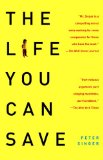
For the first time in history, it is now within our reach to eradicate world poverty and the suffering it brings. The people of the developed world face a profound choice: If we are not to turn our backs on a fifth of the world’s population, we must become part of the solution.
This is the right time to ask yourself: “What should I be doing to help?”
For the first time in history, it is now within our reach to eradicate world poverty and the suffering it brings. Yet around the world, a billion people struggle to live each day on less than many of us pay for bottled water. And though the number of deaths attributable to poverty worldwide has fallen dramatically in the past half-century, nearly ten million children still die unnecessarily each year. The people of the developed world face a profound choice: If we are not to turn our backs on a fifth of the world’s population, we must become part of the solution.
In The Life You Can Save, philosopher Peter Singer, named one of “The 100 Most Influential People in the World” by Time magazine, uses ethical arguments, provocative thought experiments, illuminating examples, and case studies of charitable giving to show that our current response to world poverty is not only insufficient but ethically indefensible.
Singer contends that we need to change our views of what is involved in living an ethical life. To help us play our part in bringing about that change, he offers a seven-point plan that mixes personal philanthropy (figuring how much to give and how best to give it), local activism (spreading the word in your community), and political awareness (contacting your representatives to ensure that your nation’s foreign aid is really directed to the world’s poorest people).
In The Life You Can Save, Singer makes the irrefutable argument that giving will make a huge difference in the lives of others, without diminishing the quality of our own. This book is an urgent call to action and a hopeful primer on the power of compassion, when mixed with rigorous investigation and careful reasoning, to lift others out of despair.
Chapter 1
Saving a Child
On your way to work, you pass a small pond. On hot days, children sometimes play in the pond, which is only about knee-deep. The weather’s cool today, though, and the hour is early, so you are surprised to see a child splashing about in the pond. As you get closer, you see that it is a very young child, just a toddler, who is flailing about, unable to stay upright or walk out of the pond. You look for the parents or babysitter, but there is no one else around. The child is unable to keep his head above the water for more than a few seconds at a time. If you don’t wade in and pull him out, he seems likely to drown. Wading in is easy and safe, but you will ruin the new shoes you bought only a few days ago, and get your suit wet and muddy. By the time you hand the child over to someone responsible for him, and change your clothes, you’ll be late for work. What should you do?
I teach a course called Practical Ethics. When we start talking about ...
Though Singer's plea is reasoned and calm, The Life You Can Save is rough reading, especially for readers used to "feel good" nonfiction or the narcissistic wallow offered by most self-help titles. The Life You Can Save is definitely a "feel bad" read and that's why it's so good and so important: Pour yourself a glass of tap water and settle down with it for a few hours. You won't escape into fantasy, lose weight, unclutter your closets or boost your self-esteem, but you might be shamed into doing somebody some good...continued
Full Review
(1024 words)
This review is available to non-members for a limited time. For full access,
become a member today.
(Reviewed by Jo Perry).
 Holden Karnofsky, co-founder, GiveWell.
If you think you can’t afford to give money to the needy, I urge you to read this book. If you think you’re already giving enough, and to the right places, still I urge you to read this book. In The Life You Can Save, Peter Singer makes a strong case–logical and factual, but also emotional–for why each of us should be doing more for the world’s impoverished. This book will challenge you to be a better person. Raymond C. Offenheiser, president, Oxfam America.
In The Life You Can Save, Peter Singer challenges each of us to ask: Am I willing to make poverty history? Skillfully weaving together parable, philosophy, and hard statistics, he tackles the most familiar moral, ethical, and ideological obstacles to building a global culture of philanthropy, and sets the bar for how we as citizens might do our part to empower the world's poor.
Holden Karnofsky, co-founder, GiveWell.
If you think you can’t afford to give money to the needy, I urge you to read this book. If you think you’re already giving enough, and to the right places, still I urge you to read this book. In The Life You Can Save, Peter Singer makes a strong case–logical and factual, but also emotional–for why each of us should be doing more for the world’s impoverished. This book will challenge you to be a better person. Raymond C. Offenheiser, president, Oxfam America.
In The Life You Can Save, Peter Singer challenges each of us to ask: Am I willing to make poverty history? Skillfully weaving together parable, philosophy, and hard statistics, he tackles the most familiar moral, ethical, and ideological obstacles to building a global culture of philanthropy, and sets the bar for how we as citizens might do our part to empower the world's poor.The United Nations
International Children's Emergency Fund (UNICEF) estimates that 27,000
children die every day from preventable, poverty-related causes.
The Life You Can Save website has links to relief
organizations that Singer has examined for effectiveness and transparency:
This "beyond the book" feature is available to non-members for a limited time. Join today for full access.

If you liked The Life You Can Save, try these:
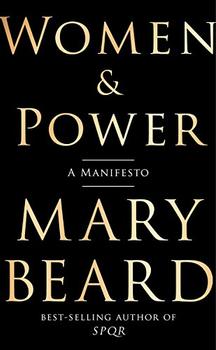
by Mary Beard
Published 2017
"A modern feminist classic." - The Guardian
From the internationally acclaimed classicist and New York Times best-selling author comes this timely manifesto on women and power.
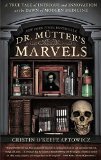
by Cristin O'Keefe Aptowicz
Published 2015
A mesmerizing biography of the brilliant and eccentric medical innovator who revolutionized American surgery and founded the country's most famous museum of medical oddities

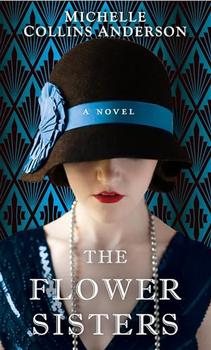
The Flower Sisters
by Michelle Collins Anderson
From the new Fannie Flagg of the Ozarks, a richly-woven story of family, forgiveness, and reinvention.
Common sense is genius dressed in its working clothes.
Click Here to find out who said this, as well as discovering other famous literary quotes!
Your guide toexceptional books
BookBrowse seeks out and recommends the best in contemporary fiction and nonfiction—books that not only engage and entertain but also deepen our understanding of ourselves and the world around us.