Summary | Excerpt | Reviews | Beyond the book | Read-Alikes | Genres & Themes | Author Bio
Critics' Opinion:
Readers' Opinion:
First Published:
Jan 2008, 304 pages
Paperback:
Jan 2009, 304 pages
 Book Reviewed by:
Paul Hughes
Buy This Book
A gripping biological detective story that uncovers the myth, mystery, and endangered fate of the world’s most humble fruit - the banana.
To most people, a banana is a banana: a simple yellow fruit. Americans eat more bananas than apples and oranges combined. In others parts of the world, bananas are what keep millions of people alive. But for all its ubiquity, the banana is surprisingly mysterious; nobody knows how bananas evolved or exactly where they originated. Rich cultural lore surrounds the fruit: In ancient translations of the Bible, the "apple" consumed by Eve is actually a banana (it makes sense, doesn’t it?). Entire Central American nations have been said to rise and fall over the banana.
But the biggest mystery about the banana today is whether it will survive. A seedless fruit with a unique reproductive system, every banana is a genetic duplicate of the next, and therefore susceptible to the same blights. Today’s yellow banana, the Cavendish, is increasingly threatened by such a blight—and there’s no cure in sight.
Banana combines a pop-science journey around the globe, a fascinating tale of an iconic American business enterprise, and a look into the alternately tragic and hilarious banana subculture (one does exist)—ultimately taking us to the high-tech labs where new bananas are literally being built in test tubes, in a race to save the world’s most beloved fruit.
CHAPTER 1
And God Created the Banana
IF THERE IS AN ANSWER TO PANAMA DISEASE, it begins further back than even
the earliest recorded history. It starts in myth. It starts when people—and
bananas—were born.
It is humanity's oldest story. There's probably not a single person you
know who isn't familiar with it. The odds, however, are also good that
nobody—not you, me, or perhaps even your local pastor—has gotten it quite
right.
In the beginning, God spent a week creating heaven and earth. Fruit
appeared on day two. Man arrived after the sixth dawn. After resting, God
created a companion for his progeny, and Adam and Eve became a couple. Their
Eden was a classic utopia. Everything was there in abundance, for the
taking, with a significant exception: "You may freely eat of every tree in
the garden," God said, "but of the tree of knowledge of good and evil you
shall not eat, for in the day that you eat it, you ...
Like your fruit locally grown? Enjoy variety? Prefer non-GMO food? Like bananas?
That's cognitive dissonance for you. The banana you eat is likely from Ecuador and identical to every other banana of its species. Modified oft in the past, banana growers are now trying to save it from extinction-threatening disease - by genetic modification.
All that and far more are in Banana by Dan Koeppel...
Maybe it started in Eden, where the fruit of the tree of knowledge of good and evil might have been a banana. (Musa sapentium, the botanist Linnaeus named it —the "wise fruit".)
Maybe it started in Africa, then moved to Southeast Asia, then on to Central and South America. (Some of those bananas you wouldn't want to meet, let alone eat.)
Today, the banana is here and we love it. More than apples and oranges (to which, yes, we can compare bananas). We love bananas!
But although the banana is for everyone, the whole book may not be. However, because it's superbly organized you can easily skip to the parts you prefer.
Starting in Eden, Koeppel devotes the first fourth of the book to the science and spread of the non-commercial banana. The middle half of the book explores the history of the fruit's transformation to what we think of today when we think of bananas. This is fascinating — ripe, if you will — with wars and revolutions, history and literature, business and politics, and enough colorful characters and events for a half-dozen movies. We see the birth of the United Fruit Company, now better known as Chiquita, and the rise of its major competitor, Dole. We hear of wars and rumors of war, fomented — planted — by the same banana companies and abetted — cultivated — by the U.S. government. The last quarter of the book goes toward today, where the banana is threatened by disease while growers and scientists seek a cure.
For me the slowest slog was the science, not for its poor quality but because I wanted to get to the history. A second quibble is the small chapters, some as few as three pages and none longer than 10, which present stories more like a magazine would. Indeed, the book began as magazine material: one article the author read and at least one that he wrote. Even that, though, makes the book easily digestible, although I prefer books that weave together less discernibly. Nevertheless, there's a ton of information here and Koeppel writes engagingly as the long-form journalist he is, and includes a useful timeline and index...continued
Full Review
(535 words)
This review is available to non-members for a limited time. For full access,
become a member today.
(Reviewed by Paul Hughes).
Bananas may look like they grow on trees but in fact they grow on plants that are related to the lily and orchid family.
The term 'banana republic' was coined by American humorist and short story writer O. Henry, in reference to Honduras - "republic" in his day being a common euphemism for a dictatorship.
On a number of occasions the term 'banana republic' has been quite literal with the banana companies owning massive percentages of entire countries and their own private armies. For example, in Honduras in the early 20th century, the United Fruit Company was nicknamed "The Octopus" for its extensive involvement in, sometimes violent, politics; and in the 1950s, the directors of United Fruit played a role in convincing the Truman and ...
This "beyond the book" feature is available to non-members for a limited time. Join today for full access.

If you liked Banana, try these:
Why Did the Chicken Cross the World?
by Andrew Lawler
Published 2016
From ancient empires to modern economics, veteran journalist Andrew Lawler delivers a sweeping history of the animal that has been most crucial to the spread of civilization across the globe - the chicken.
by Nicholas A. Basbanes
Published 2014
A consideration of all things paper: Entertaining, illuminating, irresistible, a book that masterfully guides us through paper's inseparability from human culture.


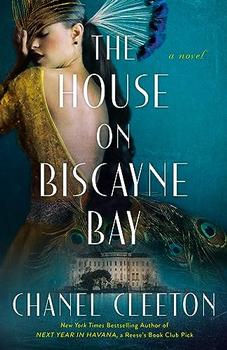
The House on Biscayne Bay
by Chanel Cleeton
As death stalks a gothic mansion in Miami, the lives of two women intertwine as the past and present collide.
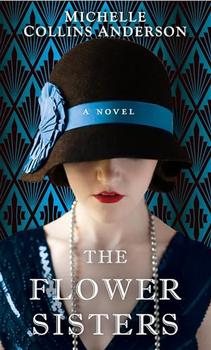
The Flower Sisters
by Michelle Collins Anderson
From the new Fannie Flagg of the Ozarks, a richly-woven story of family, forgiveness, and reinvention.
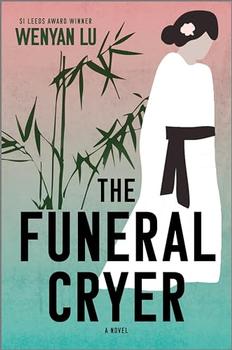
The Funeral Cryer by Wenyan Lu
Debut novelist Wenyan Lu brings us this witty yet profound story about one woman's midlife reawakening in contemporary rural China.
Your guide toexceptional books
BookBrowse seeks out and recommends the best in contemporary fiction and nonfiction—books that not only engage and entertain but also deepen our understanding of ourselves and the world around us.