
-
Your next favorite book
is waiting.
Summary | Excerpt | Reading Guide | Reviews | Beyond the book | Read-Alikes | Genres & Themes | Author Bio
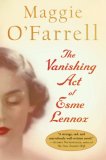
 Book Reviewed by:
Maggie O’Farrell takes readers on a journey to the darker places of the human heart, where desires struggle with the imposition of social mores. This haunting story explores the seedy past of Victorian asylums, the oppression of family secrets, and the way truth can change everything.
In the middle of tending to the everyday business at her vintage clothing shop and sidestepping her married boyfriend’s attempts at commitment, Iris Lockhart receives a stunning phone call: Her great-aunt Esme, whom she never knew existed, is being released from Cauldstone Hospital - where she has been locked away for over sixty years. Iris’s grandmother Kitty always claimed to be an only child. But Esme’s papers prove she is Kitty’s sister, and Iris can see the shadow of her dead father in Esme’s face. Esme has been labeled harmless - sane enough to coexist with the rest of the world. But Esme’s still basically a stranger, a family member never mentioned by the family, and one who is sure to bring life-altering secrets with her when she leaves the ward. If Iris takes her in, what dangerous truths might she inherit?
Maggie O’Farrell’s intricate tale of family secrets, lost lives, and the freedom brought by truth will haunt readers long past its final page.
Excerpt
The Vanishing Act of Esme Lennox
Let us begin with two girls at a dance.
They are at the edge of the room. One sits on a chair, opening and shutting a dance-card with gloved fingers. The other stands beside her, watching the dance unfold: the circling couples, the clasped hands, the drumming shoes, the whirling skirts, the bounce of the floor. It is the last hour of the year and the windows behind them are blank with night. The seated girl is dressed in something pale; Esme forgets what the other in a dark red frock that doesn't suit her. She has lost her gloves. It begins here.
Or perhaps not. Perhaps it begins earlier, before the party, before they dressed in their new finery, before the candles were lit, before the sand was sprinkled on the boards, before the year whose end they are celebrating began. Who knows? Either way it ends at a grille covering a window with each square exactly two thumbnails wide.
If Esme cares to gaze into the distance-that is to say, at ...
The virtue of this book is its absorbing, suspenseful narration. The reader joins Iris on a kind of detective hunt for her family's true story, and O'Farrell masterfully times the clues to both gratify the hunger for answers and extend the mystery even further. Yet the book's downfall is how thoroughly it sacrifices character development to the rhythms of its engrossing plot. The book dips into the heads of its female protagonists—Iris, Esme, and Esme's sister Kitty—but all three remain stock characters without true interiority. Their thoughts and actions are calculated not to reveal how women in their situation might feel but, rather, to reveal the pieces of the puzzle with deft narrative control. This is a serious flaw in a work that aims to pierce the stereotype of the hysterical woman...continued
Full Review
 (556 words)
(Reviewed by Amy Reading).
 Audrey Niffenegger, author of The Time Traveler's Wife
The Vanishing Act of Esme Lennox is strange, sad, and a marvelously well-written novel. I would like to think that families only behave this way in books, but unfortunately betrayal, jealousy, and secrets are all too common in real life. It was a terrific book, I will be thinking about it for a long time.
Audrey Niffenegger, author of The Time Traveler's Wife
The Vanishing Act of Esme Lennox is strange, sad, and a marvelously well-written novel. I would like to think that families only behave this way in books, but unfortunately betrayal, jealousy, and secrets are all too common in real life. It was a terrific book, I will be thinking about it for a long time.If you liked The Vanishing Act of Esme Lennox, try these:
by Brad Watson
Published 2017
Astonishing prose brings to life a forgotten woman and a lost world in a strange and bittersweet Southern pastoral.

by Michael Lowenthal
Published 2008
Charity Girl examines one of the darkest periods in our history, when patriotic fervor and fear led to devastating consequences. During World War I, the U.S. government went on a moral and medical campaign, quarantining and incarcerating young women who were thought to have venereal diseases. They were called “charity girls”
by Diane Setterfield
Published 2007
A love letter to reading, a book for the feral reader in all of us, a return to that rich vein of storytelling that our parents loved and that we loved as children. Diane Setterfield will keep you guessing, make you wonder, move you to tears and laughter and, in the end, deposit you breathless yet satisfied back upon the shore of your everyday life...

L.A. Women by Ella Berman
Two ambitious writers in 1960s LA face betrayal when one writes a novel based on the other's life.






