Summary | Excerpt | Reviews | Beyond the book | Read-Alikes | Genres & Themes | Author Bio
Critics' Opinion:
Readers' Opinion:
First Published:
Jul 2006, 272 pages
Paperback:
Jun 2007, 288 pages
 Book Reviewed by:
BookBrowse Review Team
Buy This Book
The End of Iraq, definitive, tough-minded, clear-eyed, describes America's failed strategy toward that country and what must be done now.
The United States invaded Iraq with grand ambitions to bring it democracy and thereby transform the Middle East. Instead, Iraq has disintegrated into three constituent components: a pro-western Kurdistan in the north, an Iran-dominated Shiite entity in the south, and a chaotic Sunni Arab region in the center. The country is plagued by insurgency and is in the opening phases of a potentially catastrophic civil war.
George W. Bush broke up Iraq when he ordered its invasion in 2003. The United States not only removed Saddam Hussein, it also smashed and later dissolved the institutions by which Iraq's Sunni Arab minority ruled the country: its army, its security services, and the Baath Party. With these institutions gone and irreplaceable, the basis of an Iraqi state has disappeared.
The End of Iraq describes the administration's strategic miscalculations behind the war as well as the blunders of the American occupation. There was the failure to understand the intensity of the ethnic and religious divisions in Iraq. This was followed by incoherent and inconsistent strategies for governing, the failure to spend money for reconstruction, the misguided effort to create a national army and police, and then the turning over of the country's management to Republican political loyalists rather than qualified professionals.
As a matter of morality, Galbraith writes, the Kurds of Iraq are no less entitled to independence than are Lithuanians, Croatians, or Palestinians. And if the country's majority Shiites want to run their own affairs, or even have their own state, on what democratic principle should they be denied? If the price of a unified Iraq is another dictatorship, Galbraith writes in The End of Iraq, it is too high a price to pay.
The United States must focus now, not on preserving or forging a unified Iraq, but on avoiding a spreading and increasingly dangerous and deadly civil war. It must accept the reality of Iraq's breakup and work with Iraq's Shiites, Kurds, and Sunni Arabs to strengthen the already semi-independent regions. If they are properly constituted, these regions can provide security, though not all will be democratic.
There is no easy exit from Iraq for America. We have to relinquish our present strategy -- trying to build national institutions when there is in fact no nation. That effort is doomed, Galbraith argues, and it will only leave the United States with an open-ended commitment in circumstances of uncontrollable turmoil.
Peter Galbraith has been in Iraq many times over the last twenty-one years during historic turning points for the country: the Iran-Iraq War, the Kurdish genocide, the 1991 uprising, the immediate aftermath of the 2003 war, and the writing of Iraq's constitutions. In The End of Iraq, he offers many firsthand observations of the men who are now Iraq's leaders. He draws on his nearly two decades of involvement in Iraq policy working for the U.S. government to appraise what has occurred and what will happen. The End of Iraq is the definitive account of this war and its ramifications.
On March 2, in Basra's Sa'ad Square, an Iraqi tank driver turned his turret toward a two-story portrait of Saddam Hussein and fired. The shell ignited a rebellion that spread from Basra up the Euphrates and Tigris river valleys, reaching the southern outskirts of Baghdad.
In Nasiriyah, crowds literally tore Ba'ath Party officials apart. Government offices, Ba'ath Party headquarters, and military installations were looted and burned. The intensity of Shiite feelings was encapsulated for me in an incident that I witnessed a few weeks later.
I was in a refugee camp on the Iraq-Kuwait border when a U.S. Army medic in a Humvee drove into the camp. Four children, he said, had been collecting tomatoes on the Iraqi side of the border when they stepped on unexploded American ordnance. It had detonated. Was there a doctor, he asked. I rounded up the only available medical person, a Kuwaiti medical student, and drove him into Iraq. Three of the children had been moved to an American...
Galbraith's cogent analysis of the history of Iraq, and the USA's involvement in the country, seems to be eminently balanced and clear and, from the point of view of this armchair-observer of the Iraq debacle, it is difficult to find fault with his conclusions...continued
Full Review
(1418 words)
This review is available to non-members for a limited time. For full access,
become a member today.
(Reviewed by BookBrowse Review Team).
 Foreign Affairs
The perceptive and well-informed Galbraith has it just about right in his litany of miscalculations and mismanagements.... Fast paced. Phillip G. Henderson, National Catholic Reporter
Excellent and indispensable.... Peter Galbraith's learned and insightful book is literally a must-read for those who wish to place the Iraq war in historical context and to understand the forces at play in what may well be the dissolution of Iraq. Richard Holbrooke, former U.S. Ambassador to the United Nations
Peter Galbraith has seen, with balance and clarity, the whole arc of America's tragic and mismanaged relationship with Iraq. This is an essential book as the debate on what to do in Iraq continues to grow in the United States.
Foreign Affairs
The perceptive and well-informed Galbraith has it just about right in his litany of miscalculations and mismanagements.... Fast paced. Phillip G. Henderson, National Catholic Reporter
Excellent and indispensable.... Peter Galbraith's learned and insightful book is literally a must-read for those who wish to place the Iraq war in historical context and to understand the forces at play in what may well be the dissolution of Iraq. Richard Holbrooke, former U.S. Ambassador to the United Nations
Peter Galbraith has seen, with balance and clarity, the whole arc of America's tragic and mismanaged relationship with Iraq. This is an essential book as the debate on what to do in Iraq continues to grow in the United States.map showing Kurdish and Shia areas or Iraq
The Republic of Iraq (about the size of California) spans the lands of ancient Mesopotamia, (between the Tigris and Euphrates Rivers), the northwestern end of the Zagros mountain range and parts of the Syrian Desert. Mesopotamia was home to the world's first known civilization, the Sumerians, who were followed by the Akkadians, Babylonians and Assyrians. Between them they were responsible for the earliest known writing, establishing mathematical principles and laws, developing irrigation techniques, the wheel and much else. For four centuries from the 6th century BC the Neo-Babylonian Empire was incorporated into the Persian Empire, then it fell under Greek rule for a couple of ...
This "beyond the book" feature is available to non-members for a limited time. Join today for full access.

If you liked The End of Iraq, try these:
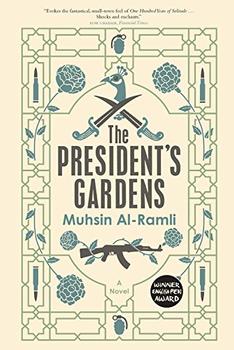
by Muhsin Al-Ramli
Published 2019
One Hundred Years of Solitude meets The Kite Runner in Saddam Hussein's Iraq.
by Kevin Powers
Published 2013
With profound emotional insight, especially into the effects of a hidden war on mothers and families at home, The Yellow Birds is a groundbreaking novel about the costs of war that is destined to become a classic.





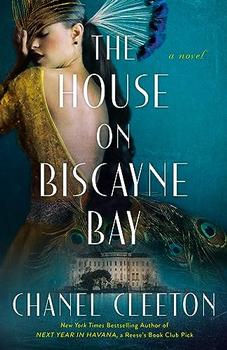
The House on Biscayne Bay
by Chanel Cleeton
As death stalks a gothic mansion in Miami, the lives of two women intertwine as the past and present collide.

The Flower Sisters
by Michelle Collins Anderson
From the new Fannie Flagg of the Ozarks, a richly-woven story of family, forgiveness, and reinvention.

The Funeral Cryer by Wenyan Lu
Debut novelist Wenyan Lu brings us this witty yet profound story about one woman's midlife reawakening in contemporary rural China.
Your guide toexceptional books
BookBrowse seeks out and recommends the best in contemporary fiction and nonfiction—books that not only engage and entertain but also deepen our understanding of ourselves and the world around us.