
-
Your next favorite book
is waiting.
Summary | Excerpt | Reviews | Read-Alikes | Genres & Themes | Author Bio
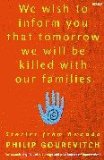
Stories From Rwanda
by Philip GourevitchIn 1994 the Rwandan government implemented a policy that called on everyone in the Hutu majority to murder everyone in the Tutsi minority: 800,000 people were massacred. Read their story.
This extraordinary book concerns what happened when the Rwandan government in 1994 implemented a policy that called on everyone in the Hutu majority to murder everyone in the Tutsi minority. Though the massacres were low-tech - done largely by machete - they were carried out at dazzling speed, and 800,000 people were killed in a hundred days. Pastors in one Tutsi community sent a letter to their church president, a Hutu, that included the chilling phrase that gives Philip Gourevitch his title.
Mr. Gourevitch's haunting work is not only an anatomy of this genocide and what Rwandans call its "genocidal logic," but a vivid history of the background to the tragedy and an unforgettable account of its aftermath: the mass displacements, the temptations of revenge and the quest for justice, the replacement of elites and the plight of survivors, the impossibly crowded prisons and militant refugee camps. His intimate portraits of Rwandans in all walks of life as they cope with the psychological and political challenges of survival make their tragic situation unexpectedly immediate and familiar; his dramatic narrative also shows how resurgent genocidal forces threatened to plunge central Africa into total war and how this sparked the drive to oust Mobutu from power in the Congo. Lastly, he contrasts the Rwandans' provocatively original political response to the horror with the wholly inadequate reactions of international humanitarian organizations and foreign governments - not least the United States.
It is impossible to achieve full justice after genocide, but Rwanda faces the old anguish in new ways: how can people who have suffered so grievously manage to live together in a single cohesive society with those who have inflicted such suffering? Mr. Gourevitch's memorable book tells us much about the struggle everywhere on the globe to establish legitimate and sustainable nation-states when we share bloody and compromised histories. His powerful literary testament is a major document about ethical choice and political responsibility.
Excerpt
We Wish To Inform You That Tomorrow We Will Be Killed With Our Families
IN THE PROVINCE of Kibungo, in eastern Rwanda, in the swamp- and pastureland near the Tanzanian border, there's a rocky hill called Nyarubuye with a church where many Tutsis were slaughtered in mid-April of 1994. A year after the killing I went to Nyurabuye with two Canadian military officers. We flew in a United Nations helicopter, traveling low over the hills in the morning mists, with the banana trees like green starbursts dense over the slopes. The uncut grass blew back as we dropped into the center of the parish schoolyard. A lone solider materialized with his Kalashnikov, and shook our hands with stiff, shy formality. The Canadians presented the paperwork for our visit, and I stepped up into the open doorway of a classroom.
At least fifty mostly decomposed cadavers covered the floor, wadded in clothing, their belongings strewn about and smashed. Macheted skulls had rolled here and there.
...

If you liked We Wish To Inform You That Tomorrow We Will Be Killed With Our Families, try these:
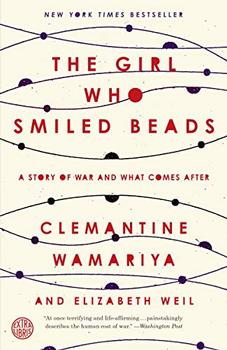
by Elizabeth Weil, Clemantine Wamariya
Published 2019
A riveting story of dislocation, survival, and the power of stories to break or save us.
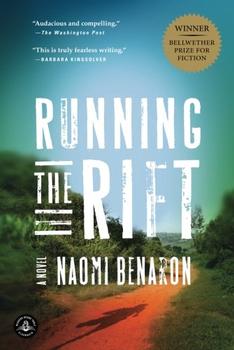
by Naomi Benaron
Published 2012
Running the Rift follows Jean Patrick Nkuba, a gifted Rwandan boy, from the day he knows that running will be his life to the moment he must run to save his life, a ten-year span in which his country is undone by the Hutu-Tutsi tensions.
by Tracy Kidder
Published 2010
Strength in What Remains is a wonderfully written, inspiring account of one man’s remarkable American journey and of the ordinary people who helped him – a brilliant testament to the power of will and of second chances.




If passion drives you, let reason hold the reins
Click Here to find out who said this, as well as discovering other famous literary quotes!

Can you name the title?
Test your book knowledge with our daily trivia challenge!