Summary | Excerpt | Reviews | Beyond the book | Read-Alikes | Genres & Themes | Author Bio
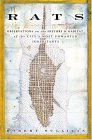
Observations on the History and Habitat of the City's Most Unwanted Inhabitants
Critics' Opinion:
Readers' Opinion:
First Published:
Apr 2004, 256 pages
Paperback:
Apr 2005, 256 pages
 Book Reviewed by:
BookBrowse Review Team
Buy This Book
Behold the rat, dirty and disgusting! Robert Sullivan turns the lowly rat into the star of the most perversely intriguing, remarkable, and unexpectedly elegant book of the season.
Thoreau went to Walden Pond to live simply in the wild and contemplate his own place in the world by observing nature. Robert Sullivan went to a disused, garbage-filled little alley in lower Manhattan to contemplate the city and its lesser-known inhabitants—by observing the rat.
Rats live in the world precisely where humans do; they survive on the effluvia of human society; they eat our garbage. While dispensing gruesomely fascinating rat facts and strangely entertaining rat-stories—everyone has one, it turns out—Sullivan gets to know not just the beast but its friends and foes: the exterminators, the sanitation workers, the agitators and activists who have played their part in the centuries-old war between human city dweller and wild city rat. With a notebook and night-vision gear, he sits nightly in the streamlike flow of garbage and searches for fabled rat-kings, sets out to trap a rat, and eventually travels to the Midwest to learn about rats in Chicago, Milwaukee, and other cities of America. With tales of rat fights in the Gangs of New York era and stories of Harlem rent strike leaders who used rats to win tenants basic rights, Sullivan looks deeper and deeper into the largely unrecorded history of the city and its masses—its herd-of-rats-like mob. Funny, wise, sometimes disgusting but always compulsively readable, Rats earns its unlikely place alongside the great classics of nature writing.
Did you know?
Chapter One
WHEN I WROTE the following account of my experiences with rats, I lived in an apartment building on a block filled with other apartment buildings, amidst the approximately eight million people in New York City, and I paid rent to a landlord that I never actually met-though I did meet the superintendent, who was a very nice guy. At this moment, I am living out of the city, away from the masses, in a bucolic little village with about the same number of inhabitants as my former city block. I wouldn't normally delve into my own personal matters, except that when I mention my rat experiences to people, they sometimes think I took extraordinary measures to investigate them, and I didn't. All I did was stand in an alley--a filth-slicked little alley that is about as old as the city and secret the way alleys are secret and yet just a block or two from Wall Street, from Broadway, and from what used to be the World Trade Center. All I did was take a spot next to the trash and wait...
I could fill pages with anecdotes from this book but instead I encourage you to go and read the very extensive excerpt at BookBrowse for yourself. The excerpt is unique to BookBrowse and I guarantee you'll come away with lots of wonderful facts to send shivers down your friends' spines for years to come!..continued
Full Review
(217 words)
This review is available to non-members for a limited time. For full access,
become a member today.
(Reviewed by BookBrowse Review Team).
Rat Facts
This "beyond the book" feature is available to non-members for a limited time. Join today for full access.

If you liked Rats, try these:
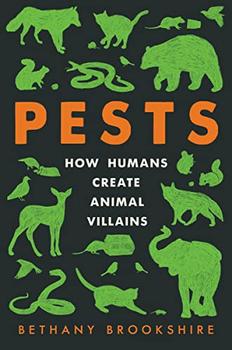
by Bethany Brookshire
Published 2023
An engrossing and revealing study of why we deem certain animals "pests" and others not - from cats to rats, elephants to pigeons - and what this tells us about our own perceptions, beliefs, and actions, as well as our place in the natural world.

by Hannah Nordhaus
Published 2011
The honey bee is a willing conscript, a working wonder, an unseen and crucial link in America's agricultural industry. But never before has its survival been so unclear - and the future of our food supply so acutely challenged.


The Flower Sisters
by Michelle Collins Anderson
From the new Fannie Flagg of the Ozarks, a richly-woven story of family, forgiveness, and reinvention.
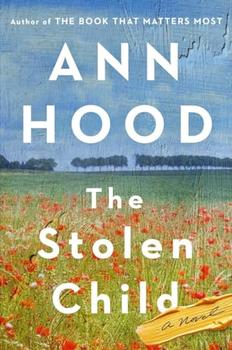
The Stolen Child
by Ann Hood
An unlikely duo ventures through France and Italy to solve the mystery of a child’s fate.
To make a library it takes two volumes and a fire. Two volumes and a fire, and interest. The interest alone will ...
Click Here to find out who said this, as well as discovering other famous literary quotes!
Your guide toexceptional books
BookBrowse seeks out and recommends the best in contemporary fiction and nonfiction—books that not only engage and entertain but also deepen our understanding of ourselves and the world around us.