Book Club Discussion Questions
Please be aware that this discussion guide will contain spoilers!
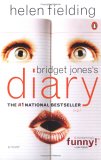
An Introduction to Bridget Jones's Diary
(as if you really need one):
Single, thirty-something career woman Bridget Jones has taken the best-seller lists by storm -- much to her creator's surprise -- and entered the English language and psyche. As Newsweek put it, "Ally McBeal better watch her scrawny little back -- Bridget Jones is coming to America." Too thin and upwardly mobile, Ally nevertheless shares with Bridget an obsessive, slightly paranoid preoccupation with her love life (or lack thereof), which proves the point: Bridget lives in all of us. She is every woman who has ever looked in the mirror and groaned, resolved to Do Something About It (whether via gym membership, slashing caloric intake, or marshaling Inner Resources), and kicked off the new program in a fattening or embarrassingly public manner.
As Helen Fielding puts it for this Guide, "Bridget's battling with two different ideas. One is the image of the Cosmo Girl, that she should be living this great, independent life full of friends and glamorous dinner parties. The second is the old fashioned idea of failure: that if you're not married by thirty, you'll die alone and be found three weeks later half-eaten by an Alsatian."
So what'll it be: tragic, barren spinsterhood, or relegation to the dull, diaper-and-coordinated-pasta-container-filled realm of the Smug Marrieds?
Take the following quiz to see where you fit on the Bridget-O-Meter. Have you ever:
- realized cellulite is creation of fiendish, misogynist extraterrestrial force in grips of which female earthlings are helpless (or entertained similar, late-night theory)
[ ] NEVER
[ ] OCCASIONALLY
[ ] FREQUENTLY
- not heard doorbell rung by attractive man owing to proximity of industrial-strength hairdryer to ear?
[ ] NEVER [ ]
OCCASIONALLY
[ ] FREQUENTLY
- had genuine concern about whereabouts of missing friend tempered by gratification at possessing perfect outfit for funeral?
[ ] NEVER
[ ] OCCASIONALLY
[ ] FREQUENTLY
- calculated likelihood of dying alone, in bad underwear
[ ] NEVER
[ ] OCCASIONALLY
[ ] FREQUENTLY
- found more than four pairs of black pantyhose -- each unwearable for a different reason -- in drawer at any one time?
[ ] NEVER
[ ] OCCASIONALLY
[ ] FREQUENTLY
- served guests food of a color not existing in nature? (Add five points if color is blue; one point per half-hour period between 8:30 and the hour at which dinner typically materializes; two points if consistently tempted to impress guests with food cannot pronounce.)
[ ] NEVER
[ ] OCCASIONALLY
[ ] FREQUENTLY
- checked phone messages more than six times an hour in any four-day period following initial sexual encounter?
[ ] NEVER
[ ] OCCASIONALLY
[ ] FREQUENTLY
- been late to first day on job because of two+ hours spent on optimum hair/make-up/outfit combo? (Add one point if ensemble still turned out to be dead wrong. Add two points if punctuality continues to prove elusive.)
[ ] NEVER
[ ] OCCASIONALLY
[ ] FREQUENTLY
Each "never" answer is worth one point; each "occasionally" worth two points; each "frequently" worth three points. If you score over 25, you may be Bridget--unlike Helen Fielding, who says firmly, "No, I'm not Bridget. I don't smoke or drink, and I'm a virgin." Nonetheless, her hilarious account of the miseries and triumphs of one very modern woman makes Fielding a spokesperson for all of us.
Discussion Questions
- At one point Bridget realizes that she's been on a diet for so many years that "the idea that you might actually need calories to survive has been completely wiped out of my consciousness." Yet one of her greatest assets is that she recognizes that this eternal quest for self-improvement is doomed and silly. How does the media influence women's self-images? Why do women collaborate so energetically in the process? When Bridget decides she's simply not up to the struggle and is going to stay home in an egg-spotted sweater, it is a victory or a defeat?
- Was the book as satisfying to read as a conventionally structured novel? How did the diary form affect your impression of Bridget Jones's Diary? Does it make you want to keep one, and if so, why?
- What do you think Bridget looks like? Why does Fielding never describe her? Given the frequent references to shagging, why are there no steamy sex scenes either?
📖
Get the full reading guide
Join BookBrowse free to unlock all 18 discussion questions, author background, themes, and more for Bridget Jones's Diary.
Join free — it takes 30 seconds
Already a member? Log in →
- How does the author develop themes of identity and belonging throughout the narrative?
- What role does the setting play in shaping the characters' decisions and relationships?
- Discuss how the ending reframes the events of the story. Were you surprised?
Unless otherwise stated, this discussion guide is reprinted with the permission of Penguin.
Any page references refer to a USA edition of the book, usually the trade paperback version, and may vary in other editions.