Please be aware that this discussion guide may contain spoilers!
Questions for discussion
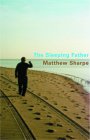
What might the author have intended by calling this novel The Sleeping Father? Does the title have any significance beyond its being a reference to the coma that befalls Bernard Schwartz?
One reviewer has described The Sleeping Father as an "inquiry into the weight of words" (Ed Park, Village Voice, March 39, 2004). What are some of the places in the book where language is not just the medium but the subject matter? What is the thematic relevance of language in this novel?
Bernard Schwartz's son, Chris, at one point thinks, "[W]hether you embrace irony or not, sooner or later irony embraces you." (p. 122) What is the role of irony in the book? Is there a connection between verbal irony--in which someone says one thing and means another--and dramatic irony--in which someone expects and hopes for the opposite of what they end up getting?
Sharpe describes a neurologist describing Bernard Schwartz's coma: "In the room where Bernie lay inert, Lisa Danmeyer created a second Bernie made of test results and drug names and parts of the brain and biochemical causality and possible outcomes... Lisa Danmeyer's Bernie was the opposite of Jesus: flesh made words." (p. 48) The novel takes up various and sometimes contradictory ways of describing and thinking about the self: the medical, the religious, the poetic, the psychological; where and how else in the novel do you see this theme being investigated?
What issues of race and class come up in this novel, and how are they addressed?
There are a few incidents in the novel that could be construed as supernatural. And Cathy Schwartz, a Jewish girl, immerses herself in Catholicism. What do you make of the way this novel portrays the divine, and the quest for faith?
Unless otherwise stated, this discussion guide is reprinted with the permission of Soft Skull Press.
Any page references refer to a USA edition of the book, usually the trade paperback version, and may vary in other editions.
Stranger than fiction, blending tragedy and farce, How to Create the Perfect Wife is an engrossing tale of the radicalism, and deep contradictions, at the heart of the Enlightenment.
Z, the novel about the life of Zelda Sayre Fitzgerald is at points charming and; like another reviewer, I kept thinking of the movie, "Midnight...
read more
Although heavy on the scientific details, which slowed down the story for me (OK, I admit, I was one of those liberal arts majors who skipped out on...
read more
Loved this book. Magical, quirky, enchanting I could go on. All books do not have to be literary fiction, sometimes it is just so comforting to read...
read more
U.S. ebook sales up in 2012, but rate of growth is slowing(May 16 2013) In 2012, trade book sales (i.e. non academic book sales) rose 6.9%, to $15.049 billion, and e-book sales continued to grow, although the rate of growth...
Full Story